What to Do When Yucca Elephantipes Leaves Turn Yellow? Analysis of 5 Major Causes and Treatment Methods
Friends who enjoy growing Yucca elephantipes have surely encountered the phenomenon of its leaves turning yellow. So what should be done when Yucca elephantipes leaves turn yellow? How should Yucca elephantipes be cultivated so that its leaves do not turn yellow? Below, the Huacaole editor has summarized the problems that frequently occur during the care of Yucca elephantipes and the methods for treating them.
What to do when Yucca elephantipes leaves turn yellow? Analysis of the 5 major causes of yellowing leaves in Yucca elephantipes and treatment methods
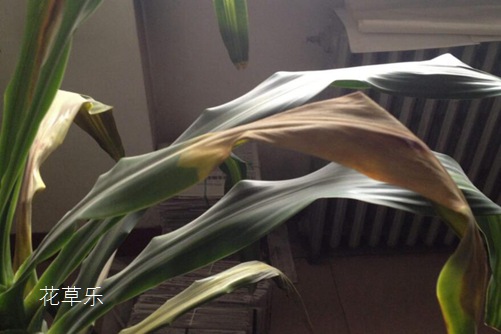
I. What to do when Yucca elephantipes leaves turn yellow
1. Yellowing caused by lack of fertilizer. Solution: Mainly use a nitrogen-phosphorus-potassium ternary compound fertilizer, and spray a potassium dihydrogen phosphate solution once every half month as a foliar fertilizer.
2. Yellowing caused by overwatering. Solution: Immediately stop watering, and move the potted plant to a ventilated location to help moisture evaporate.
3. Yellowing caused by insufficient light. Yucca elephantipes is shade-tolerant but cannot be placed in a shaded spot for a long time. With insufficient light, the chlorophyll in the leaves decreases, the green color of the leaves gradually fades, and yellowing or albinism appears. Solution: Generally, every half month it should be moved to a location with light for one week until the leaves turn green again, then the position can be switched back.
4. Yellowing of leaves caused by a humid, hot environment. This mainly occurs in summer. When the weather is hot, if ventilation is poor and there is no shading, yellow leaves are most likely to appear. Solution: Pay attention to ventilation and cooling, and make sure the potting soil does not become too warm.
5. Yellowing caused by lack of water. It is caused by a lack of water due to not watering for a long time. Its characteristic is that the old leaves turn yellow first from bottom to top. If the water shortage lasts too long, the whole plant will have yellow leaves and may even die. Solution: Water regularly and in fixed amounts. When this situation occurs, first cut off the yellow leaves and then replenish water. Repeat 3 times, and be sure to water thoroughly each time.
II. How to cultivate Yucca elephantipes? Key points for caring for Yucca elephantipes
1. Yucca elephantipes prefers a warm, humid, and well-ventilated environment. The suitable growth temperature is 20-30°C. Pay attention to good ventilation and maintain a relative air humidity above 80%. In winter, adverse reactions appear when the temperature drops below about 10°C. At this time, cold protection measures should be taken to prevent cold damage from drying out the leaves.
2. Yucca elephantipes is shade-tolerant but cannot be placed in a shaded spot for a long time. Without photosynthesis, the leaves will fade, and the leaves will be slender with wavy leaf margins. Indoor potted Yucca elephantipes should be placed in a location with relatively sufficient light
3. Frequently wipe the dust off the leaf surface. Do not let too much dust remain on the leaf surface, as it is not only unattractive but also prone to causing disease.
4. Yucca elephantipes prefers fertile loam soil with good drainage. Generally, repot the soil once every 2 years. For fertilization, mainly use a nitrogen-phosphorus-potassium ternary compound fertilizer, and do not apply only one element. Foliar fertilizer can also be sprayed outside the roots, such as spraying a 0.1-0.2% urea and potassium dihydrogen phosphate solution, once every half month.
Summary
When Yucca elephantipes has already developed yellowing leaves, first troubleshoot according to the situations above, and at the same time prune off the yellow leaves first. Also repot the Yucca elephantipes with some potting soil that has better air permeability, and pay attention to controlling watering, light, and temperature. Basically, all these problems can be solved. At the same time, strengthen routine protection to avoid pest and disease damage.