Daphne odora 'Aureomarginata' Is Sick: Common Diseases and Treatment Methods
Daphne odora 'Aureomarginata' is a precious flower variety. Although it grows easily, it is also quite delicate. As the saying goes: “easy to propagate but hard to cultivate”. If you do not pay attention to its care, it can easily die. Come and see what to do when your little darling Daphne odora 'Aureomarginata' is sick? Let Huacaole take everyone through the common diseases of Daphne odora 'Aureomarginata' and their treatment.
Come and see what to do when your little darling Daphne odora 'Aureomarginata' is sick? Common diseases of Daphne odora 'Aureomarginata' and their treatment
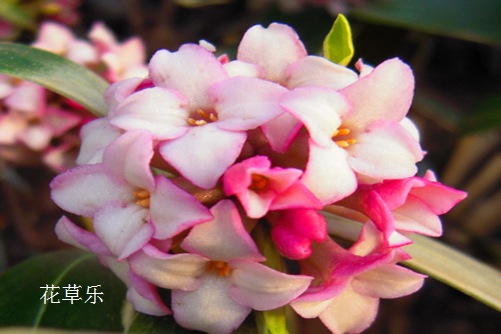
I. Daphne odora 'Aureomarginata' stem rot
Stem rot in Daphne odora 'Aureomarginata' is not easy to notice, because it occurs at the root and stem, and outwardly it looks no different from a normal tree. The phloem of the affected part turns black and rots, gradually spreading toward the roots. Once it is discovered, there is no way to save it.
Solution: For Daphne odora 'Aureomarginata' stem rot, carry out comprehensive control with prevention as the priority. (1) Placement environment for potted flowers: Daphne odora 'Aureomarginata' likes cool shade and needs a long-term ventilated environment. (2) Growing medium: acidic, fertile soil. (3) Water management: keep the soil and water moist, but do not overwater. (4) Timely pruning: prune branches promptly when the plant is growing vigorously to prevent excessively vigorous metabolism. (5) Handling of affected plants: once a plant becomes diseased, immediately dispose of the affected plant together with the pot soil, and the flower pot should be rinsed and disinfected. Other saplings should be disinfected to prevent the disease from spreading.
II. Daphne odora 'Aureomarginata' leaf spot
In the early stage of the disease, small green round spots appear on the leaves of Daphne odora 'Aureomarginata'. In the later stage, larger lesions form on the leaf surface. The size of the lesions is uncertain and they are accompanied by black mold. The disease occurs from April to September. The lower leaves of the plant are affected first, then gradually spread to the middle and upper leaves, and gradually develop toward the middle leaves. In severe cases, the leaves all drop off, the growth becomes weak, and eventually the whole plant dies.
Solution: Water reasonably, prevent waterlogging, strengthen ventilation, apply more fully decomposed liquid fertilizer rich in phosphorus and potassium, promptly clean up fallen leaves of affected plants and burn them in a centralized manner. Bordeaux mixture can also be sprayed in spring for prevention. During the disease period, use mancozeb, carbendazim, and thiophanate-methyl at 500-800 times dilution, spraying alternately and crosswise on the leaf surface every 7-10 days, for 3-4 consecutive cycles.
III. Daphne odora 'Aureomarginata' fusarium wilt
In the early stage of the disease, the leaves of Daphne odora 'Aureomarginata' turn yellow, become brown, and even dry up, gradually extending upward. The disease mostly occurs in spring when temperatures rise or in rainy seasons. Generally, from onset to death, the disease course is usually 15-45 days, and it is extremely harmful.
Solution: Cultivate reasonably. When disease is found, promptly clean up diseased leaves and branches and destroy them. Before potting, disinfect the soil with formalin solution or quintozene. In the early stage of the disease, irrigate the roots with carbendazim or benomyl at 800-1000 times dilution, once a week, for 5-6 consecutive applications, with obvious results.
IV. Daphne odora 'Aureomarginata' viral disease
When Daphne odora 'Aureomarginata' is affected, the leaves show mottling of varying shades, the leaf surface wrinkles, curls, and rolls back, plant growth slows, flower buds are difficult to form, and flowering decreases or does not occur at all. In that year, the leaves partially drop off, and in severe cases the leaves all drop off or the plant dies. The disease is severe in spring and autumn.
Solution: Strengthen cultivation management, water and fertilize reasonably, pay attention to ventilation and light transmission, so as to promote robust plant growth and improve its disease resistance. If diseased plants are found, isolate them immediately. Hands and tools that have contacted diseased plants must be disinfected, and diseased plants must absolutely not be used as mother plants for propagation.
V. Daphne odora 'Aureomarginata' root rot
Root rot is mainly caused by excessively wet potting soil or excessive fertilization, which burns the root system.
Solution: Choose 30% validamycin powder at 1000 times dilution or root rot control agent at 500 times dilution, and spray alternately for 4-5 consecutive applications, which can provide relatively good control.
VI. Daphne odora 'Aureomarginata' mosaic disease
Solution: Spray with 10% virus control agent at 600 times dilution, while also controlling aphids.
Summary:
Take good care of your little darling, okay? Do not let it leave you. Only by understanding the habits and cultivation methods of Daphne odora 'Aureomarginata' and adding your careful care will it surely grow robustly. Understand the habits and cultivation techniques of Daphne odora 'Aureomarginata'