How to Grow Podocarpus in Spring: A Guide to Spring Care Methods for Podocarpus
Podocarpus is an evergreen small tree of the Podocarpaceae family. It stays green all year round, with narrow, long needles and a deep green color, sturdy branches and a long lifespan. Podocarpus likes a warm and humid environment, is relatively shade-tolerant, and prefers fertile, loose, well-drained, slightly acidic sandy loam. "Grow a podocarpus at home, and generations will never know poverty" sums up the feng shui value of podocarpus in one phrase. Nowadays, owners pursuing high-grade courtyard landscaping often like to plant one or two podocarpus to add a touch of genius to their own "garden story". After a winter of dormancy, spring arrives and all things revive. How do you grow podocarpus? What work needs to be done in terms of care? Below, Huacaole shares with you:
A Guide to Spring Care Methods for Podocarpus
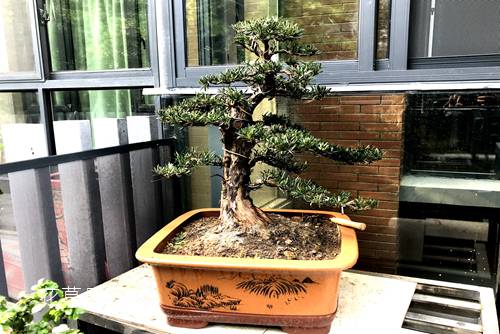
1. Repotting and changing the soil for podocarpus bonsai
Podocarpus has a well-developed root system and strong sprouting ability, and stays green with foliage through all four seasons. During a year of growth, it consumes a large amount of nutrients. Repot and change the soil once every two years, and at the same time prune the grown root hairs. This can be done in either spring or autumn. Right now happens to be a good season for changing the pot soil.
Podocarpus likes slightly acidic soil. When repotting, take it out with the root ball, remove the attached old soil, and properly prune overly long roots and rotten fibrous roots. Prune overly dense branches and replace with new potting soil. After repotting, water thoroughly with rooting powder mixed in water.
2. Shaping podocarpus
The Spring Festival happens to be a good time when all kinds of bonsai trees are growing and podocarpus can be shaped. Spring pruning is carried out in the following three aspects.
1. Thinning: Cut off diseased and pest-infested branches and burn them immediately to prevent the spread of pests and diseases. For shaping and pruning, prune according to the podocarpus shape you have designed, and at the same time prune off overlapping parallel branches, stacked branches, whorled branches, water sprouts, etc. The length of the main branches shortens one by one from bottom to top, so that the entire crown forms a typical conical columnar shape.
2. Short pruning: After thinning out the surplus branches, short-prune the shaping branches that are kept, prompting the shaping branches to sprout 2 to 3 times a year. Short-pruning once after each sprouting will rapidly increase the branching order of the shaping branches and can make each order of branches shrink very short without elongating the branches.
3. Renewal pruning: Carry out renewal pruning on perennial branches. Through renewal pruning, a large tree can be made smaller, which is beneficial for stump bonsai shaping.
3. Watering podocarpus
Spring is the growing season for podocarpus. Watering should follow the principle of "prefer dry over wet", "three parts wet, seven parts dry", keeping the pot soil alternating between dry and wet.
4. Fertilizing podocarpus
Podocarpus does not like strong fertilizer. After a winter, spring has arrived and fertilizer needs to be supplemented promptly. Well-rotted organic liquid fertilizer can be used, applied once every ten days to half a month. Water once the day after fertilizing, which helps the roots absorb it.
5. Spring pest and disease control
The main pests and diseases of podocarpus are scale insects, red spider mites, leaf spot disease and sooty mold. For leaf spot disease, 50% carbendazim can be diluted with water and sprayed for control; for sooty mold, soapy water or clean water can be used to wash it off. Scale insects and red spider mites can be killed by spraying with 80% dichlorvos emulsion at 1000 times dilution.
6. Dealing with black roots and yellow leaves in podocarpus
Podocarpus can develop black roots and yellow leaves. In severe cases, a large number of leaves fall off and the plant will die. If this happens, rescue treatment should be carried out promptly.
Specific treatment method: Dig open the pot soil, place the pot in a shaded, well-ventilated place, and let the pot soil evaporate and lose water as quickly as possible. During this period, the root system of the podocarpus has completely lost its ability to absorb. At the same time, spray a mist of water on the leaf surface so that they lose no water or less water, and after the plant regains its vitality, cover with soil and spray water again.