Introduction to the four noble bonsai: cliff cypress, boxwood, small-leaf red sandalwood, and Chinese yew
As living standards improve, people increasingly like to grow potted plants indoors to regulate the air, improve the home environment, and enhance the artistic flavor of life. Bonsai generally falls into two major categories: tree-stump bonsai and landscape bonsai. Due to differences in regional environments and natural conditions, bonsai is divided into many schools. The traditional five major schools are further divided into the Southern and Northern schools. The Southern school is the Lingnan school represented by Guangzhou, while the Northern school includes the Sichuan, Yangzhou, Suzhou, and Shanghai schools of the Yangtze River basin (the latter three were formerly collectively known as the Jiangnan school). Although there are many schools, the types of tree stumps used in bonsai remain the same. Below, Huacaole shares with you the cliff cypress bonsai, boxwood bonsai, small-leaf red sandalwood bonsai, and Chinese yew bonsai, known as the four nobles of bonsai.
The four nobles of bonsai: introduction to cliff cypress, boxwood, small-leaf red sandalwood, and Chinese yew bonsai
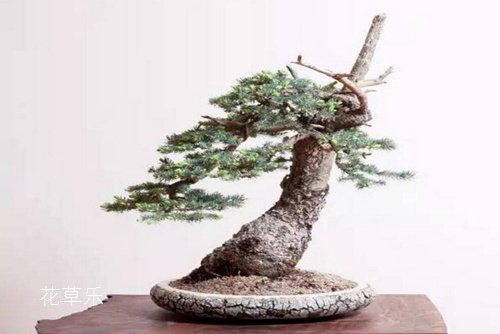
I. Cliff cypress bonsai
Cliff cypress is a completely natural plant that cannot be artificially cultivated or planted, is scarce in quantity, and is non-renewable. In particular, cliff cypress growing on sheer cliffs is even scarcer. Cliff cypress is dug out from cracks in cliff stone, has very few fibrous roots, and is even harder to transplant and keep alive, hence the saying “keep one alive, earn a cartload.” Light coffee-colored cliff cypress, commonly known as “aged material,” has endured hundreds to thousands of years of wind and sun; its scent is steady and very pleasant to smell.
II. Boxwood bonsai
Like cliff cypress, boxwood bonsai can also be called “noble.” A boxwood with a diameter of 10 cm takes about 150 years of growth cycle, which determines its “noble” status. Among wild boxwood stumps there is no lack of fine specimens, especially pearl boxwood. Pearl boxwood has for generations made its home on high mountain ridges or in stone cracks. Through the harsh tempering of wind, frost, ice, and snow, it naturally grows into a tree shape with twisted branches, curved trunks, and unusual, varied forms.
III. Small-leaf red sandalwood bonsai
Small-leaf sandalwood is a fine grade of red sandalwood, usually also simply called “red sandalwood.” It has relatively high density and relatively small pores, and is mostly produced in tropical and subtropical primeval forests, with Indian red sandalwood being the best. It is mainly found in Mysore State, while the remaining various types of sandalwood are classified under the rosewood category. It is often said that of ten sandalwood trees, nine are hollow; the largest red sandalwood is only about 20 cm in diameter, so its preciousness can well be imagined.
IV. Chinese yew bonsai
The Chinese yew is an ancient tree species with a history of a hundred years and has a long history of cultivation in our country. Because of its graceful plant shape and deep green leaves, it is also very effective when used to make bonsai and is deeply loved by people. The Chinese yew has extremely strong medicinal value and can be used to extract taxol, an internationally recognized anti-cancer agent, and it is a national first-class protected tree species. It gets its name because its red beans grow into fruit just like red beans.