Black raised patches appear on the leaves of the Chinese persimmon (Diospyros cathayensis); suspected to be scab. How should it be prevented and treated?
The pathogen of scab is a fungus of the subphylum Deuteromycotina. On affected leaves, small water-soaked round spots appear at first, then turn waxy yellow. The lesions enlarge as the leaves grow and gradually become suberized, bulging out on one side of the leaf as conical scabs while sinking inward on the other side; leaves with many lesions become twisted and deformed, and in severe cases cause defoliation. On young fruit, brown spots appear at first, then gradually enlarge and turn yellow-brown, forming conical, suberized wart-like protrusions; many scattered or clustered warts form, causing poor fruit development, deformity, early fruit drop, and deterioration of fruit quality later on. I grow a pot of Chinese persimmon, and its leaves have long had raised black patches on the underside, possibly scab. I used “chlorothalonil” and “thiophanate” but neither worked. How should it be prevented and treated? Below, Huacaole shares with you:
Raised black patches on the leaves of Chinese persimmon, suspected to be scab. How should it be prevented and treated?
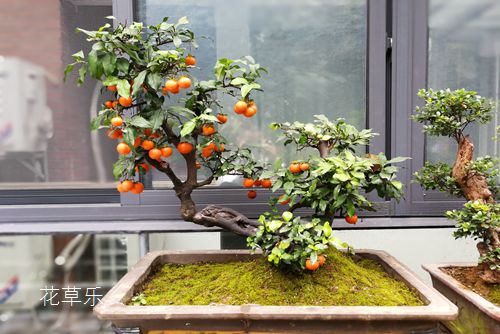
Prevention and treatment methods for Chinese persimmon scab
1. From late autumn to early spring, collect the diseased leaves that fall from the plant and burn them; leaves with lesions should also be cut off and burned. Because it is an evergreen or semi-evergreen shrub, destroying diseased leaves can greatly reduce the pathogen population causing disease the following year.
2. During overwintering, apply 0.5 degree Baume lime sulfur mixture to the trunk; you can also use lime sulfur mixture crystals bought from an agrochemical store, dissolved and diluted. If all the leaves have already fallen, the whole plant can be sprayed with lime sulfur mixture, but do not let the solution seep into the potting soil, because the solution is fairly alkaline and can easily burn the feeding roots. Before spraying, first cover the potting soil with a layer of plastic film. This way you can effectively kill the mycelium or conidia hiding on the branches and trunk to overwinter, while also preventing the solution from seeping into the potting soil.
3. The disease begins in May, and July to September is the peak period. The pathogen prefers shady, humid environments, and disease is severe in shady, humid, wind-sheltered spots, so create an environment with good ventilation and light and dry, cool conditions for it. Starting from the emergence of new leaves, spray once every half month with 50% carbendazim wettable powder at 500 times dilution to prevent infection. 4. If a small number of diseased leaves appear, remove and burn them as early as possible, and at the same time use 70% zineb wettable powder at 800 times dilution, or 70% thiophanate-methyl wettable powder at 1000 times dilution, once every half month for 3 to 4 consecutive times. Note that pesticides must be purchased from reputable stores and must be stored in a low-temperature, dark place to avoid decomposition and loss of effectiveness. The ineffectiveness of the “chlorothalonil” and “thiophanate” you mentioned may be related to poor storage or impure quality of the pesticide.
In daily care, do a good job maintaining the Chinese persimmon and prevent pests and diseases early. The Chinese persimmon is a sun-loving tree with vigorous growth and strong adaptability, and it is not choosy about soil. It can grow in acidic, alkaline, and neutral soils, and can bloom and bear fruit. The Chinese persimmon is drought-tolerant and heat-tolerant, cold-tolerant and tolerant of shade and humidity, and can be cultivated as a bonsai on an unobstructed rooftop terrace......[View details]