How do you deal with jasmine leaves turning yellow and black?
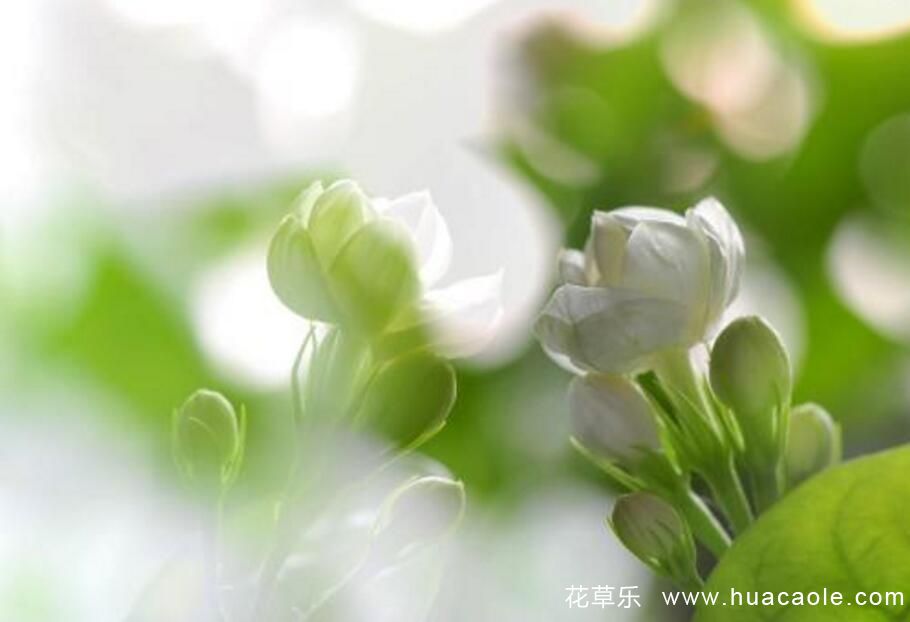
“When flowers bloom all over the garden, none is as fragrant as it” - it is the jasmine, whose “single bloom can scent a whole room.” Jasmine has emerald-green leaves and pure white flowers with a rich fragrance, and it is a common ornamental fragrant flower for gardens and pots. It is mostly grown in pots to adorn interiors, elegant and pleasant, and can also be processed into garlands and other decorations. During jasmine cultivation, situations often arise such as leaves turning yellow or black, or lush leaves with no flowers or only sparse blooms - how should these be handled? Below, Huacaole shares with you how to deal with these problems.
The jasmine's leaves have turned yellow and black - how should you deal with it?
1. Watering problems
Although jasmine likes moist soil, it fears waterlogging. If the potting soil stays too wet for a long time, oxygen deficiency will cause root rot, yellowing leaves, and even plant death. If its leaves turn black, it is very likely that you are watering it too much. Too much water means less air, which leaves the roots sitting in an overly wet environment for a long time, causing oxygen deficiency and turning the leaves black. So watering must be moderate, and never excessive.
Jasmine likes slightly acidic soil. Using water with a high salt content or tap water over the long term easily causes poor growth and yellowing, withered branches and leaves.
2. Pest and disease problems
Jasmine is prone to leaf spot disease and red spider mite damage. At first, many small brown spots appear on the leaves, then they slowly expand into round or irregular shapes, and the infected leaves also become thin, almost transparent, and gradually black granular material grows, so the leaves turn black.
Control method: First, we can promptly cut off its diseased leaves and destroy them, then remember to apply a little less nitrogen fertilizer and more phosphorus fertilizer, and finally spray with the pesticide Lvguo, which will provide very good control.
3. Fertilizing problems
If fertilizer is too concentrated, or if undecomposed organic fertilizer is applied, it will cause “root burn” and also cause withered, yellow branches and leaves. Also, some people worry that the flowers are not getting enough nutrients, so they fertilize desperately, leading to excess nutrients that burn the plant and also turn the leaves black. So fertilizing must be controlled.
If the potting soil has not been changed and no fertilizer applied for a long time, nutrients cannot meet demand, causing jasmine leaves to turn yellow. In this case, simply repot the plant; replace the soil with fertile, loose sandy loam, and regularly apply liquid fertilizer, and the jasmine will soon grow normally.
4. During care, situations may also arise such as lush leaves with no flowers or only sparse blooms; the handling methods are as follows:
1) Improper watering causes jasmine root rot or yellowing leaves.
Solution: First cut off the rotted roots, move the pot to a shaded, humid place, stop fertilizing, and strictly control watering. At the same time, loosen the potting soil to improve aeration, and water moderately once new roots grow.
2) Water quality and alkaline potting soil cause leaves to gradually turn yellow and wilt.
Solution: During the growing season, apply dilute alum fertilizer water to adjust. Generally, within half a month, the withered, yellow old leaves of potted jasmine can gradually turn green again.
3) Yellowing leaves caused by long-term lack of fertilizer or not repotting for a long time.
Solution: Promptly repot the potted jasmine, replace it with fertile, loose new soil, and regularly apply supplementary liquid fertilizer.
4) For jasmine with lush branches and leaves but no flowers or very few flowers.
Solution: The reason potted jasmine does not bloom is basically insufficient sunlight. No flowers or few flowers are generally caused by excessive shading and poor ventilation or by applying too much nitrogen fertilizer. At this time, place the pot in a spot with plenty of sunlight, appropriately restrict water and fertilizer, and appropriately increase phosphorus fertilizer.
Jasmine has emerald-green leaves and pure white flowers with a rich fragrance, and it is a common ornamental fragrant flower for gardens and pots. It is mostly grown in pots to adorn interiors, elegant and pleasant, and can also be processed into garlands and other decorations. Jasmine flowers are extremely fragrant and are a famous raw material for scented tea and an important raw material for essence; the flowers and leaves are used medicinally to treat red, swollen, painful eyes. Jasmine tea can also be made as a drink. Jasmine has many effects and benefits......[View details]