Flower and bonsai disease prevention and control: how to treat anthracnose in flowering plants
During the cultivation of flowers and bonsai, various pests and diseases can occur, and the hardest part is identifying the symptoms and judging the effectiveness of control. They are summarized into two types: fungal diseases and viral diseases. Fungal diseases mainly include red spider mites, aphids, and so on, while viral diseases include anthracnose, gray mold, southern blight, sooty mold, and so on. Anthracnose is a major category of diseases that commonly occur in garden plants. It mainly damages the leaves of plants, and sometimes also damages stems and young branches. When the damage is severe, it reduces the ornamental value of the plants and can even cause the plants to die. When we encounter anthracnose, how should we deal with it? Below, Huacao Le will share with everyone pictures of anthracnose and methods for preventing and controlling anthracnose.
Flower and bonsai disease prevention and control: how to treat anthracnose in flowering plants
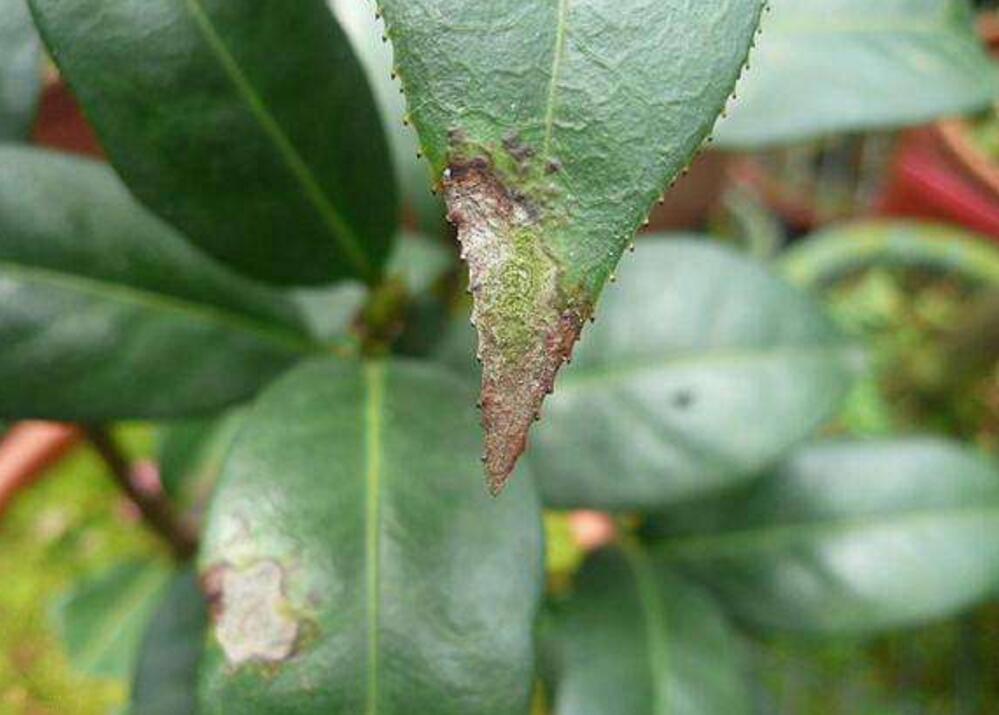
I. Symptoms and pictures of anthracnose
Anthracnose is a fungal disease, and the symptoms come in two types:
1. In the early stage of the disease, round and oval reddish-brown small spots appear on the leaves. Later, they expand into dark brown lesions; the center changes from grayish-brown to grayish-white, while the edges are purplish-brown or dark green, sometimes with a yellow halo at the edges. Finally, the lesions turn dark brown, and small black dots arranged in concentric rings are produced. This disease often occurs on leaf margins and leaf tips. In severe cases, more than half of the leaf withers, turns black, and dies.
2. Round or nearly round lesions are produced on the stems, light brown in color, with small black dots arranged in concentric rings on them. Lesions occurring on young shoots are oval canker spots with slightly raised edges. For example, anthracnose in cacti.
II. Methods for preventing and controlling anthracnose
1. In the early stage of the disease, cut off diseased leaves and promptly burn dead branches and fallen leaves in the green area to prevent spread; do not plant too densely or place indoor flowers too densely. For indoor flowers, do not pour water directly over the top of the plant, and always maintain ventilation and light. In winter, clean the garden and promptly burn diseased plant residues.
2. Improve the watering method: pour water in from the edge of the pot, control the amount of watering, and do not use too much; promptly remove and destroy diseased leaves when found to reduce sources of infection; there should be appropriate space between pots to prevent branches and leaves from touching and to ensure air circulation. Adopt scientific fertilization formulas and techniques, apply sufficient decomposed organic fertilizer, and increase the application of phosphorus and potassium fertilizers to improve the disease resistance of garden plants.
3. Chemical control: During the disease period, spray 70% Anthracnose Fumei at 500 times dilution, 70% mancozeb at 600 times dilution, or 75% chlorothalonil at 700 times dilution, or 1:1:200 Bordeaux mixture, once every 10-15 days, spraying 3-4 times.
4. Chinese fir anthracnose is a latent infection disease. New leaves of the year begin to sprout in early April, and can be infected by anthracnose fungi in May, but symptoms generally do not appear until April-June of the following year. The rate of conifer needles carrying the pathogen increases rapidly as the temperature rises, reaching its highest in August. After mid-November, it gradually declines, dropping to its lowest by the end of March, and then rises again after April. This shows that apart from the low-temperature period in winter (average monthly temperature below 10°C), infection can occur, but a large portion of the latent pathogens also lose their vitality in winter.