Detailed Guide to Making and Caring for Chinese Pistache Bonsai
Chinese pistache (Pistacia chinensis) is a deciduous tree in the Anacardiaceae family. It likes light and warmth and fears severe cold; it is suited to growing on fertile, moist limestone hills with good drainage. The tree form is elegant, the crown is spherical, and the branches and leaves are lush. In spring the young leaves are red, in summer the leaves are emerald green, in autumn the leaves turn golden yellow, and in winter they all fall off. Chinese pistache is an excellent urban greening tree species, and as a bonsai species it also has very good ornamental value. Chinese pistache is called a variety with “both talent and beauty.” How do you grow Chinese pistache? Below, the Huacaole editor introduces to you the methods for making and caring for Chinese pistache bonsai.
How do you grow the “both talent and beauty” Chinese pistache? Introduction to methods for making and caring for Chinese pistache bonsai
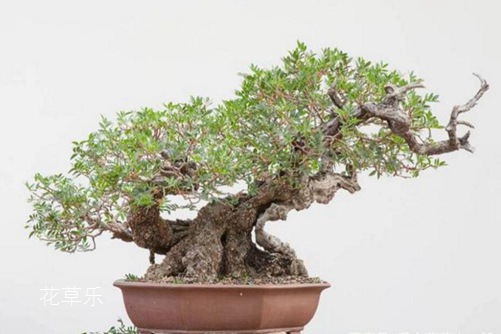
I. Selection and mixing of potting soil
Chinese pistache is a large tree, with a tall and thick stem and a well-developed root system, so a larger flower pot should be chosen, and the potting soil must be sufficiently fertile to maintain the nutrients needed for growth. Choose loose, fertile garden soil, add 1/3 decomposed cake fertilizer, and mix evenly before use.
II. Choosing a pot
For Chinese pistache bonsai, it is recommended to use containers such as small wooden boxes, wooden buckets, small crocks, and flower pots.
III. Potting and styling
Chinese pistache is best potted in April. Before potting, carry out tip-pinching and dwarfing treatment so that the side branches are longer and more luxuriant. On the main trunk of Chinese pistache, generally 4~5 layers of side branches are retained, and the growth angle of the side branches at each layer is adjusted: the lower side branches grow obliquely, the middle side branches are basically horizontal, and the upper side branches extend obliquely upward for styling, to make a natural-style bonsai with clever and appropriate arrangement.
IV. Repotting and changing the soil
Chinese pistache has a well-developed root system and grows fast, so generally the potting soil is changed and the plant is repotted once every 2 years, carried out in March. Generally replace 1/3 of the potting soil and leave about 2 cm of water space to make watering easier. After changing the soil, remember to water immediately, and water until it is thoroughly soaked.
V. Care of Chinese pistache bonsai
1. Chinese pistache likes light and warmth, and fears severe cold. It needs to be placed in a place with ample sunlight, ventilation, and moisture. In summer it must not lack water or be exposed to scorching sun, and in winter it should be moved indoors to overwinter, while keeping the potting soil moist in daily care. During the growth period, fertilizer and water management should be strengthened, applying a dilute fertilizer once a month. In every growing season, tip-pinching and height-limiting treatment should be carried out to promote the development of the seedling toward a dwarf and sturdy form.
2. Prune promptly in autumn and winter, using methods such as thinning, short pruning, and renewal pruning to cut off excess side branches, parallel branches, crossing branches, overly dense branches, leggy branches, and dead branches.
3. Chinese pistache is dioecious, so when making bonsai, attention should be paid to matching female and male plants in proportion. Branches can also be grafted, and combined with artificial pollination, to increase the fruit-setting rate and seed-setting rate.
4. Chinese pistache has strong stress resistance. The volatile aromatic substances contained in the leaves and bark have strong insect-repellent and insecticidal effects, and it rarely suffers from diseases and pests.
Summary
The leaves of Chinese pistache contain a relatively high amount of volatile aromatic oil, which can release a rare and peculiar olive fragrance into the air, and the leaves can adsorb and absorb large amounts of harmful gases such as S02 and coal smoke from the air. As an indoor bonsai, placed on a desk, windowsill, balcony, and other places, it can effectively purify and freshen the air and benefit people's physical and mental health.