Sageretia is easy to keep alive but hard to cultivate well - watering is the key to bonsai care
The Sageretia tree has an aged, gnarled and vigorous posture, and has long been praised as one of the "Seven Sages" of bonsai; it is one of the five famous trees of Lingnan bonsai. It bears white flowers, and its ripe fruit is edible. Sageretia likes light, tolerates shade, prefers a warm and humid climate, and tolerates pruning. It is one of the main tree species of Chinese bonsai. How can you care well for a pot of Sageretia bonsai? Below, the Huacaole editor shares with you the selection of Sageretia stumps and an introduction to the care methods for potted Sageretia.
It is said that Sageretia is easy to keep alive but hard to cultivate well; in fact, watering is the key in Sageretia bonsai care
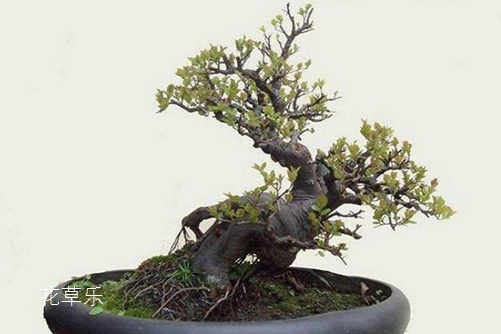
I. Selecting tree stumps
Sageretia basically all grows on mountain slopes. The best time for digging up stumps is generally late autumn and spring. For stumps collected in late autumn, pay attention after digging them out to taking measures against wind drying; it is recommended to coat the roots with mud slurry, pot them immediately, and pile the potting soil up high. For winter collection, be sure to protect against cold and freezing injury; after digging them out, the root system should be wrapped with bags or other materials to avoid freezing injury.
II. Introduction to Sageretia care methods
1. Planting: The planting soil should preferably be plain soil, such as river sand soil, mainly garden soil, and it needs drainage, air permeability, moisture retention and to be sterile. After planting, water thoroughly once and move it to a shaded, wind-sheltered place for care. Spray water once each morning and evening to keep the branches and trunk at a certain humidity so as to help the plant cells survive and keep the water line uninterrupted. Once new roots grow and buds sprout, it can enter normal management.
2. Water control: The key to the survival of newly planted Sageretia is watering. Sageretia likes moisture and fears both drought and waterlogging. The potting soil should neither be too dry nor waterlogged. Generally, watering can be divided into:
1) Water by season: water less in winter; in spring, as it revives, it should be kept moist; in summer, with high temperatures, do not cut off water; in autumn, as it turns cool, water when the soil shows traces of dryness.
2) Water by growth condition: newly planted stumps should be kept moist; once buds sprout and roots form, water thoroughly; when growth is vigorous, water more; when growth is poor, water less.
3) Water according to the weather: water more on clear days, less on cloudy days, and on overcast days judge watering by how dry or moist the potting soil is.
4) Water according to the environment: water more upstairs, less downstairs; water more in open areas, less in courtyards.
3. Scientific fertilizing: do not fertilize in winter, fertilize little in summer, fertilize frequently in spring and autumn, and do not fertilize newly planted or weak, sickly stumps. For robust, vigorous stumps, fertilize frequently; fertilize heavily before pruning; do not fertilize after pruning.
4. Pruning and care: after Sageretia sprouts and survives, in principle do not prune it that year; let it grow wildly to promote strong root development. If growth is too vigorous, according to the styling you may appropriately thin out some overly dense clustered branches, strengthen light and ventilation, and concentrate nutrients to thicken the styling branches. During the styling stage, keep or remove branches according to the layout, but you must consider the one-way conduction of Sageretia's vascular bundles; therefore, for old stumps with a longer time in the pot, a branch should be reserved beside the styling branch. This can both promote the activity of the water-line cells and serve as a backup. For repotting Sageretia, generally a large pot is repotted every 4-5 years, a medium pot every 2-3 years, and a small pot every 1 year. This can keep the root system vigorous, regenerate new roots, effectively avoid branch dieback, and maintain the vigor of the whole tree.
III. Key care tips for Sageretia
Sageretia has one-way conduction of vascular bundles; once a branch or trunk is damaged, it will cause a biased-branch phenomenon, and the damaged part will die. The undamaged branches and trunk also cannot heal the damaged vascular bundles. Therefore, in care, note that once a branch or trunk is damaged, that section of branches and trunk is basically beyond saving.
IV. Sharing of little bonsai knowledge
1. The Seven Sages of bonsai: refers to Huangshan pine, juniper, elm, maple, holly, ginkgo and Sageretia, seven tree species each with its own characteristics.
2. The Four Great Masters of bonsai: refers to Caragana, boxwood, winter jasmine and juniper, four tree species that are relatively harmonious and full of poetic charm.
3. The Eighteen Scholars refers to plum, peach, Damnacanthus, kumquat, goji, azalea, cypress, Chinese flowering quince, wintersweet, nandina, camellia, Buddhist pine, Malus spectabilis, bamboo, crape myrtle, pomegranate, Serissa and gardenia, and so on - 18 tree species with diverse forms and styles, rich and varied.