How to grow potted lemons? Do these things well and the branches will be full of fruit
Lemon is also known as ningmeng, foreign lemon, yimuguo, etc. It is a small tree with a few small thorns on the branches. The lemon fruit is oval, yellow, and its juice is very sour. Lemons bloom from April to May, and the fruit ripens from September to November. Because lemons taste very sour, pregnant women love to eat them, so they are called yimuguo. Lemon juice is plentiful, the flesh is crisp, the scent is very fragrant, and the taste is very sour; it is also a top-grade seasoning. With so many advantages, don't you want to grow a potted lemon at home? When you want to eat one, just pick one from the pot. How do you grow potted lemons? It is actually very simple. Below, Huacaole shares with you the cultivation methods and precautions for potted lemons.
How to grow potted lemons? Cultivation methods and precautions for potted lemons
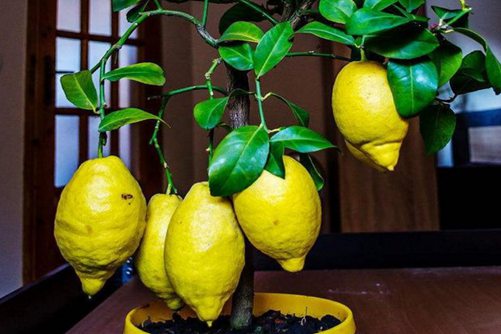
Because fruit bonsai absorb more nutrients than ordinary green plant bonsai, you should choose a slightly larger purple clay pot, and try to choose a thicker, better-shaped lemon tree. The precautions during cultivation are as follows:
1. Light and temperature: Lemons like light. The optimal growth temperature is 23°C to 29°C. Above 35°C they stop growing, and below -2°C they suffer freeze damage, which causes the leaves to turn yellow. Potted lemons need to be moved indoors before Frost's Descent, and moved back outside after Qingming Festival, which ensures they overwinter safely.
2. Change the pot and soil on time: This is generally done after Qingming Festival and before April. When changing pots, choose a pot suitable for the size of the lemon plant, not too large or too small. When changing the soil, add base fertilizer at the bottom of the pot, such as chicken manure, cake fertilizer, etc.
3. Fertilize at the right time: For potted lemons, before flowering and after the fruit sets, apply a multi-element flower fertilizer once a month, and spray a flower nutrient solution once every half month. Fertilize appropriately according to the growth trend; larger plants can be fertilized more, while small pots should be fertilized less.
4. Pest and disease control: Lemons have strong resistance to pests and diseases. In dry climates, there are even fewer pests and diseases. Pest and disease control should focus on prevention. During cultivation and management, spray water to clean the branches and leaves, and prune to maintain good ventilation and light transmission. Generally, it is enough to spray carbendazim once every half month.
5. Prune in time: Pruning of lemons is mainly done in winter and spring. Cut off dead branches and fallen leaves, diseased pest roots and leaves, leggy branches, and other parts, so that the plant can grow fruit. Pruning during the growing season is supplementary. When the fruit has just set, pruning the tree should focus on light thinning and letting branches grow. Through shaping and pruning, regulate the reasonable distribution of nutrients in the tree, so that the limited nutrients are concentrated to supply buds and leaves, forming more fruiting branches, thereby achieving branches full of flowers and fruit. For potted lemons, before the spring shoots sprout, severe pruning must be carried out. First remove dead branches, diseased branches, leggy branches, inward-growing branches, crossing branches, sprouting branches, etc. For strong branches, prune lightly, leaving 4 or 5 plump buds; for weak branches, prune heavily, leaving 2 or 3 buds, to encourage each branch to produce more robust spring shoots. After the spring shoots have grown fully, to control their leggy growth, light pruning can be done, cutting off 3 or 4 nodes of the shoot tips. When the new shoots that grow later have 6 to 8 nodes, pinch off the tips, in order to induce more summer shoots.
II. How to grow potted lemons so they bear more fruit
If potted lemons are not managed well, the result is that they only bloom but do not set fruit, or set little fruit and do not bloom. How can potted lemons be made to bear abundant fruit year after year? Below, Huacaole tells you to pay attention to the following 3 points:
1. Control water before flowering. To prevent summer shoots from growing too vigorously, gradually reduce the water supply to potted lemons more than ten days before End of Heat; stop water supply 5 days before, until the leaves are shriveled and curled. To prevent leaf dehydration, spray water on the leaf surface in the morning and evening, so that the lemon is in a condition that is both dry and not dying, and its axillary buds instead swell day by day, with the bud color changing from green to white. When most axillary buds are found to have changed from green to white, the water control for flower promotion has succeeded. After that, resume watering normally.
2. Fertilizing is very important. After lemons bloom, in addition to applying a thin fertilizer once a week, flower thinning and fruit thinning must also be carried out. Before the flowers open, first thin out some flower buds; after the flowers fade and the fruit sets, thin out some young fruits in improper positions, so that nutrients are concentrated to supply the retained flowers and fruits, making the fruit grow larger and better. During the fruit growth period, if fertilizer and water are sufficient, the plant's branches will sprout new shoots. To protect the fruit, the new shoots that grow must be removed in time. When the fruit turns yellow and ripe, stop fertilizing and reduce watering, keeping the soil moist and slightly on the dry side to increase the fruit-setting rate.
3. Pinching and fruit thinning. Potted lemons like fertilizer, so apply thin fertilizer more often on ordinary days. Apply a decomposed liquid fertilizer once before sprouting, and afterward apply a liquid nitrogen fertilizer once a week; only then will they grow more branches and leaves and produce more spring shoots. After each pinching, fertilize in time to encourage the branches to mature earlier. During the lemon's growth period, you can scatter some cake fertilizer on the pot surface; after watering, the fertilizer seeps into the soil and enhances fertility. After the beginning of autumn, reduce fertilization to avoid excessive plant nutrition, which promotes autumn shoots and causes fruit drop by competing with the fruit for nutrients.