How to grow Fragrant Wood (Pistacia weinmannifolia) so it fills the air with fragrance and keeps mosquitoes from flying into the yard
Fragrant Wood, also known as fragrant leaf, fine leaf, and Chinese pistache wood, is a mosquito-repelling plant of the genus Pistacia in the Anacardiaceae family, a shrub or small tree that mainly grows in the dry-hot river valleys of central and northern Yunnan, China, as well as Sichuan, Guizhou, and southwestern Guangxi. Fragrant Wood's delicate fragrance calms the mind and spirit, its foliage is verdant and finely textured, its branches gnarled with bark like dragon scales, vigorous and powerful. And Fragrant Wood's unique scent can repel mosquitoes. So in recent years more and more people like to grow Fragrant Wood as bonsai. Because Fragrant Wood bonsai is relatively difficult to keep alive and grows rather slowly, generally taking about a year to grow roots, and after rooting it still needs careful observation, taking 2~3 years to confirm survival, therefore the price of established Fragrant Wood stock is considerably higher than that of other tree species. How to grow Fragrant Wood? So it fills the air with fragrance and even mosquitoes dare not fly into the yard. Below, the Huacaole editor introduces the cultivation methods for Fragrant Wood and lets you admire some Fragrant Wood bonsai pictures of very well-maintained plants.
How to grow Fragrant Wood so it fills the air with fragrance and even mosquitoes dare not fly into the yard
I. Introduction to the cultivation methods for Fragrant Wood
Below, Huacaole shares with everyone the key care points for wild-collected Fragrant Wood stumps: sealing the cuts, wrapping in film, and high mounding are essential conditions for planting wild-collected Fragrant Wood stumps. Daily water and fertilizer should not be excessive, and light should be appropriate. We hope this gives bonsai enthusiasts who love Fragrant Wood some reference, so they take fewer detours and improve the survival rate.
1. Stump selection: The best time to dig and plant stumps is from November to March. Because the survival rate is low, you must choose stump material with a soil ball, remove thick roots but keep the main root and intact fibrous roots, keep forked branches, and cut off all thick trunks and miscellaneous branches. Seal the wounds with mud or apply wound-healing ointment. The selected stump is best planted the same day; beyond 3 days it is very hard to keep alive. In winter, wild-collected stumps should be fully wrapped in film against freezing; in spring during February to March when it warms up, only the branches need to be wrapped in film to retain moisture.
2. Soil: Fragrant Wood likes slightly acidic, breathable, loose soil. It is recommended to plant with coarse river sand + garden soil or red soil + sawdust at a ratio of about 7:3. After planting, water with rooting powder solution for 2 cycles, and mist the stump daily for care. Usually after about a month it will begin to sprout. If the new buds are red, it means growth is normal; if the buds are green, it means insufficient light. Some will sprout later, so there is no need to worry; it means the root system is developing and growing, and the later survival rate is higher.
3. Temperature: The optimal growing temperature for Fragrant Wood is 20-25°C. It is cold-resistant and can survive at -10°C. Seedlings have weak cold resistance, so when planting in northern regions, do good protective management, move them to a place sheltered from wind and cold, but there must be light.
4. Light: Fragrant Wood is a sun-loving plant; it likes light but cannot be in direct sun for long periods. It is slightly shade-tolerant, and a place with diffused light and ventilation is more suitable. It fears scorching sun, so do good shading work in summer; if kept in a long-term shady environment, it will also affect plant growth.
Fragrant Wood is sensitive to water and fertilizer, so pay attention
5. Watering: Fragrant Wood is drought-tolerant, so do not water too frequently. Do not water new stumps; just mist daily to keep the stump moist, and keep the potting soil moist but do not overwater. Established Fragrant Wood generally only needs watering about once a week; in the rainy season do not water and be careful about waterlogging. Too much water easily causes root rot, so watering 1~2 times a week is enough. In spring and summer when the weather is dry, keep the soil slightly moist; in autumn and winter when the soil is dry, water once, following "water when dry, dry when wet."
6. Fertilizing: It tolerates barren conditions and can be managed extensively. Fragrant Wood is very sensitive to both water and fertilizer, so fertilizing must adhere to the principle of light fertilizer applied frequently. In the peak growing season from May to September, fertilize with liquid fertilizer 1-2 times a month; at other times, observe the plant's leaf growth and apply a little diluted liquid fertilizer when growth is poor. Seedlings or newly planted ones should not be fertilized; after the plant is fully mature, appropriately increase fertilizer, and apply a little base fertilizer when new leaves sprout. Do not apply only nitrogen fertilizer.
II. Why Fragrant Wood keeps dropping leaves
1. It is normal for a newly bought Fragrant Wood to have a few yellow leaves and dropped leaves, because the care environment has changed; the adjustment period is generally about half a month to 1 month.
2. If it has long-term, large amounts of withered yellow leaf drop, then you may need to consider whether the soil is too alkaline, or problems with water, fertilizer, or light. For soil, water, and light, refer to the introduction to Fragrant Wood cultivation methods above.
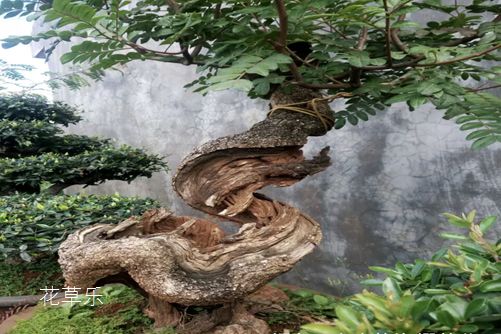
III. Fragrant Wood bonsai picture appreciation
Summary:
The Fragrant Wood plant can release a very strong pepper-like fragrance, which can purify the air and drive away mosquitoes. But the range in which Fragrant Wood releases its fragrance only repels mosquitoes near the potted plant. Only a well-grown Fragrant Wood has a stronger fragrance and a better mosquito-repelling effect. So relying only on one Fragrant Wood to drive away mosquitoes in the garden is not enough. However, if we can plant 2 or 3 Fragrant Woods around the yard, or keep one each at the door and windowsill, it will certainly have a mosquito-repelling effect. Only a well-grown Fragrant Wood has a stronger fragrance and a better mosquito-repelling effect. So the cultivation methods for Fragrant Wood are very important. Many vendors in flower and bird markets sell Pepperwood (Zanthoxylum beecheyanum) as Fragrant Wood, so pay attention when buying. How to tell Fragrant Wood and Pepperwood apart: one look and one sniff and you will know.