How do you care for and manage the upscale indoor foliage plant Snow White dieffenbachia?
Although few people know that Snow White is also the name of an indoor plant, everyone has certainly seen this plant. So how do you grow the indoor plant Snow White? Below is an introduction to the growing methods and precautions for Snow White, for your reference!
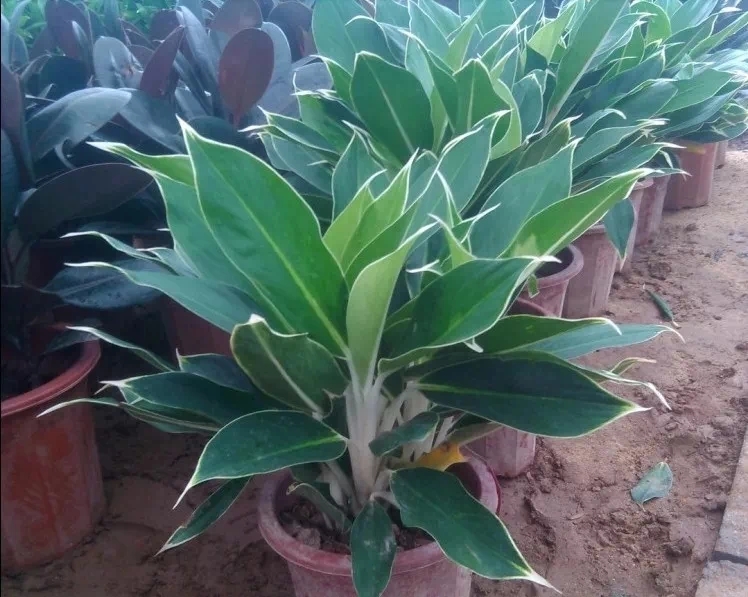
I. Growing methods for the indoor plant Snow White
1. Early-stage management.
When caring for Snow White, keep the growing medium moist, and water more during the growing period from March to August. In summer, sprinkle water frequently to increase environmental humidity. Fertilize generously during the growing period to promote rapid growth; from March to August, apply fertilizer solution once every two weeks. Reduce fertilizing after autumn. You can water with Huaduoduo balanced fertilizer 20-20-20.
2. Light management.
Snow White likes a bright, well-ventilated environment. In spring, control light at 15000-20000Lx; in summer, because temperatures are higher with high heat and high humidity, strengthen shading and ventilation, and a light level of 8000-10000Lx is ideal; in autumn and winter, when temperatures are lower, control light at 20000-30000Lx or provide full sun. If the light is too strong, the leaves turn yellow-green; if shaded too much, the plant becomes very leggy and lodges, affecting its ornamental effect.
3. Temperature management.
Snow White likes high temperatures and is not cold-tolerant; the optimal growing temperature is 25-30°C. The minimum overwintering temperature is above 13°C. Once frozen, the leaves turn yellow and wilt, the terminal buds die, and the lower leaves drop. Winter care requires heating equipment.
How to grow the indoor plant Snow White; growing methods for Snow White
4. Humidity management.
Snow White prefers high temperature, high humidity, and a semi-shaded or shaded environment; keeping humidity at 60%-70% is sufficient.
5. Pest and disease control.
Leaf spot: This disease occurs easily in humid weather. The lesions initially appear as small brown spots, with a water-soaked, faded-green margin, and expand in concentric rings, round to oval, with brown edges and grayish-white centers. Later, dark brown mold spots appear in the center of the lesions, becoming a dark brown mold layer under humid conditions. The method to control this disease is to promptly remove diseased and dead leaves; use 800 times mancozeb for control, once a week, for 3-4 consecutive times.
Anthracnose: It mainly occurs on the leaves and can spread to the petioles in severe cases. The lesions initially appear as small water-soaked yellow spots, and after expanding become oval to irregular brown or yellow-brown, slightly showing concentric rings; later the lesions join into a dry, withered patch and produce small black dots arranged in concentric rings. This disease is mainly caused by poor ventilation, and the presence of scale insect damage favors its occurrence. The method for this disease is to strengthen care and apply more phosphorus and potassium fertilizer; in the early stage of the disease, use 1000 times chlorothalonil for control, once a week, for 3-4 consecutive times.
II. Precautions for growing Snow White:
1. Tolerates partial shade; avoid excessively strong sunlight, but too dark light will also cause the leaves to fade.
2. Likes moisture; water more during the growing period from March to August. In summer, sprinkle water frequently to increase environmental humidity.
3. Likes high temperatures and is not cold-tolerant; the optimal growing temperature is 20-30°C. The minimum overwintering temperature is above 12°C.
I hope the introduction from the Plant Encyclopedia editor is helpful to everyone!