Detailed Guide to the Care and Management of Potted Gardenia
Gardenia belongs to the Rubiaceae family and is an evergreen shrub. Its branches and leaves are lush, its leaves stay green all year round, and its flowers are richly fragrant, making it an important ornamental plant for balconies and courtyards. Besides being ornamental, its flowers, fruits, roots, and leaves can all be used as medicine.
Other Names for Gardenia
Huang Zhizi, Jin Zhizi, Yin Zhizi, Shan Zhihua, Linlan, Mudan, Yuetao, Mu Hengzhi, Yu Hehua.
Growing Habits of Gardenia
It enjoys sunlight and tolerates shade; under shaded conditions its leaves remain deep green, but flowering is somewhat poorer. It likes a warm and humid environment, tolerates heat and cold, and can overwinter safely at -3°C.
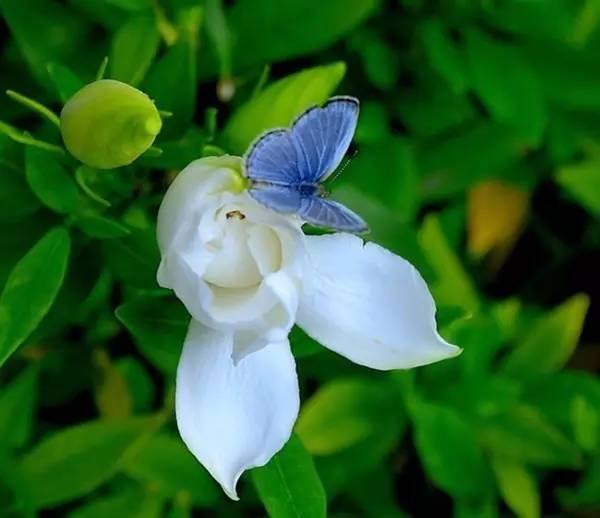
It grows best in fertile, well-drained acidic soil, and can also grow in poor, dry soil, but the plant tends to age prematurely.
It has a relatively strong resistance to sulfur dioxide, strong sprouting ability, and tolerates pruning
The Flower Language of Gardenia
The flower language of gardenia - strength, and the wait of life.
Gardenia brings people joy, like a vibrant summer, full of unknown hope and joy.
For lovers, gardenia represents eternal love and promise, a symbol of beauty.
Below is an introduction to the knowledge of caring for and managing potted gardenia
(1) Potting Soil
Potted gardenia is best planted in late autumn, placed into the pot with a soil ball. Gardenia prefers acidic soil, while soil in the north is mostly neutral or slightly alkaline, which is one of the main causes of leaf yellowing. Therefore, when caring for gardenia, choose a fertile acidic potting mix. Generally, it can be mixed from 5 parts leaf mold, 3 parts garden soil, and 2 parts sandy soil, and 1-2 grams of sulfur powder should be mixed into every kilogram of potting soil.
(2) Watering
Gardenia likes moisture; during the growing period, the potting soil should be kept moist, and attention should be paid to increasing air humidity. In summer when temperatures are high and the weather is dry, water more; in spring and summer, spray the leaf surface with clean water every morning and evening, and also sprinkle water on the ground around the pot to increase air humidity; in winter, water less, but still frequently spray and wash the branches and leaves to keep the leaf surface clean.
(3) Fertilizing
Gardenia likes fertilizer. When potted, in addition to applying organic fertilizer as a base fertilizer when repotting, it should also be fertilized frequently during the growing period, preferably with light fertilizer applied often. During the growing period, apply organic liquid fertilizer once about every 10 days, preferably cake fertilizer water at a concentration of 10%-15%; after flower buds appear, apply 2-3 additional applications of quick-acting phosphorus fertilizer, such as 0.5% superphosphate. Do not fertilize past autumn; fertilizing after autumn causes vigorous growth of autumn branches and makes the plant prone to cold damage. During the growing period, along with fertilizing and watering, water once with 0.2% ferrous sulfate solution about every 15-20 days to prevent leaf yellowing.
(4) Light
Gardenia likes partial shade and fears direct strong light; it requires about 50% shade. If exposed to the sun, the leaves turn yellow and white and eventually fall off, so in summer it must be kept in a shaded place or a place with scattered light for care. Let it receive light in the morning and evening to avoid leaf yellowing.
(5) Pruning
In daily care, pay attention to pruning and shaping so that it forms a certain crown shape. Generally, prune 2-3 times during the growing season. When pruning, cut off the top shoots to promote branching, so as to form a hemispherical crown.
(6) Moving Indoors and Outdoors
Gardenia has relatively weak cold tolerance, so attention should be paid to moving it indoors and outdoors at the appropriate time. Generally, move it indoors in mid-October, and after moving indoors place it in a sunny spot, with room temperature kept at 10-12°C, and no lower than 0°C at minimum; in spring it should not be moved outdoors too early, and generally late April is the best time to move it outdoors.