Kalanchoe cultivation methods: many varieties, good symbolism, and easy to propagate!
Christmas kalanchoe (scientific name: Kalanchoe blossfeldiana Poelln.): also known as "longevity flower". Perennial succulent herb. Plant height 10-30 cm. Stems erect. Leaves simple, opposite, elliptical, with blunt teeth along the margins. Cymes; small flowers orange-red to crimson. Follicles. Seeds numerous. Flowering period February-May.
The leaves are densely packed and emerald green, and it blooms near the Christmas holiday, clustered in masses with rich flower colors, making it a beloved indoor potted flower. This flower was introduced to Europe from southern Africa by the German R. Blossfeld. But it was not until the 1930s that it was more widely cultivated for ornamental purposes in Europe. To date, in the Netherlands, a major flower-exporting country in the world, the output value of kalanchoe in 1995 had already reached 333 billion US dollars, ranking third in potted flower production. In Denmark, potted kalanchoe has become the champion among Danish potted flowers, ranking first in both output and output value. This shows that kalanchoe occupies an important position among potted flowers and has become one of the fastest-growing potted flowers in the international flower market.
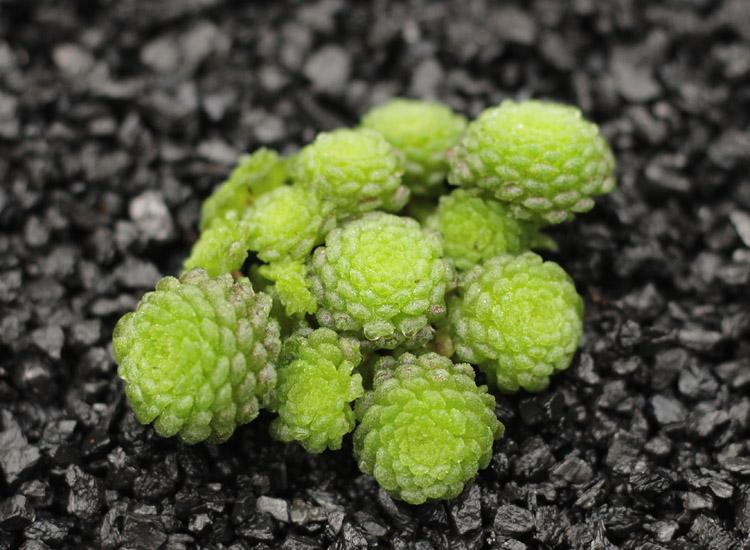
Kalanchoe cultivation methods
1. Growing temperature
The most suitable temperature for kalanchoe growth is 15°C to 25°C. Above 30°C growth slows and it enters a semi-dormant state; below 10°C growth stalls; below 8°C the leaves turn red and flowering is delayed; below 0°C it is prone to freezing to death. Therefore, to grow kalanchoe well, you must create a small environment for it that is warm in winter and cool in summer. At noon in midsummer, avoid strong direct sunlight and place it in a semi-shaded spot with ample scattered light, such as under a large tree, under the eaves, or on a north-facing balcony. Pay special attention to ventilation and cooling. You can sprinkle water on the nearby ground, but do not sprinkle it on the plant.
2. Plenty of sunlight
Kalanchoe likes a sunny, well-lit environment. Except for slight shading at noon in midsummer, it should be placed in a sunny spot the rest of the time. It needs at least 4 hours of direct light per day to grow robustly. On a building balcony, turn the flowerpot 180 degrees every half month so that it receives light evenly, avoiding an uneven crown and reduced ornamental value. Although it can also grow in semi-shade, the stems are thin, the leaves are sparse, there are fewer flowers, and the colors are pale, far less lush than in a sunny spot. If it is too shady, it will not only easily drop leaves and fail to bloom; even a plant that has already bloomed, if placed in shade, will have duller flower colors and then the flowers will drop and wither.
3. Appropriate moisture
Kalanchoe is a succulent plant with a relatively high water content in its body, so it is fairly drought-tolerant and afraid of waterlogging. It grows well under the dry-air conditions of high-rise buildings. In spring and autumn, water thoroughly about once every 3 days after the potting soil dries, and usually keep it slightly moist. In summer, water less; once every 5 to 7 days is best. For kalanchoe placed outdoors, avoid rain soaking during the rainy season, as too much water can easily cause root rot, leaf drop, and even death. With proper water control and the potting soil kept alternately dry and moist, the branches will be lush and the flowers plentiful. After bringing it indoors in winter, it is best to water at noon with water close to room temperature, about once a week.
4. Sufficient fertilizer
Kalanchoe likes fertilizer. Half a month after seedlings are potted and planted, or half a month after old plants are divided, apply 2 to 3 times a nitrogen-based liquid fertilizer to promote stem and leaf growth. After flowering, apply one nitrogen-based liquid fertilizer to help it regain vigor. At other times, except for stopping fertilization in summer, only a nitrogen-phosphorus-potassium compound fertilizer may be applied. When fertilizing, do not get fertilizer on the leaves, otherwise the leaves will easily rot. If the leaf surface is accidentally soiled, rinse it off with water. Kalanchoe has a long flowering period, so the rule against fertilizing during flowering should be broken. Apply a dilute nitrogen-phosphorus-potassium fertilizer or a 0.2% potassium dihydrogen phosphate solution once a month so that later flowers do not become smaller and paler due to lack of fertilizer.
5. Beware of pests and diseases
As the environment becomes milder, kalanchoe also becomes very susceptible to pest and disease infection. Pay attention to keeping the room ventilated to prevent pests and diseases from entering the room. At the same time, mainly use some insecticides to prevent pest and disease infection. The main diseases seen are downy mildew and anthracnose.
6. Sandy loam should be loose
Kalanchoe grows best when planted in a breathable earthenware pot, but this is not attractive indoors, so it can be placed in an outer plastic or porcelain pot, or planted directly in a small purple clay pot or plastic pot. When planting, put a layer of crushed charcoal pieces or crushed hard plastic foam pieces at the bottom of the pot to enhance permeability. For pots with an inner diameter of 10 cm to 20 cm, plant 3 to 6 plants. Although it is not very particular about soil, it is prone to root rot in heavy clay, while it grows best in loose, fertile, slightly acidic sandy loam. For home potting, it is best to mix leaf mold and garden topsoil in equal amounts, then add 5% to 8% sand as the growing medium.
7. Suitable pruning
In the early stage of vigorous growth of kalanchoe, pay attention to pinching to promote branching and make the potted plant fuller; after the flowers fade, promptly cut off the spent flowers to avoid consuming nutrients and affecting the number of flowers in the next bloom.
Kalanchoe is a plant with tenacious vitality, which is to say, it is very easy to keep alive. There are 2 methods of cutting propagation. One is stem cutting, and the other is leaf cutting