Detailed Guide to the Cultivation and Care Process of Perennial Flowers
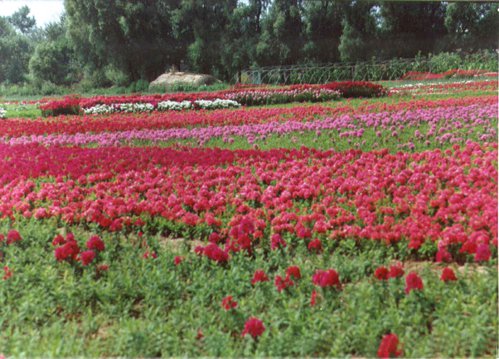
Perennial flowers, also known as perennial herbaceous flowers, refer to a type of perennial herbaceous ornamental plant whose aboveground parts flower, set seed, and wither, while the underground parts form a well-developed root system, can overwinter in the open field, and sprout, grow, flower, and set seed again the following year, such as purple coneflower, astilbe, blanket flower, black-eyed Susan, sea thrift, Iceland poppy, stonecrop, columbine, campanula, and salvia.
Flowering Mechanism
Perennial flowers have different flowering mechanisms. Generally speaking, perennial flowers require photoperiod (day length) or vernalization (low temperature), or both. Understanding the special flowering mechanisms of perennial flowers is one of the most important factors affecting the success of perennial commercial production.
Photoperiod Perennial flowers often require photoperiod to stimulate flowering. Long-day plants need 14 hours or more of daylight to flower; intermediate-day plants flower regardless of day length, but some varieties flower more under long days; short-day plants need short days to flower, generally less than 12 hours. Long-day plants can be stimulated to flower outside their natural flowering season through supplemental lighting. A simple and easy method to artificially create long days is supplemental lighting at night, adding 4 hours of light from 10 p.m. to 2 a.m. the next day, using incandescent light at 50 lux to 100 lux. Supplemental lighting sometimes causes plants to become leggy, especially when incandescent light is used, so once flower buds appear, the light source should be turned off.
There are three key elements for successful vernalization, none of which can be missing: the plants prepared for vernalization must be fully mature; there must be suitable low temperature, generally not higher than 5°C; and the appropriate low-temperature treatment time is generally 6 weeks to 10 weeks.