How to grow Artabotrys hexapetalus? Detailed growing methods and precautions
Yingzhua lan, jizhua lan, and wuzhua lan are all alternative names for Artabotrys hexapetalus (climbing ylang-ylang). The beautiful Artabotrys hexapetalus is a common climbing shrub, widely used to decorate courtyard trellises or flower walls, and some are also planted among rockery stones, thereby adding much woodland charm. In China, Artabotrys hexapetalus mainly grows in the southeastern coastal and southern regions, and of course, the Philippines, Vietnam, Thailand and other countries are also places where it thrives. But how exactly should it be grown, and what issues need attention? Let us discuss it.
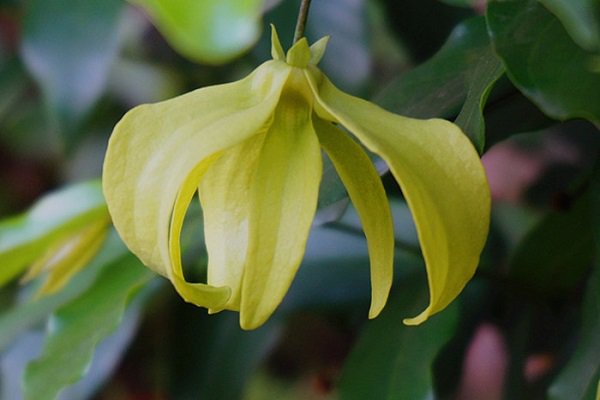
Growing methods and precautions for Artabotrys hexapetalus
I. Suitable environment for Artabotrys hexapetalus growth
In our country, Artabotrys hexapetalus prefers the warm climate of the south. The closer to the equator, the warmer the weather, and the better Artabotrys hexapetalus can grow. If the local climate is warm and humid, Artabotrys hexapetalus can bloom with all its might. Abundant sunlight can also contribute greatly to growing Artabotrys hexapetalus, but Artabotrys hexapetalus is also a shade-tolerant plant, so as long as the local climate is mild, it will not affect the growth of Artabotrys hexapetalus.
II. How should watering be done during the growing of Artabotrys hexapetalus
Artabotrys hexapetalus needs well-drained soil, and when watering, the principle of not watering until dry, and watering thoroughly when you do, should be maintained. In addition, we need to note that there should not be standing water in the pot or in the growing soil, as this will cause the roots of Artabotrys hexapetalus to rot, so the most direct method is to simply moisten the soil.
III. Fertilization issues to face during the growing of Artabotrys hexapetalus
It is recommended to use water-soluble fertilizer, as it is relatively easy to let Artabotrys hexapetalus absorb nutrients more comprehensively. However, if conditions permit, decomposed compost fertilizer can also be used to grow it, which not only improves the soil but also allows Artabotrys hexapetalus to absorb nutrients, making it a good method that kills two birds with one stone. Generally speaking, fertilizing it three times a year is enough.