How to Grow Dendrobium thyrsiflorum? Detailed Guide to Cultivation Methods and Precautions
If you love brilliantly blooming flowers, then you are sure to be interested in this plant. Currently, it is a very popular ornamental plant and very appealing. So, if you want to grow one, what exactly should you do?
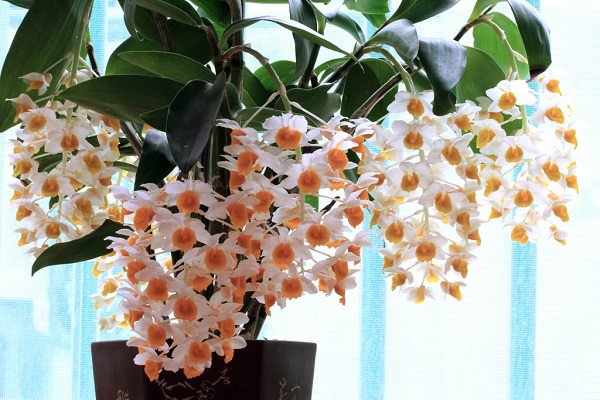
Cultivation Methods and Precautions for Dendrobium thyrsiflorum
Growth Habits
First, it has relatively high requirements for temperature and humidity, especially temperature. Its suitable temperature is 15-28°C, and the winter temperature is best kept above 8°C. In autumn and winter when the temperature is very low, it enters a dormant period and grows very slowly. As for humidity, keeping it at 60 percent is sufficient.
Specific Methods
Water: Let's start with newly transplanted plants. At this time, the plant is very sensitive to water, and neither too little nor too much water will do. If there is too little water, the plant may grow slowly and its branches and leaves may dry up, resulting in a very low survival rate. If it is misted too much or water accumulates in the pot, especially if combined with high temperatures at this time, soft rot is very likely to occur. After transplanting, the air humidity should preferably be kept at around 90 percent, and after about a week it can be adjusted to 70 to 80 percent. Now let's talk about the growing season. At this time, alternating dry and wet conditions are suitable, as this promotes sprouting and root growth. Then there is the dormant period in autumn and winter. We all roughly know how to handle this: do not water too much. However, if the air humidity is too low in late winter, water a little more, and you can also use a sprayer to mist some water.
Temperature: In order for the plant to grow, develop and bloom normally, the suitable temperature (we mentioned the specific temperature above) is of course better. Therefore, in autumn and winter, cold protection measures should be taken. Those that can be brought indoors should be placed indoors as much as possible, and for those that cannot be moved, methods such as covering can be used.