How to save potted flowering plants that have wilted from lack of water? The wrong approach will only speed up their death
Many flower lovers have encountered forgetting to water, or being away from home, so that potted flowers go without water for a long time, causing a large amount of scorching and withering of the plant's leaves and tender shoots. This is when you need to pay attention. Plants rely on their root system to absorb water, but in fact the absorption by plants takes place through the root hair portion at the tips of the roots. Plant root hairs are extremely small, barely visible to the naked eye. They are very numerous, but all are very delicate, and easily die when they encounter harsh conditions such as drought.
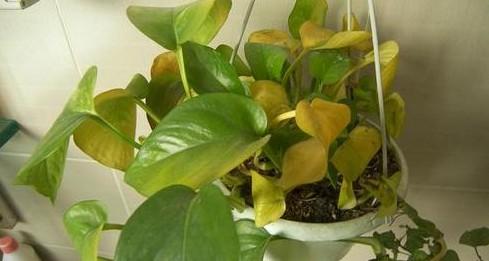
When potted flowers cannot absorb enough water, the plant's cells lose turgor pressure and the stems and leaves droop and wilt. At first, some of the potted flower's root hairs still have the ability to absorb, and if water is supplied immediately it can return to its normal state. But after a relatively long period of drying, a large number of the plant's root hairs die, which affects the plant's absorption capacity. Conifers in particular, because their form and structure can reduce water transpiration, will not immediately show signs of drying out even if a branch is cut off and left in the sun to bake. So once water-deficiency symptoms are noticed in conifers, the condition is often already very serious.
In this situation, if you immediately water the potted flower thoroughly, the plant not only cannot absorb the water, but the potting soil will also become too wet. After a potted flower is watered, the water in the pot is mainly absorbed by the root system and then lost through transpiration from the leaf surface. After the plant has lost its water-absorbing capacity, even if watered thoroughly, the potting soil will not easily dry out even under hot high temperatures. This affects the respiration of the potted flower, thereby putting the potted flower, whose physiological functions are already extremely weakened by water loss, on the road to death.
After discovering that a potted flower has gone too long without water, you must first promptly prevent further consumption of water within the plant, so that the plant maintains a certain level of life activity, thereby enabling the roots to send out new roots and root hairs. So immediately move it to a rain-sheltered shady spot. For broadleaf plants, heavy pruning should be carried out; conifers are generally not pruned. At the same time, continuously mist the leaf surface, with the amount of spray water being just enough to moisten the branches and leaves without forming droplets that fall into the potting soil.
This not only gives the potted flower a higher air-humidity environment, but also allows it to absorb a small but very important amount of water through the plant's stems and leaves, so that the potted flower gradually revives. Generally after 2 to 3 days you can water a small amount; after about two weeks, when broadleaf plants sprout new buds and the leaf color of conifers turns glossy green, it shows that the potted flower has grown root hairs with absorption capacity. Only then can you resume normal watering and care, and move it back to its original spot for growing.