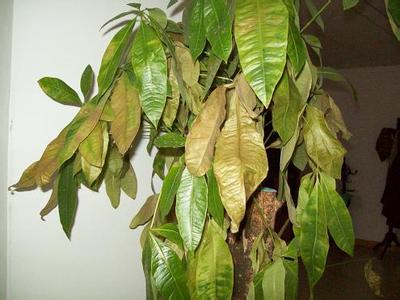
Reasons for Yellowing Leaves on Money Tree and How to Fix Them
The money tree (Pachira aquatica) is an evergreen shrub or small tree of the genus Pachira in the family Araliaceae, with an upright stem, large alternate leaves, long petioles, and palmately compound leaves with 9-12 leaflets, each 12-15 cm long and about 6 cm wide. Because of its unusual tree and leaf form and its auspicious common name, more and more people have been introducing and cultivating it in recent years. This plant is native to Australia and some islands in the Pacific Ocean, and it thrives in warm, humid, well-ventilated environments. It likes sunlight but also tolerates a little shade, and grows best in loose, fertile, well-drained soil.
Basic Money Tree Care Knowledge
Potted money trees should be repotted once every 1-2 years, done in spring when they are moved outdoors, and yellow leaves and weak, thin branches should be pruned as necessary to encourage new shoot growth. Watering should follow the principle of alternating between dry and moist; in spring and autumn, adjust watering frequency according to whether the weather is sunny or rainy and whether conditions are dry or humid. Generally, water once a day; when the temperature exceeds 35°C, water at least twice a day. During the growing season, fertilize twice a month, and for newly grown leaves, also mist with water to maintain higher ambient humidity; from June to September, provide shade and maintain 60%-70% light transmittance, or place the plant in a spot with bright, indirect light. After moving indoors in winter, the temperature should not drop below 5°C; keeping it around 10°C is better. Water once every 5-7 days, and make sure it receives fairly abundant light. In addition, during the growing season, if ventilation is poor, red spider mites and scale insects are likely to occur, so watch for them closely. If pests are found, remove them promptly by hand or spray with pesticide.
What to Do When Money Tree Leaves Turn Yellow
1. Overwatering: when the potting soil stays wet for a long time, it causes a lack of oxygen in the soil, rots some of the fibrous roots, hinders normal respiration and the absorption of water and nutrients, and causes leaves to turn yellow and drop. After damage occurs, the young leaves first turn pale yellow, and then the old leaves gradually yellow as well. Watering should be controlled immediately, fertilizing stopped, and the soil loosened frequently to improve aeration.
2. Drought and dehydration. Missing watering or watering only halfway for a long time (that is, wet on top and dry below) affects nutrient absorption and also easily causes dull, lusterless leaves that wilt and droop. First the lower old leaves age, then gradually wither, yellow and drop from bottom to top. At this point, water lightly and mist the plant, let it gradually recover, and then return to normal watering.
3. Long-term nutrient deficiency. If nitrogen fertilizer has not been applied for a long time or the pot and soil have not been changed, the soil lacks nitrogen and other nutrients, causing weak branches and leaves and thin, yellow foliage. The plant should be repotted promptly, moved into fresh loose, fertile potting soil, and gradually given dilute decomposed liquid fertilizer or compound flower fertilizer.
4. Overfertilization. Too much fertilizer causes new leaves to be thick and fleshy, often uneven and bumpy, while old leaves dry at the tips, scorch yellow and drop. Fertilizing should be stopped immediately, watering increased so the fertilizer drains out through the holes at the bottom of the pot, or the plant should be repotted immediately, the root ball rinsed with water, and then replanted in the pot.
5. Hot, high temperatures. In summer, if cool-preferring flowers (such as cyclamen, fuchsia, and wax begonia) are placed in a hot spot and exposed to direct strong sunlight, the tips and edges of young leaves very easily become scorched, or the leaves turn yellow and drop. They should be moved promptly to a well-ventilated, shady spot.
Excessive shade. If sun-loving flowers are kept for a long time in a shaded place or a spot with insufficient light, their branches and leaves will turn yellow. Soil and water tending toward alkaline. In most areas of the north, the soil and water contain more salt and alkali. When growing acid-loving flowers such as rhododendrons, camellias, banana shrubs (Michelia figo), gardenias, orchids, white magnolias (Michelia alba), and osmanthus, the leaves gradually turn yellow because the soil lacks absorbable soluble iron and other elements. When planting, choose acidic soil, and during the growing period, regularly water with alum fertilizer water.
Money trees can be watered once every ten days to half a month; they must not be overwatered. When the potting soil stays wet for a long time, it causes a lack of oxygen in the soil, rots some of the fibrous roots, hinders normal respiration and the absorption of water and nutrients, and causes leaves to turn yellow and drop. After damage occurs, the young leaves first turn pale yellow, and then the old leaves gradually yellow as well. Watering should be controlled immediately, fertilizing stopped, and the soil loosened frequently to improve aeration.