What are the reasons for yellowing leaves on a clivia (Clivia miniata)?
Clivia is a somewhat difficult flowering plant to grow: it fears severe cold yet is not cold-hardy, prefers a humid environment, is a well-known greenhouse flower, and is fairly suited to being grown indoors. If chosen as an indoor flower and the temperature is suitable, it can bloom around the Spring Festival. So what are the reasons for yellowing leaves on clivia? And how do you fix them?
Reason one for yellowing clivia leaves: temperature
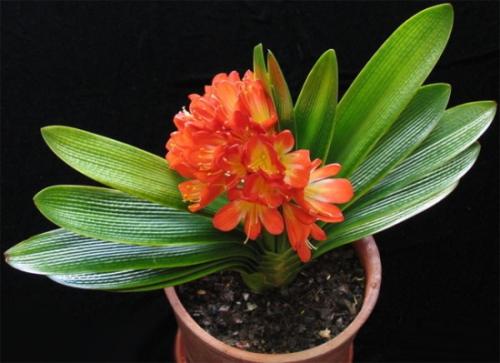
The suitable temperature for clivia growth is 15-25°C. A day-night temperature difference of 8-12°C is most suitable for clivia growth. When the temperature stays above 30°C for long periods in summer, it enters semi-dormancy. At this time, if the air humidity is below 60%, the clivia leaves will turn pale and yellow and even wilt; if the humidity is above 90%, the stems and leaves grow long. To prevent these undesirable phenomena, cooling measures should be taken, then ventilation and light transmission, and humidity should be controlled. In winter, when the temperature drops below 8°C, clivia basically stops growing. If the temperature drops below 6°C, frost damage will occur, causing the leaf tips and leaf margins to lose green and turn yellow, and even yellow-white necrotic spots to appear.
Reason two for yellowing clivia leaves: humidity
Clivia is a moisture-loving plant and has relatively high requirements for the humidity of its growing environment. Its most suitable relative humidity range is 70%-80%. In this humid environment, clivia leaves are tender green, the leaf veins are clear, and the leaves are short, wide and neat, with high ornamental value. If the potting soil is too dry for a long time and the temperature is also high, the leaves are prone to turning yellow. But long-term overwatering can easily lead to oxygen deficiency, hindering the plant's normal respiration and causing the clivia root system to rot or even die.
Reason three for yellowing clivia leaves: soil and fertilizer
Clivia prefers loose, fertile sandy soil. Soil compaction and insufficient fertilizer supply will cause the leaves to turn yellow and affect flowering. Generally, fertilizing once each in spring and autumn within a year is enough. Decayed-resistant tree leaves must be fermented before use; if not fermented, they easily rot the roots, and clivia must have its soil changed once a year. When the temperature at the clivia's care location is above 25°C, fertilizer should be appropriately reduced or stopped, so as to avoid over-fertilizing and burning the fleshy roots. If the temperature can be lowered below 20°C, fertilizing can still continue as usual.
Reason four for yellowing clivia leaves: light
Clivia is a semi-sun-loving flower and prefers relatively weak, scattered light. It is not tolerant of strong light; too strong light easily causes sunscald, with mild cases showing leaves turning from green to yellow and severe cases showing leaves dehydrating, drying up and dying. Short-day conditions in winter and spring are more conducive to flowering. Good light is an important condition for ensuring large, brightly colored clivia flowers. However, if the placement location is too dark and light is insufficient for a long time, the leaves will also lose their luster, the old leaves will be dark green, and the new leaves will become thin and yellow or yellow-green (shade yellowing). At this time, the clivia should be moved to a place with slightly stronger light or given supplementary lighting. Clivia leaves have phototropism, so they should be grown facing the light; only then can the shape be maintained as a line when viewed from the side and a fan when viewed from the front.
Reason five for yellowing clivia leaves: ventilation
While the thick fleshy roots of clivia store sufficient water, they also place higher demands on the soil they depend on for survival. Only nutrient soil with good air permeability, a loose texture and rich humus is suitable for the growth of clivia's fleshy roots. If clivia is placed too densely and the surrounding environment is closed off, both hinder air circulation and make the plant weak, thin and yellow. Therefore, indoor ventilation should be strengthened and overly dense placement should be avoided.