What to Do When Philodendron Leaves Turn Yellow, Analysis of Yellowing Leaves in Philodendron
In terms of the growth habits of Philodendron, because it likes humidity, tolerates cold, and fears strong light, the external causes include unsuitable temperature, low humidity, unsuitable lighting, excessive fertilization, too frequent watering, pests and diseases, etc. In addition to these, there are also potting soil causes.
Philodendron is a perennial evergreen herbaceous foliage plant. Its stem is extremely short, and the leaves extend from the top of the stem in all directions, densely and neatly arranged, forming a clustered shape. The plant height can reach 1 m, the stem is thick and upright, with a diameter of up to 10 cm, and the stem has obvious leaf scars and wire-like aerial roots. The leaves spread from the top of the stem in all directions, with petioles about 40-50 cm long. The leaf blade is bright and glossy, ovate-cordate in shape, up to 60 cm long and 40 cm wide, but those of ordinary potted plants are only about half that size. The entire leaf is deeply pinnatifid and leathery. The leaves of seedling-stage plants are thinner and triangular, and as growth proceeds the leaves gradually become larger, with more and deeper pinnatifid incisions.
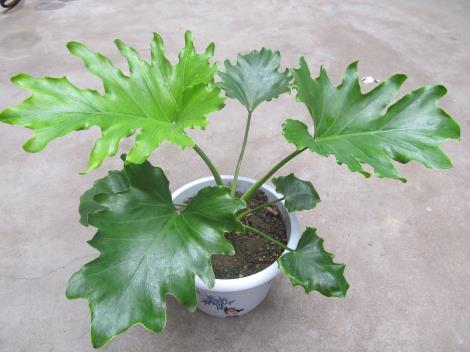
Analysis of the Causes of Yellowing Leaves in Philodendron
In terms of the growth habits of Philodendron, because it likes humidity, tolerates cold, and fears strong light, the external causes include unsuitable temperature, low humidity, unsuitable lighting, excessive fertilization, too frequent watering, pests and diseases, etc. In addition to these, there are also potting soil causes.
Potting Soil Causes and Symptoms of Yellowing Leaves in Philodendron
Nitrogen deficiency in potting soil: small leaf surface, pale yellow leaves, the lower part of the leaf turns yellow first and then the whole leaf changes from green to yellow
Phosphorus deficiency in potting soil: leaves curl, color is dark green, veins of lower leaves turn yellow.
Potassium deficiency in potting soil: the edges of lower leaves appear brown, and the plant is prone to lodging.
Magnesium deficiency in potting soil: leaf edges and centers turn white
Iron deficiency in potting soil: scorched brown spots appear and dry up
How to Deal with Yellowing Leaves in Philodendron
Water-induced yellowing: mainly caused by improper watering and fertilizing. Too much watering leads to poor soil aeration, which in turn causes root rot in the Philodendron plant. In this case, watering should be reduced, and the soil should be loosened to enhance aeration.
Fertilizer-induced yellowing: mainly caused by excessive fertilization. Old leaves turn yellow and fall off while new leaves are thick and do not spread out. In this case, you can sow a layer of cabbage or radish seeds on the plant, and pull them out after they sprout to consume the excess nutrients.
Drought-induced yellowing: due to long-term lack of watering or plant dehydration, the lower leaves dry out and turn yellow or fall off and age. In this case, watering can be appropriately increased and more water can be sprayed to meet the plant's water needs and keep the environment moist, or an appropriate agent can be sprayed to supply the plant's necessary water.
Alkaline-induced yellowing: because Philodendron likes acidic soil while the water quality and soil in the north are generally alkaline, the leaves fade, turn yellow, and fall off. In this case, fermented rice-washing water or rainwater should be used for watering.