A Complete Guide to Camellia Disease Prevention and Control Methods
Camellia disease prevention and control methods: when the outbreak is small, gently wipe the mold layer clean with clean water; when the amount is large, spray 50% carbendazim at a 500-800 times dilution for control. Promptly eliminating pests such as scale insects and aphids can reduce the occurrence of sooty mold.
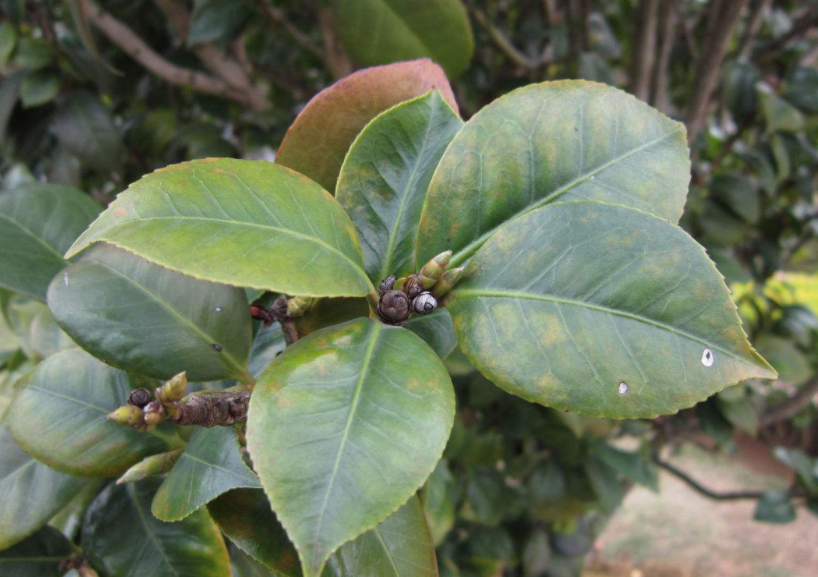
Gray leaf spot, sooty mold and root rot are relatively common on camellias.
1. Camellia gray leaf spot: this disease mainly harms leaves and young shoots. After the leaves are infected, irregular dark brown spots appear, which later form large grayish-white spots. In the late stage of the disease, some spots rupture from the leaf surface and even fall off, forming holes. After young shoots are infected, they often fall off from the base, which is why growers call it "joint drop disease."
2. Sooty mold: also known as sooty blotch and black mold disease. In the early stage of the disease, small black mold spots appear on the leaves and twigs, then gradually expand and spread over the entire leaf or twig, forming a tightly covering sooty layer on the leaf surface, which blocks photosynthesis, weakens growth vigor and affects ornamental value. Sooty mold occurs easily in environments with high temperature, high humidity and poor ventilation. Plants harmed by scale insects, aphids and other pests often develop this disease as well.
3. Root rot: camellia root rot is caused by the soil fungi Phytophthora and Cinnamon. It torments the plant until growth stops. The plant's leaves turn yellow, then become grayish-green, wither and fall off. The plant's roots change from healthy white to a reddish-brown or dark brown color. Rotten roots cannot take up water, and the plant eventually dies from dehydration. This fungus occurs in soil with poor drainage and insufficient aeration.
Camellia disease prevention and control methods:
① Place the flower pot in a well-ventilated, well-lit spot, and strictly avoid a damp, stuffy environment.
② Promptly eliminating pests such as scale insects and aphids can reduce the occurrence of sooty mold.
③ When the outbreak is small, gently wipe the mold layer clean with clean water; when the amount is large, spray 50% carbendazim at a 500-800 times dilution for control.