Common problems in osmanthus planting and care, and their solutions
The reason Four Seasons Osmanthus blooms year-round but is not fragrant is that the variety itself has a relatively faint scent. Among the common varieties of osmanthus, the most strongly scented is Jingu (Golden Osmanthus), followed by Yingui (Silver Osmanthus), then Dangui (Red Osmanthus), while Four Seasons Osmanthus has the faintest scent of all. It is rarely cultivated as an economic crop precisely because its flowering is sparse and its scent is not strong; as an ornamental potted plant, it is grown because of its beautiful tree shape and year-round flowering, making it suitable for potted display...
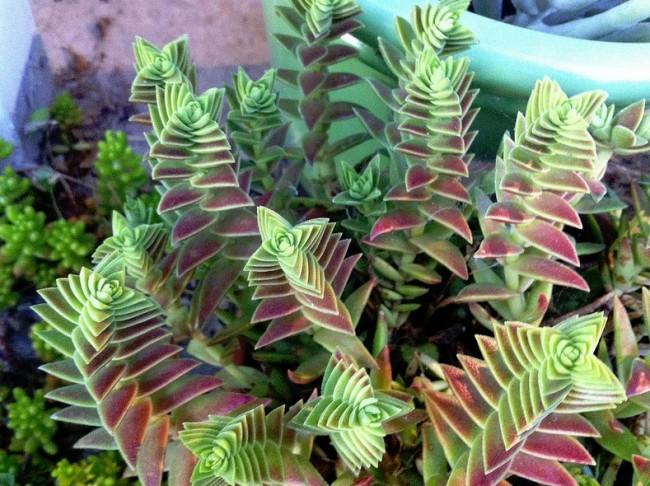
1. Why is Four Seasons Osmanthus not fragrant?
The reason Four Seasons Osmanthus blooms year-round but is not fragrant is that the variety itself has a relatively faint scent. Among the common varieties of osmanthus, the most strongly scented is Jingu (Golden Osmanthus), followed by Yingui (Silver Osmanthus), then Dangui (Red Osmanthus), while Four Seasons Osmanthus has the faintest scent of all. It is rarely cultivated as an economic crop precisely because its flowering is sparse and its scent is not strong; as an ornamental potted plant, it is grown because of its beautiful tree shape and year-round flowering, making it suitable for potted display. Four Seasons Osmanthus mostly grows in clumps, with yellowish-white flowers that are relatively sparse, a faint scent and a long flowering period. Generally, except in the severe cold of winter and the intense heat of summer, it can bloom about once every two months, with the scent slightly stronger in autumn and fainter at other times. Its varieties include Large-leaf Four Seasons Osmanthus and Small-leaf Four Seasons Osmanthus. When Yueyuegui (Monthly Osmanthus) is cultivated, a lack of light and insufficient phosphorus fertilizer make its floral scent faint. If the plant is placed in a sunny and well-ventilated environment, given a topdressing every 10 days, and appropriately given extra phosphorus fertilizer, the fragrance of the flowers can be increased to a certain extent, but it still cannot match other varieties.
2. Why does potted osmanthus not bloom?
First, insufficient light. Osmanthus loves light. During the vegetative growth period, when light intensity is below 60°C, its growth and development decline, vegetative growth worsens, and the number of flowers decreases. When light is severely insufficient, because photosynthesis weakens and nutrients accumulate poorly, it cannot bloom. Therefore, sufficient light must be provided. Second, lack of fertilizer. Osmanthus grows and blooms abundantly and needs to consume a large amount of nutrients. Poor or infertile potting soil will also affect the plant's growth and flowering. Therefore, when new shoots emerge, apply 1-2 times a nitrogen-based fertilizer, and from the flower bud differentiation stage (beginning at the end of May) to before flowering, apply 2-3 times a phosphorus-based fertilizer. Third, potting soil that is too wet. Osmanthus dislikes excessive moisture and waterlogging. Waterlogging can cause root rot, leading to poor growth and failure to bloom, and in severe cases can even cause the death of the potted plant. Watering should follow the principle of "do not water if not dry, and when watering, water thoroughly." After heavy rain and torrential rain, promptly pour out accumulated water in the pot. Pay special attention to weather that clears up after rain, and even more should avoid damaging the root system. Fourth, alkaline soil. Osmanthus prefers slightly acidic soil, with a pH of 5.5-6.5 being suitable. Osmanthus growing in alkaline soil often has poor growth, which affects flowering. Fifth, soot and dust pollution. Osmanthus is not tolerant of soot, dust and pollution. When there is too much soot and dust or after exposure to pollution, the leaves become smaller and fall off easily, and the plant may only grow leaves without blooming. Sixth, it has not reached flowering age.
3. What edible and health benefits does osmanthus have?
Osmanthus tea has the effect of refreshing the mind with a delicate fragrance. After briefly scalding osmanthus in boiling water, remove it and dry it, then preserve it with white sugar and seal it in a bottle to maintain its color and aroma; it can be used as a food flavoring. Mix osmanthus and pure lotus root starch with white sugar and brew it, and it becomes osmanthus lotus root starch, which is delicious and appetizing. Take top-grade small jujubes and cook them with sugar; when the liquid is almost gone, add osmanthus, and it becomes spleen-strengthening and appetite-promoting osmanthus candied jujubes. Traditional Chinese medicine holds that osmanthus is warm in nature and pungent in taste; taken internally as a decoction, tea, or infused liquor, it can resolve phlegm and dissipate blood stasis, and has a certain therapeutic effect on poor appetite, phlegm-fluid cough and asthma, intestinal wind and bloody dysentery, and abdominal pain due to closed menstruation. Guizhi (osmanthus twigs), guizi (osmanthus seeds), and guigen (osmanthus roots) can all be used as medicine. Guizhi Tang, prepared from guizhi, peony, ginger, jujube and licorice, is specifically used to treat externally contracted wind pathogen, fever and headache, and other conditions. Guigen is sweet in taste and slightly astringent.
4. How do you thaw frozen osmanthus?
In early winter, when osmanthus is hit by a cold wave, frost damage is very likely to occur. In affected plants, the concentration of the solution in the intercellular spaces increases, and the protoplasm becomes severely dehydrated, causing tender leaves to shrivel. In this situation, if you rush to place the affected potted plant in a high-temperature or direct-sunlight location, it will instead accelerate the death of the osmanthus. The correct method is to adopt slow thawing measures so that the cells gradually absorb water and return to normal. In this situation, you can also quickly wrap the potted flower, together with the pot, in three layers of waste newspaper with strong water absorbency. When wrapping, be careful not to damage the branches and leaves of the potted flower, and avoid direct sunlight. Leave it like this for one day so that the temperature of the potted flower gradually rises. After this treatment, the frozen potted flower can recover.
5. How do you make the osmanthus plant shape grow evenly?
First, when planting osmanthus, place the plant in the exact center of the pot. After watering thoroughly, straighten any tilted plant to lay a good foundation for future cultivation. Second, prune reasonably. When pruning, pay attention to the overall appearance of the plant, pay attention to retaining buds, and try to let the terminal buds grow toward empty spaces. Prune vigorous branches heavily, cut away useless weak branches, and retain and lightly prune those needed to fill gaps. Third, tie the potted flower moderately. If a certain direction has a relatively large gap, you can use tying to guide dense branches toward the gap. Fourth, turn the pot frequently. For osmanthus that does not need pruning, turn the pot frequently so that new branches can be induced at the gap facing the sun. Turning the pot: throughout the year, the sun always moves along its orbit, so the angle and intensity of light are constantly changing. If a flower pot is fixed in one position for a long time, one side of the plant will always fail to receive proper light, and over time a round potted plant will grow unevenly because of unequal sunlight exposure. Therefore, during the growing season, rotate the flower pot 45° every 10 days. By frequently turning the flower pot, all angles and directions of the plant will grow evenly, the side branches around the main trunk will also be neat and consistent, and the leaves can receive sunlight in a balanced way. Thus, the plant's shape and posture can be full and beautiful, achieving an ornamental effect from every angle, and allowing the branches and leaves to grow more spread out and attractive.
6. Why is osmanthus prone to dying at the turn of winter and spring?
This should be traced to management methods. In addition to providing appropriate moisture and sufficient light, it is especially important not to fertilize osmanthus in winter and to keep it in a cool, cold environment. The reason osmanthus easily dies in winter is not that the environment is not warm enough, but that the environment is not cool enough. In the osmanthus's place of origin, winter is not warm. Having adapted to this growing environment over thousands of years, when osmanthus overwinters in a warm place, at first no abnormality is visible in the plant. On the contrary, it seems to forget that winter has arrived, sprouting buds and shoots, appearing full of vitality. However, this situation cannot last long. Factors such as changes in indoor lighting and temperature cannot satisfy growth like that in summer, and old leaves begin to fall, new shoots wilt, and the plant dies. To help the osmanthus you grow overwinter safely, in winter place it in an environment of 0–5℃, give it sufficient sunshine, do not apply topdressing, and avoid overly wet potting soil. After winter passes, you will find that the osmanthus you grow has not only survived safely, but its growth vigor is even stronger than those that barely survived the winter in a high-temperature environment.