Why Osmanthus Does Not Bloom and a Detailed Guide to Its Blooming Time
When osmanthus does not bloom, it is due to insufficient nutrients. Osmanthus is a heavy feeder; some potted osmanthus are not repotted or given fresh soil for years, resulting in insufficient nutrients, with roots tightly coiled and unable to spread, which affects blooming. Osmanthus loves light and is suited to growing in acidic soil, but according to this reader's description, the growing environment of their osmanthus can be described as quite harsh. Potted osmanthus are mostly cuttings or grafted seedlings, and their blooming period is short. A cutting-grown osmanthus blooms in its fourth year; grafted Golden Osmanthus, Silver Osmanthus and Dan Osmanthus may have 1/5 of plants bloom in the second year, while Four-Season Osmanthus blooms in the same year, but in cultivation, quite a few potted osmanthus still fail to bloom when their blooming time arrives.
Analysis of the Reasons Why Osmanthus Does Not Bloom
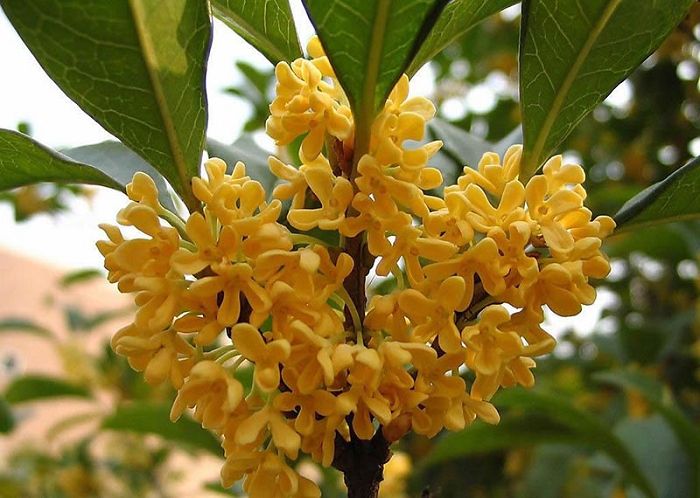
1. Being moved indoors too early, with temperatures above 10°C, means the osmanthus cannot get sufficient dormancy. This causes the osmanthus to sprout and unfurl leaves too early, consuming a large amount of nutrients, and combined with insufficient light and a weakened plant, this affects blooming. Solution: ensure low-temperature winter dormancy. The overwintering temperature for potted osmanthus is 3-5°C; above 3°C there is no need to move it indoors, and it can be kept at natural temperature; below 3°C, move it indoors. After being moved indoors, let it go dormant at low temperature, so that it can grow vigorously the following year with abundant flowers and lush foliage.
2. Being moved outdoors too early. After being moved outdoors in spring, wind and sun can dry out the leaf tips, and even if new buds grow again, it is not easy for the plant to bloom. Solution: when moving it outdoors in spring, move it outside on a cloudy day or a rainy day; never move it outdoors on a scorching day and expose it to sudden intense sun. It should be allowed to gradually adapt to the outdoor environment.
3. Insufficient nutrients. Osmanthus is a heavy feeder; some potted osmanthus are not repotted or given fresh soil for years, resulting in insufficient nutrients, with roots tightly coiled and unable to spread, which affects blooming. Solution: repot and change the soil for pots that have been in the same soil too long. Change the pot and soil once every 1-2 years; when repotting, a small amount of hoof pieces can be applied at the bottom of the pot as a base fertilizer.
4. Insufficient light. Osmanthus needs more than 10 hours of light; otherwise the leaves will not be lush, which affects flower bud formation and prevents blooming. Solution: ensure long-day conditions, with more than 10 hours of sunlight per day to meet its sunlight needs.
5. Overwatering causes root rot and leaf drop, which affects blooming. Solution: water reasonably. The water content should be kept at 30%; in hot summer, 60% water content is suitable; do not let it become too dry or too wet.
6. Too much nitrogen fertilizer causes excessive vegetative growth of branches and leaves, which affects blooming. Solution: nitrogen fertilizer should not be excessive, and it should be applied together with phosphorus and potassium fertilizers. Osmanthus needs a lot of phosphorus and potassium fertilizer; it can be fertilized by foliar feeding, spraying the leaves with 0.1%-0.2% potassium dihydrogen phosphate.
7. Pollution from smoke, dust and grease. Osmanthus is not tolerant of smoke, dust and grease; if the leaves are polluted by smoke, dust and grease for a long time, growth will be poor, and the leaves may even fall off, which affects blooming. Solution: prevent pollution. You can gently wipe the leaves with fine gauze to keep the leaf surface clean, wiping once every 15th day, to help photosynthesis and make the plant grow robustly.
8. Lack of pruning. Osmanthus has a well-developed root system and strong sprouting ability; if it is not pruned moderately, the branches and leaves will be too dense, which affects blooming. Solution: prune appropriately. Before moving it outdoors, cut off diseased and weak branches and overly dense branches, and shorten them appropriately according to the plant's shape, so as to improve ventilation and light penetration and promote blooming.
When Does Osmanthus Bloom
When it comes to the short blooming time of osmanthus, this actually depends on the variety of osmanthus, because different varieties of osmanthus have different blooming times, and the flower colors are different as well.
Golden Osmanthus blooms in September-October, and its color is golden yellow. Silver Osmanthus also blooms in September-October, but the flower color is white or yellowish white. Dan Osmanthus blooms in October, and its color is orange-red or orange-yellow. Four-Season Osmanthus generally blooms in small amounts in all four seasons, and its color is white.