What are the solutions for yellowing leaves on hibiscus?
Hibiscus tends to drop buds, which is caused by improper care leading to an imbalance in the plant's internal nutrient supply. Hibiscus is a strongly sun-loving flower that prefers plenty of sunlight. If kept in shade for a long time with insufficient light, and at the same time overwatered so the potting soil stays wet, it will cause root rot, leading to leaf drop and bud drop.
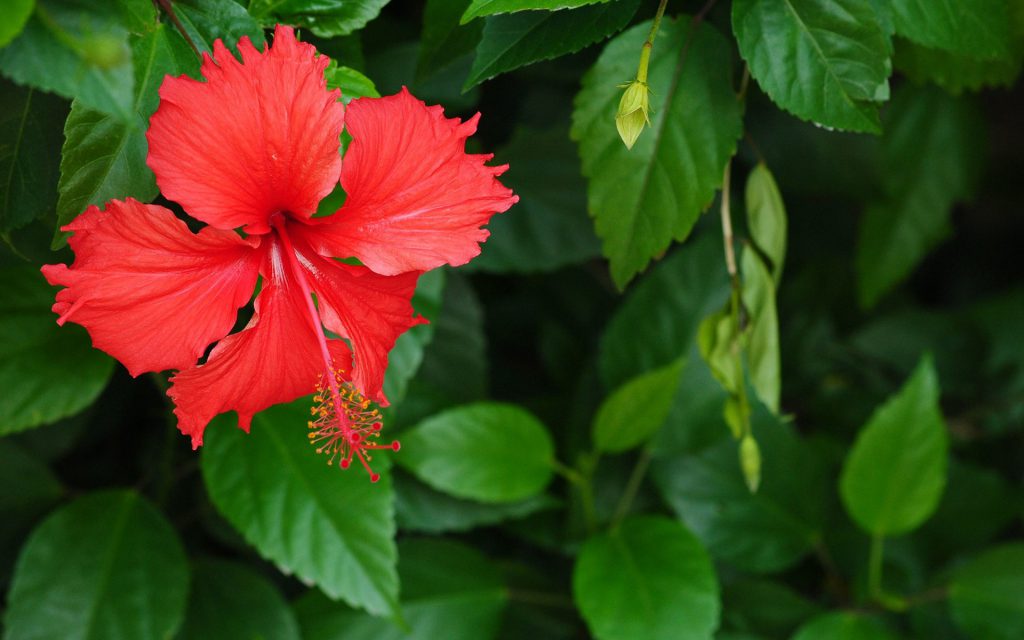
Hibiscus, hibiscus leaves
1. Yellowing leaves on hibiscus: improper watering
Both lack of water and overwatering have a negative effect on the growth of hibiscus. Hibiscus likes water but cannot tolerate waterlogging, and it fears drought. Whether waterlogged or drought-stressed, it will cause the leaves to turn yellow and even drop off. Overwatering keeps the potting soil wet, which causes root rot and leads to leaf drop and bud drop.
Solution: Therefore, watering should follow the principle of watering as soon as the surface layer of the potting soil dries, which is best for healthy plant growth. Waterlogging damage may also be caused by too much rain. So gardeners who encounter this situation can think back on their usual watering habits: if watering has been appropriate, could it be due to too much rain? If the pot is small and the plant is large, or during summer when high temperatures cause rapid evaporation, the watering frequency should also be appropriately increased.
Hibiscus, hibiscus leaves
2. Yellowing leaves on hibiscus: lack of necessary nutrients (nutrient-deficiency yellowing)
Solution: Wait until temperatures are below 30 degrees before considering topdressing hibiscus. Apply cake fertilizer liquid once a week to ensure abundant blooming.
3. Yellowing leaves on hibiscus: lack of light (light-deficiency yellowing)
Solution: Hibiscus is a strongly sun-loving plant and requires a full-sun growing environment. If kept in shade for a long time with insufficient light, it will cause yellow leaves and even leaf drop.
4. Yellowing leaves on hibiscus: pot too large
The pot used for potted hibiscus should not be too large; generally a 15 cm diameter clay pot is used, and soil is added year by year. Use sandy loam rich in organic matter, mixed with 10% decomposed cake fertilizer or dried manure. For newly planted seedlings, firm the soil and water thoroughly, first shade them for several days, and after they recover from transplanting, move them to a sunny spot for cultivation, which favors survival. At ordinary times, water moderately; too much moisture affects flowering.
5. Yellowing leaves on hibiscus: pest damage (disease yellowing)
If hibiscus suffers from pests and diseases, it can also cause leaves to turn yellow and drop, such as red spider mites, whiteflies and scale insects.
6. Solutions for pest-caused leaf yellowing
a. Red spider mites mainly damage the underside of leaves. Once discovered, rinse the whole plant with plenty of water, then spray with a miticide specifically for mites, such as Miejing or Kemite;
b. Whiteflies mainly parasitize the underside of leaves, piercing into the leaf tissue to suck its sap, causing leaves to curl, lose green color and turn yellow, and even dry up and drop. During a whitefly outbreak, spray with 25% buprofezin wettable powder at 1500 to 2000 times dilution, and depending on the pest situation spray again after 15 days, or use 10% imidacloprid wettable powder at 2000 times dilution. As long as the adults and nymphs are killed, then with increased ventilation and light exposure, repeated spraying and washing with water will wash away the honeydew and the dirty mold layer on them will soon fade. Under home growing conditions, when the adults are flying about, you can try spraying with mosquito-killing spray to knock down the adults in one go, then gently wipe away the mold layer with a damp cloth and strengthen water and fertilizer management, and the plant will quickly recover its vigor;
c. Scale insects mainly damage the stems, leaf stalks and other parts; they vary in size and color, and in shape may be round, oval, etc. For scale insects, you can brush them off with a toothbrush or wipe them clean with a cloth, or spray with a 0.2% solution of laundry detergent or essential balm for control, or spray with pesticides such as methidathion for control; all give good results.