Is Hedyotis diffusa poisonous? Detailed explanation of medicinal herb cultivation techniques
Hedyotis diffusa (scientific name: Hedyotis diffusa) is an annual sprawling herb, 15-50cm tall. Roots slender, branched, white flowers. Stems slightly square or flat-cylindrical, smooth and hairless, with many branches emerging from the base. Flowering period in spring. Seeds brownish-yellow, tiny, with 3 angular edges.
Its medicinal taste is bitter and mild, with a cold nature. Its main effects are clearing heat and detoxifying, relieving pain and dissipating nodules, and promoting diuresis to remove dampness. It is especially good at treating various types of inflammation. In clinical practice, it has been found that Hedyotis diffusa, when properly combined with other herbs, can treat a variety of diseases. Other names: snake tongue grass, snake tongue huang, snake needle grass, snake steward, two-leaf bedstraw, white-flowered cross grass, sharp knife grass, armor fierce grass, dragon tongue grass, snake tongue grass, crane tongue grass.
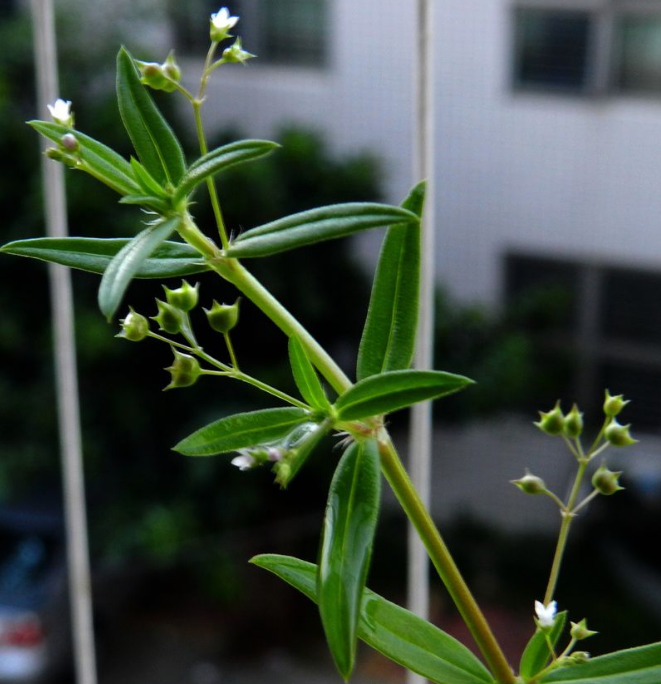
Hedyotis diffusa is not toxic, but Hedyotis diffusa is a medicinal herb, and as the saying goes, every medicine has some toxicity, so it is best not to take too much on your own. Hedyotis diffusa is on the cool side, and long-term use will damage the body's yang energy. Women should pay even more attention and should not drink it before and after their menstrual period. Those with menstrual pain should also best avoid drinking this tea. Also, Hedyotis diffusa has a certain effect on treating high blood pressure, so people with low blood pressure should be careful not to drink too much, otherwise it will only make things worse. Also, people who usually have kidney deficiency should best avoid it, otherwise it will only make the condition more serious.
Hedyotis diffusa usually grows in areas at an altitude of 800 m, mostly growing on mountain rocks, and is commonly seen in paddy fields, field ridges and moist open ground. Today we will briefly introduce the cultivation techniques of Hedyotis diffusa.
Land selection and soil preparation:
For Hedyotis diffusa, choose low-lying loam soil with sufficient sunlight, convenient irrigation and drainage, and a loose and fertile texture. Apply 500 kg of various decomposed farmyard manure per mu as base fertilizer, or 50 kg of compound fertilizer and 50 kg of phosphate fertilizer. Spread the base fertilizer evenly into the soil, plow shallowly and harrow finely, open furrows and make beds. The bed width is 1 m, the furrow depth is 25 cm, and the bed surface is shaped like a turtle shell to facilitate irrigation and drainage.
Sowing:
The sowing time of Hedyotis diffusa can be divided into spring sowing and autumn sowing. Spring sowing is for commercial products, while autumn sowing can be used both for commercial products and for seed retention. In the rice-growing areas of the south, spring sowing is best from late March to early May. After the spring sowing harvest, it can be continuously sown in the same place, or the roots can be left to sprout for cultivation. Autumn sowing is carried out in mid-to-late August. One mu of land requires 1 kg of seeds.
Because the seeds of Hedyotis diffusa are tiny and contained in the fruit, seed treatment should be carried out before sowing to improve the emergence rate. The specific method is to place the fruits of Hedyotis diffusa on a cement floor and gently rub them with a wooden stick wrapped in rubber or cloth to remove the fruit skin and the waxy layer outside the seeds, then mix the tiny seeds with several times their volume of fine soil to facilitate even sowing.
Sowing of Hedyotis diffusa is divided into drilling and broadcasting. The row spacing for drilling is 30 cm; for broadcasting, evenly sow the seeds mixed with fine soil on the bed surface, press lightly or pat gently with a bamboo broom, then cover thinly with rice straw after sowing. Shade during the day and uncover at night until 4 leaves have grown after emergence, or after sowing cover the bed surface thinly with pig pen manure while leaving some space.
This both shades and keeps the soil loose, which is beneficial for emergence. Spray water once in the morning and evening to keep the bed surface moist, but do not let water accumulate. For autumn sowing, the bed surface should be covered with rice straw to prevent strong sunlight from affecting emergence. When the seedlings grow 4 leaves, remove the covering straw. In autumn, if roots are left for propagation, no shading is needed. The furrows should be filled with water, with the bed surface kept moist without water accumulation as the ideal.
Field management:
After the seedlings emerge, combine loosening the soil and weeding, and carry out thinning. When the seedlings are 8-10 cm tall, set the plants at a spacing of about 10 cm. Before the plants have closed the rows, frequently remove weeds and apply 1 topdressing of dilute human and livestock manure water. After the plants grow and close the rows, no more weeding is needed to avoid injuring the plants with the hoe.
After sowing, keep the soil moist, but avoid water accumulation on the bed surface. After rain, drain accumulated water in time. During high temperatures, irrigate in the furrows to cool down and prevent plant scorching. During the plant growth period, water management is key: both drought prevention and waterlogging prevention are needed. Irrigation can be stopped during the fruiting period.
Hedyotis diffusa has a relatively short growth period, so heavy base fertilizer is needed, mainly farmyard manure. Practice has shown that human and livestock manure can both loosen the soil and promote plant growth. Therefore, when the seedlings are about 10 cm tall, use 500 kg of human and livestock manure per mu, add 5 times water, and splash-apply. In the middle stage, according to plant growth, human and livestock manure water can be applied as topdressing from time to time.
Because the seedlings of Hedyotis diffusa are tender, the concentration must be controlled during topdressing to prevent burning. In addition, if harvesting twice, after the first harvest, apply 15 kg of diluted human and livestock manure or urea per mu as a second topdressing. When the seedlings are about 10 cm tall, apply an appropriate amount of human and livestock manure water again. If growth is poor when the plants are just flowering, apply an additional 1 round of manure fertilizer.
According to the sowing time, Hedyotis diffusa can be harvested 2 times a year. The harvest period for spring sowing is mid-to-late August, and the harvest period for autumn sowing is early-to-mid November. When the fruits are ripe, cut the aboveground parts level with the ground, remove impurities and soil, and sun-dry to obtain the commercial product. Generally, 1 mu of land can yield 300-350 kg of dried Hedyotis diffusa.