Care Methods and Flowering Habits of Agave titanota
Agave titanota, of the family Agavaceae and genus Agave, is a perennial succulent plant. The plant has no stem, with a spread of 20-30 cm. The fleshy leaves are arranged in a rosette; the upper half of the leaf is narrowly elliptical with a pointed tip bearing sharp dark brown thick spines, and the upper half of the leaf margin has a dark brown cuticle. The leaf color is blue-green, covered with a white powder, and the surface of new leaves retains the "squeeze" marks of the hard spines of old leaves. The leaf margin has wavy teeth, and the tip of each tooth bears a sharp spine. The spine at the leaf tip is long and thick; new spines are yellowish-brown, while old spines are white-brown. Under strong light the leaves become thick and short, while under weak light the leaves tend to stretch. Although it does not easily become leggy, once it does it is hard to bring back. It has never been seen flowering.
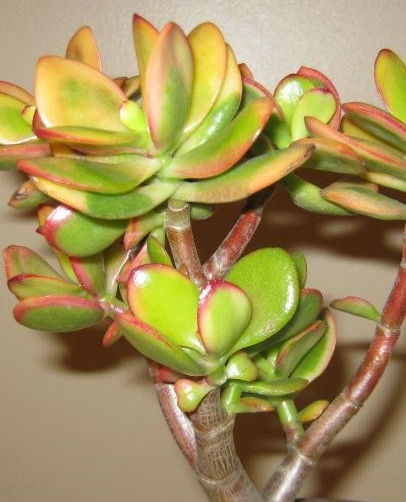
Agave titanota needs sufficient sunlight for the leaf color to be vivid and the plant shape to be more compact and attractive. Agave titanota is a medium-sized plant; depending on its growth, repot roughly every 2-3 years, and the pot diameter can be 1-2 cun larger than the plant diameter, which promotes growth. The medium must be dry before watering, and a slow-release fertilizer can be applied once per quarter. Propagation is by offsets or beheading, and can be done year-round.
Although the editor grows it in a sunroom, once the temperature rises above 35°C it is moved to bright indirect light and gradually given less water. Throughout the high-temperature period of summer, little or no water is given; by mid-September, when the temperature drops, watering is resumed. Agave titanota that has adapted to outdoor conditions can still grow normally in summer, and its dormancy is not very obvious. In winter, if the temperature can be kept above 0°C, water can be given; below 0°C, watering must be stopped, otherwise it is prone to frost damage.
Although winter is cold, it is not that no water at all is given for the whole winter; a little water is also given at the base of the plant at appropriate times. Never mist or give a lot of water, as water lingering in the leaf center for too long can easily cause rot. After the temperature rises in spring, normal watering can gradually be resumed. Agave titanota is a very easy plant to grow; apart from paying attention to appropriate shading in summer, it can be given full sun in the other seasons. For the soil, the editor uses peat mixed with granular cinders, river sand, etc., with the mix mainly being breathable.