How to Grow Chinese Evergreen? Detailed Guide to Cultivation Methods and Precautions
Chinese evergreen (Rohdea japonica) is often planted together with pine and Japanese lucky grass, expressing the meaning of auspiciousness and everlasting greenery. The people of our country are especially fond of Chinese evergreen, which carries the meaning of “good fortune and prosperity.” In traditional Chinese decorations, patterns combining Chinese evergreen and the glossy ganoderma herb often appear, symbolizing that everything goes smoothly and according to one's wishes, that is, may all things go as one desires. So how do you grow Chinese evergreen? What are the cultivation techniques and precautions for Chinese evergreen?
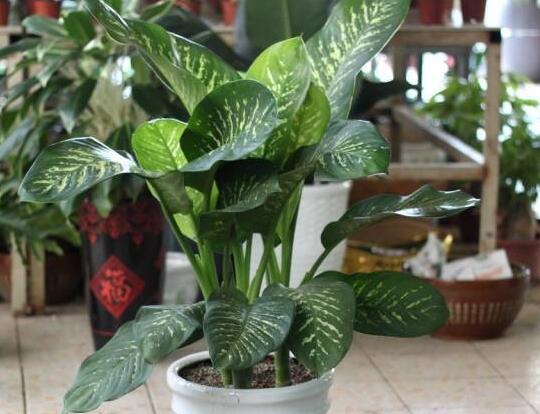
I. Cultivation Techniques for Chinese Evergreen
1. Soil Selection for Growing Chinese Evergreen
The growing medium for Chinese evergreen can be made by mixing 2 parts humus soil, 2 parts forest leaf mold, 2 parts sandy vegetable garden soil, 2 parts furnace cinder ash, and 2 parts decomposed manure. These five media are best prepared in advance, spread out under strong sunlight in summer for exposure, and finally finely sifted before being put into pots for later use. When planting, a layer of base fertilizer should also be placed at the bottom of the pot, such as fermented and fully decomposed dry poultry manure mixed with a small amount of growing soil.
2. Fertilization Methods for Growing Chinese Evergreen
Chinese evergreen has thick, fleshy leaves and stays green all year round, requiring a large amount of fertilizer. During the growing season, an organic liquid fertilizer made by fermenting rapeseed cake, meat bones and the like must be applied once every half month. After the plants are brought outdoors in spring each year and resume normal growth, it can be applied at a ratio of 1:6 or 1:8 once every 7—10 days. Before flower bud differentiation, appropriately add 0.5% ammonium sulfate or superphosphate to the top dressing, which is beneficial for bud formation and flowering. Stop fertilizing before flowering. After fruit set, a large amount of nutrients is needed, so apply thin fertilizer frequently to make the fruit brightly colored and plump.
3. Watering Methods for Growing Chinese Evergreen
Chinese evergreen is a herbaceous flowering plant with fleshy roots. It likes moisture but fears water accumulation in the pot, so it should not be watered too much, otherwise the roots are prone to rot. In spring, watering should keep the potting soil moist, generally once every 2—3 days. In summer, depending on its growth, generally water once every evening, and sprinkler irrigation is preferable, as this makes the soil looser and easier for the roots to absorb. In autumn, water about once every 3 days, and the soil must be kept moist to promote the growth and development of the fruit.
No matter where Chinese evergreen is grown, it is best to place a water tray under the flower pot so that water is continuously drawn into the soil through the drainage hole, keeping the potting soil moist at all times. However, watering should be controlled in winter; when overwintering in a greenhouse, water once every 10 days. The lower the room temperature, the less watering needed, otherwise the roots will rot and the leaves will turn yellow in winter as well. At this time, keep the air moist and frequently rinse the leaves with warm water (25—30°C) to keep the leaves fresh, delicate, and emerald green.
4. Temperature Requirements for Growing Chinese Evergreen
Chinese evergreen has strong adaptability and is suitable for growing in both northern and southern regions. Its most suitable growth temperature is 20—30°C, and it can overwinter safely in winter as long as the temperature stays above 7°C.
5. Light Requirements for Growing Chinese Evergreen
Chinese evergreen has a strong tolerance for shade and prefers to grow in a moist, semi-shaded environment or under diffuse light. If grown on a large scale in the open field, a shade shed should be built in summer. For ordinary household ornamental cultivation, it can be placed under tall sun-loving woody flowering plants to avoid direct strong sunlight.
II. Precautions for Growing Chinese Evergreen
(1) Chinese evergreen is a flowering plant that likes warmth and moisture, tolerates shade, and fears cold. When placed outdoors for cultivation in summer, a shade shed is needed. Under strong sunlight, the leaves easily turn greenish-white, and the leaf edges easily scorch. The most suitable temperature for Chinese evergreen growth is 20—30°C. In winter, the indoor temperature is best kept between 12—15°C, and must not drop below 7°C. Below 7°C, the leaves wilt and yellow and fall off, and in severe cases the whole plant dies.
(2) During the growing season, Chinese evergreen prefers moisture over dryness. When the temperature is above 25°C, frequently spray water on the leaves; after autumn, control watering, and it is best to water only when the soil has dried somewhat; in winter, keep it appropriately dry.
(3) Chinese evergreen has a strong tolerance for fertilizer, but fertilization should be moderate. During the growing season, apply 20% rapeseed cake fertilizer water or 1% compound fertilizer solution once every 15-20 days; stop fertilizing in winter. Provide shade at noon in spring and autumn and throughout summer; when grown indoors, place it in a bright spot. But in winter, ensure sufficient light.
6. Propagation Methods for Growing Chinese Evergreen
Chinese evergreen can be propagated by division and by sowing seeds.
(1) Division propagation: Chinese evergreen grows luxuriantly with a well-developed root system and consumes a large amount of nutrients every year. Therefore, the pot and soil should be changed every year, in February—March. Chinese evergreen has strong sprouting ability, and tiller buds easily form at the base; these newly sprouted tiller buds can be used for division propagation. Division can be done together with repotting and soil changing. Take the clustered mother plant out of the flower pot with the soil ball, shake off the attached soil, and cut it apart along its natural gaps, with 2—3 plants per cluster. After cutting, smear the cut surfaces with plant ash, then plant them separately in Yixing purple clay pots of appropriate size. Chinese evergreen has strong regeneration ability and grows quickly after division, and can be divided again after 3—4 years.
(2) Seed propagation: The seeds of Chinese evergreen generally mature in December. In the Yangtze River basin and areas to its north, households do not have heating equipment, so the seeds cannot be sown immediately after harvesting. The seeds can be stored until March—April of the following year, when the average temperature is around 22°C, for sowing. The seedbed can be replaced by an earthenware flower pot depending on the number of seeds. The medium should be half forest leaf mold and half fine river sand, thoroughly mixed, sterilized with high temperature, and then put into the pot. When sowing, level and press the medium, then evenly sow the seeds in the seedbed, and water thoroughly by the immersion method. Cover the rim of the pot with glass, then place the seedbed in a warm, ventilated place.
Post-sowing management mainly involves keeping the medium moist. After about 15—20 days, the seeds begin to germinate. At this point, remove the glass, increase ventilation, and provide weak sunlight. When the seedlings grow to 3—5 cm, they can be divided and potted at 3—4 plants per pot. In autumn, use growing soil and base fertilizer to plant them permanently in Yixing purple clay pots. Newly potted Chinese evergreen needs careful maintenance; generally, after more than two years of cultivation and management, it can bloom and set fruit and be placed indoors for viewing.
7. Pruning Chinese Evergreen to Promote Fruit Set
Although Chinese evergreen is a herbaceous plant, it should also be pruned and shaped in time, around the Beginning of Summer. When pruning, place the potted plant on a workbench and examine it from front to back. For those leaves that are aged, insect-damaged, or split, resolutely cut them off. This is because these leaves are neither attractive nor able to receive light to produce nutrients. As the saying goes, “On the eighth day of the fourth month, the Chinese evergreen gets a haircut,” meaning that in spring, Chinese evergreen should have its aged leaves cut off to concentrate nutrients and encourage the plant to sprout new shoots and differentiate flower buds. Pruning during cultivation is an important task in cultivation and management; otherwise the plant will not grow well and will find it hard to bloom.
Chinese evergreens grown in the open field can mostly bloom and set fruit. But those grown in pots placed on balconies and windowsills seldom set fruit. What is the reason for this? This is caused by potted plants having no opportunity to transfer pollen. During the flowering period, Chinese evergreen must not be exposed to rain; it should be placed under a shade shed, the soil must by no means be too wet or too dry, ventilation should be good, and the air should be fresh and moist, creating good ecological conditions for the plant to pollinate.