How to grow Phalaenopsis orchids well? These care tips you need to master
Phalaenopsis orchids are highly favored by flower lovers because their blooms look like dancing butterflies. They have more than 70 varieties and are widely grown indoors and in gardens. So how do you grow Phalaenopsis orchids? What should you pay attention to?
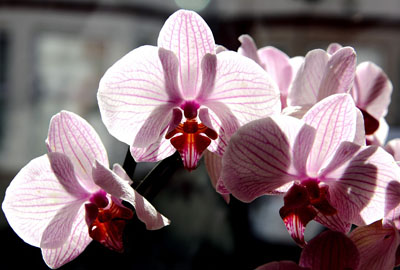
Phalaenopsis orchids are mainly native to the humid regions of Asia, and are distributed in Myanmar, the Malay Peninsula, the South China Sea Islands and other areas. Among them, the most famous are the Phalaenopsis orchids produced in Wusenyong and Green Island in Taitung. The native varieties of Phalaenopsis orchids are not very brightly colored; most of the brightly colored Phalaenopsis orchids we see today are the result of artificial hybridization and selection.
Phalaenopsis orchids have spike-like inflorescences that grow laterally from the base of the stem. The flower stalk is green, and the flowers are fragrant with many colors, and can bloom for more than a month. Most Phalaenopsis orchids have no fragrance; there are very few fragrant Phalaenopsis varieties, and their fragrance is rather unusual, so not everyone can accept it. Some people feel nauseous and dizzy after smelling the scent.
How to grow Phalaenopsis orchids
The first step in growing Phalaenopsis orchids is choosing the soil. The growing medium for Phalaenopsis orchids needs to be a bit loose, because they are not tolerant of waterlogging and need good ventilation around the roots and stem.
Next is understanding their growth habits. Phalaenopsis orchids like high-temperature, humid environments, and growing them requires maintaining good ventilation. The growing location is best in a semi-shaded environment, as they avoid direct sunlight. Phalaenopsis orchids are not tolerant of waterlogging, so when growing them, be careful not to water frequently. The optimal growth temperature for Phalaenopsis orchids is 22 to 28 °C, and the overwintering temperature should not be lower than 15 °C.
Finally, there is daily care. Watering Phalaenopsis orchids is rather complicated. Usually, pay attention to keeping enough moisture. The leaves of Phalaenopsis orchids have poor water storage capacity, but the plant itself is not tolerant of waterlogging, so usually water frequently and use an appropriate amount of water. Never pour a large amount of water at once just to save effort. When Phalaenopsis orchids are vigorously growing new roots, they need more water; during the dormant period after flowering, water less.
Notes on growing Phalaenopsis orchids
1. Temperature
Phalaenopsis orchids like high-temperature, high-humidity environments. During the growing period, the minimum temperature should be kept above 15 °C. After the Spring Festival, appropriately lowering the temperature can extend the flowering period, but note that the growing temperature must not be lower than 13 °C.
2. Water
In spring and autumn, you can water after 5 p.m. every day. Summer is the vigorous growth season, so you can water once each day before the sun comes up and after the sun goes down. Note that the principle of watering is to water when dry and stop when wet, and water thoroughly when you do. In dry areas, you can use misting to keep the leaves moist.
3. Light
Phalaenopsis orchids do not need much light, and strong direct light must be avoided. If you want to place them on a balcony to grow, you can first block part of the light. Two to three hours of light per day is enough.