What are the causes and solutions for yellowing geranium leaves?
A kind of flower can be seen on the windowsills of many homes, and that is the geranium, especially abroad, where it can decorate streets and embellish daily life. Today geraniums are becoming more and more popular in homes, but problems come up frequently, with yellow leaves always appearing. What should be done?
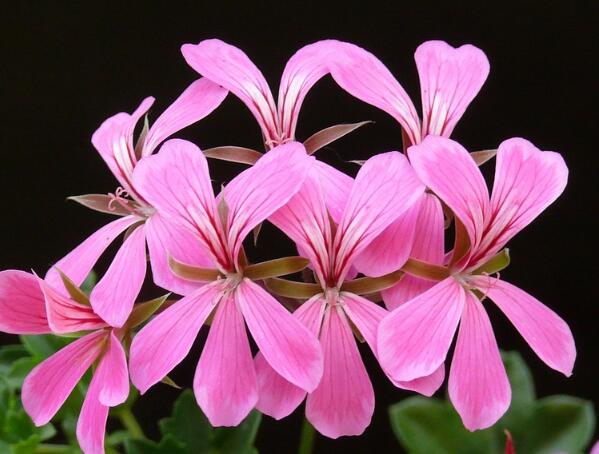
Analysis of the causes of yellowing geranium leaves and how to deal with them:
1. Sudden environmental changes cause geranium leaves to turn yellow: yellowing of old leaves caused by a change of environment. Many flower lovers, before the arrival of high summer temperatures, move their geraniums from outdoor flower stands indoors, or from a south-facing balcony to a north-facing balcony, or from full-sun outdoors to a corridor, or put up shade netting for the plants, and so on. A sudden major change in the growing environment will cause the old leaves of geraniums to turn yellow and the flower buds to dry up.
Solution: There is no need to worry too much. The geranium has a process of adapting to the new environment. You only need to pinch off the yellowing large leaves and the dried-up flower buds, and manage everything else as normal.
2. Overwatering causes geranium leaves to turn yellow (water yellowing): because watering is too frequent and too much, the potting soil stays wet for a long time, and combined with relatively high temperatures, part of the geranium's root system rots. On the leaves this shows as old leaves with no obvious change while young leaves turn pale yellow. In severe cases the old leaves also turn yellow and fall off.
Solution: This requires immediately controlling water, loosening the potting soil and placing it in a ventilated, dry place to speed up water evaporation. Or place the flower pot on a stack of newspapers or dry peat, so that the newspapers and peat absorb the excess water in the pot as quickly as possible. In especially severe cases, the whole soil ball can be taken out of the pot and placed in dry peat or a soil pile so the water seeps out quickly, and once the drooping branches and leaves recover, replant it in the pot.
3. Long-term lack of water causes geranium leaves to turn yellow (drought yellowing): some flower lovers may misunderstand the matter of properly controlling water for geraniums in summer, so they let the potting soil dry out completely and wait a long time before watering, causing geranium leaves to turn yellow and fall off from the bottom up, and in severe cases the leaf stalks droop and appear wilted.
Solution: In this case you need to adjust the watering method and water the geranium using the principle of alternating dry and wet.
4. Scorching sun causes geranium leaves to turn yellow (sunburn yellowing): here write the yellowing symptoms.
Geraniums prefer a warm and humid environment. Being exposed to the scorching sun will cause the leaves to turn yellow and, in severe cases, to wither and die.
Solution: In summer it is best to put it in a shady place.
5. Dry air causes geranium leaves to turn yellow: dry air and lack of ventilation will cause branches and leaves to wither and yellow.
Solution: Move it to a ventilated place.
6. Insufficient sunlight causes geranium leaves to turn yellow (light-deficiency yellowing): leaves on the inner side of the plant turn yellow and fall off due to insufficient light; after new branches and leaves sprout, the old leaves wither and yellow; edema disease and leaf yellowing caused by excessive watering, as well as major changes in the potted flower's environment (such as suddenly moving it from outdoors to indoors in midsummer, or just bringing it indoors in winter), and so on.
Solution: Because yellowing leaves also hope to recover their vitality as soon as possible, they absorb the nutrients the plant itself has accumulated, and the nutrients they consume are greater than the nutrients they produce. So we do not need to worry too much; simply remove the yellow leaves promptly.
7. Excessively high temperatures cause geranium leaves to turn yellow: this is because summer temperatures are too high, which affects the root system's normal absorption of iron from the soil, causing newly grown leaves to develop high-temperature, iron-deficiency yellow leaves and white leaves. When iron deficiency is mild, the mesophyll tissue of young leaves is pale green while the veins remain green; in severe cases all the young leaves become yellow-white and develop dead spots, gradually scorching and falling off.
Solution: In this case there is no need to worry too much either. You can spray and water with chelated iron solution. Once a week, and after 3 times it can basically return to normal. In addition, lower the ambient temperature, such as by moving it to a ventilated, shady place or an air-conditioned room, and the leaves will slowly return to normal.
8. Excessively low temperatures cause geranium leaves to turn yellow: geraniums like warm winters and cool summers. In winter, keeping the indoor temperature at 10-15°C during the day and above 8°C at night allows them to bloom normally. But the optimum temperature is 15-20°C. If the temperature is too low, the leaves will turn yellow.
Solution: In winter it is best to keep it indoors and maintain the optimum temperature.
9. Overfertilizing geraniums causes leaves to turn yellow (fertilizer yellowing): applying fertilizer too frequently or at too high a concentration will cause root burn and root rot. On the leaves this shows as old leaves turning yellow, while young leaves are thick, glossy and uneven.
Solution: At this point you need to stop fertilizing, do shallow cultivation and water. If the fertilizer damage is severe, immediately repot, remove part of the old soil, rinse the soil ball with water, replace it with plain soil containing no fertilizer, and let it re-root.
10. Long-term lack of fertilizer causes geranium leaves to turn yellow (nutrient-deficiency yellowing): geraniums bloom diligently, and blooming consumes a large amount of nutrients. Spring is the peak blooming season for geraniums; they bloom with all their might, bringing flower lovers much joy and delight. If we do not apply appropriate additional fertilizer in time, yellow leaves will appear after blooming.
Solution: In this case, start with a weak concentration and gradually increase the fertilization concentration for the additional feeding, to prevent a single excessive application from burning the seedlings, until the leaf color returns to normal and then follow routine fertilization.
11. Root rot causes geranium leaves to turn yellow: overwatering causes the geranium's roots to rot.
Solution: Remove the rotten roots, sprinkle carbendazim on the roots, plant in new soil, and 3 hours after planting water with carbendazim diluted in water, and spray the leaves with carbendazim.
12. Pests and diseases cause geranium leaves to turn yellow: if geraniums are infected by pathogens such as fungi and viruses, they will develop various leaf spot diseases and gray mold, causing localized tissue necrosis in the leaves, appearing as chlorotic yellow spots or yellow-green mottled patches, or the whole leaf turning yellow and falling off. When harmed by pests such as red spider mites and whiteflies, chlorophyll is destroyed, and the leaves also develop small yellow-white spots, or the leaf color turns yellow and the leaves fall off.
Solution: In this case you need to spray promptly according to the cause of the pests or diseases to control them.
How to grow geraniums:
1. Soil: Geraniums are also highly adaptable and can grow in all kinds of soil, but they grow best in sandy loam rich in humus.
2. Watering: Geraniums like dryness and dislike dampness. In winter they should not be watered too much; water only when the soil is dry. When the soil is wet, the stems are soft and tender, which is unfavorable for the sprouting and opening of flower branches. Long-term excessive moisture will cause the plant to grow leggy, the flower branches to shift upward, and the leaves to gradually turn yellow and fall off.
3. Sunlight: Geraniums need plenty of sunlight during the growing period, so in winter they must be placed in a sunny spot. With insufficient light, the stems and leaves grow leggy, the flower stalks become thin and soft, and the inflorescences develop poorly. Flower buds under weak light often fail to open well and wither early.
4. Temperature: Geraniums like warm winters and cool summers. In winter, keeping the indoor temperature at I0—15°C during the day and above 8°C at night allows them to bloom normally. But the optimum temperature is 15-20°C.
5. Fertilizing: Geraniums do not like heavy fertilizer; too much fertilizer will make geraniums grow excessively and be unfavorable for blooming. To make blooming abundant, water once with dilute fertilizer solution (decomposed soybean cake water) every 1—2 weeks; watering with 800 times diluted monopotassium phosphate solution every 7-10 days can promote normal blooming.
6. Pests: When geraniums have poor ventilation and are too damp, they are prone to leaf spot disease and flower wilt disease. Once found, pay attention to ventilation, immediately remove the diseased flowers and leaves to prevent infection, and spray equal-amount Bordeaux mixture for control. The main pests are red spider mites and whiteflies, which harm the leaves and flower branches; they can be killed by spraying with 40% omethoate emulsifiable concentrate at 1000 times dilution.
7. Pruning: Pruning branches and pinching out growing tips. To encourage geraniums with more branches to bloom more, the plant should be pinched multiple times to promote more branching and flower bud formation. After the flowers fade, promptly cut off the spent flowers and remove overly dense and weak branches so as not to consume too many nutrients, but in winter when it is cold, heavy pruning is not advisable.
Winter care for geraniums
Temperature control and light maintenance. Geraniums like warmth and fear cold. In winter, cold protection measures should be taken, and the indoor temperature should be kept at 15°C-20°C, not lower than 10°C at night. In an environment with too low a temperature, the plant grows weakly, which is unfavorable for flower bud differentiation, resulting in fewer flowers or even no flowers. But an environment above 25°C is also unfavorable for its growth and development. Normally, place the potted plant by a sunny window so it receives sufficient light. If light is insufficient, the plant tends to grow wildly, affecting flower bud formation and even causing already-formed flower buds to wither.
Moderate water and fertilizer. Geraniums fear dampness and tolerate drought. Daily watering should be moderate, generally once every 5-7 days, keeping the potting soil on the dry side and only slightly moist. Too much watering will cause leaves to turn yellow and fall off, affecting blooming and even causing root rot and death. Normally, frequently spray the leaf surface with clean water to keep the leaves clean, which is beneficial for photosynthesis. To make geraniums bloom continuously after the beginning of winter, sufficient nutrients need to be supplied. Apply dilute liquid fertilizer about once every 10 days, which can be made by mixing soybean cake, hoof pieces and fishy water, and used with added water after fermentation.
Pruning branches and pinching out growing tips. To encourage geraniums with more branches to bloom more, the plant should be pinched multiple times to promote more branching and flower bud formation. After the flowers fade, promptly cut off the spent flowers and remove overly dense and weak branches so as not to consume too many nutrients, but in winter when it is cold, heavy pruning is not advisable.
Control of the main diseases of geraniums:
1. Leaf spot disease. In the early stage, needle-tip-sized, round or irregular brown spots appear on the leaves, which later gradually expand into dark brown or reddish-brown lesions. In severe cases the entire leaf is covered with lesions until it dries up and falls off. The stem and branches also turn black, shrink and rot, and even the leaves on the stem wither and die, leaving only a few leaves at the top.
Preventive measures:
a. When growing in a greenhouse, the density should not be too high, and attention should be paid to frequent ventilation and light transmission.
b. When watering, avoid pouring water on the plant and avoid splashing water droplets.
c. Avoid taking cuttings from diseased plants. If diseased leaves and branches are found, promptly cut them off and burn them.
d. During periods of high temperature and humidity, spray 200 times diluted equal-amount Bordeaux mixture once every 2 weeks, 3 times in succession.
2. Gray mold. This disease is mainly caused by overwatering, and it is even more severe when encountered during cold, damp weather. It first harms the flowers, causing the edges of the petals to darken and wither. When air humidity is too high, a gray mold layer appears, the small flowers twist together, and the affected petals falling onto the leaves also cause the leaves to develop the disease. Water-soaked brown lesions appear on the leaf surface, and after drying and shrinking they are covered with a light gray mold layer.
Control measures: a. Promptly remove diseased leaves and flowers. When watering, avoid getting water on the plant, promptly remove moisture from the leaves and flowers, and always pay attention to ventilation and light transmission.
b. In the early stage of the disease, promptly spray with 75% chlorothalonil at 500 times dilution, 3 times in succession.