What to Do When Philodendron Leaves Turn Yellow? Causes and Solutions
Philodendron (Philodendron bipinnatifidum) is an excellent foliage houseplant. Because its leaf shape is unusual and closely resembles that of Monstera deliciosa, people often confuse the two. It is native to tropical regions such as South America and prefers a warm, humid environment. It is highly adaptable and is now widely cultivated. In dry climates ** it has a certain tolerance for both high and low temperatures, but it is not cold-hardy. Gardeners often cause Philodendron leaves to turn yellow through improper care, so what should be done? Let's go through it one by one below.
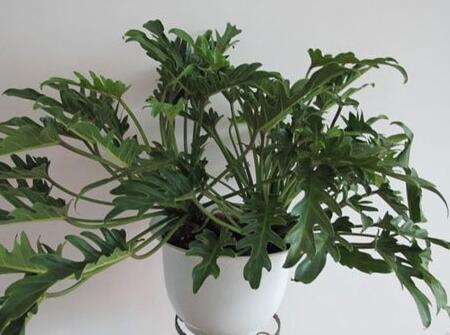
What to Do When Philodendron Leaves Turn Yellow
The main cause of Philodendron leaves turning yellow, drying up and curling is a lack of five nutrients in the potting soil, namely: nitrogen deficiency, phosphorus deficiency, potassium deficiency, magnesium deficiency and iron deficiency. In addition, there are other causes, such as yellowing caused by water and fertilizer, that is, watering too much leads to long-term waterlogging of the soil, poor aeration and even rotting of some fibrous roots. This shows up as the young leaves of Philodendron turning dull yellow and lusterless, with new shoots shrinking. Let's look at the specific cause analysis below:
I. Lack of Necessary Elements
1. Nitrogen deficiency in the potting soil: Philodendron leaves are small, the leaf color is pale yellow, the lower leaves turn yellow first, gradually the whole plant loses its green color, and the lower part becomes even more pale yellow;
2. Phosphorus deficiency in the potting soil: Philodendron leaves curl, the leaf color is dark green, and the areas between the veins of the lower leaves turn yellow;
3. Potassium deficiency in the potting soil: the edges of the lower leaves turn brown and the plant easily lodges;
4. Magnesium deficiency in the potting soil: the edges and centers of the leaves lose their green color and turn white from bottom to top;
5. Iron deficiency in the potting soil: scorched brown spots appear and the leaves dry up.
Solution: The above causes are all yellowing due to a lack of necessary elements, so simply add the missing elements when fertilizing. (Gardeners should judge which type of yellowing their plant has based on the symptoms so they can treat the right cause.)
II. Other Causes
1. Fertilizer yellowing, that is, too much fertilizer, which shows up as the tips of the branches of the old leaves of Philodendron turning yellow and falling off, while the new leaves, though thick and glossy, are generally uneven and not smooth.
Solution: If it is a valuable flowering plant, you can sprinkle a layer of bok choy or radish seeds, and after they sprout for a few days, pull them out to consume the excess nutrients;
2. Drought yellowing, due to not watering thoroughly or dehydration over a long period. Although the new leaves of Philodendron have a normal color, the lower leaves gradually dry, turn yellow and fall off, aging from the bottom up;
Solution: Water regularly, and make sure to water thoroughly each time, but without waterlogging.
3. Alkaline yellowing: some southern plants in particular like acidic soil, while the water in the north tends to be alkaline, so the leaves gradually fade, turn yellow and even fall off.
Solution: The simplest method is to water with fermented rice-washing water or rainwater.
4. Water yellowing: watering too frequently leads to excessive waterlogging. The drainage holes at the bottom of the pot also fail to drain effectively.
Solution: You need to change the soil and cover the drainage hole again with a small piece of tile or window screen.
5. The growing environment is too closed and the light too dim; the lack of light prevents photosynthesis and respiration from producing enough nutrients and chlorophyll, causing the leaves to turn yellow.
Solution: Philodendron likes light but dislikes direct strong light. It is best to keep it in semi-shade or under scattered light, and it should not be placed in a shaded environment for a long time, otherwise the leaves will very easily turn yellow.
6. The air is too dry, causing insufficient moisture on the leaf surface; photosynthesis and respiration cannot produce enough nutrients and chlorophyll, causing the leaves to turn yellow.
Solution: The indoor temperature for Philodendron should be kept at around 20oC, and especially in hydroponics it must not be lower than 10oC. It should also be kept away from heating, air conditioning and cold drafts. Indoor air humidity should be kept between 50~75%; below 50% the leaves easily turn yellow and the edges dry out. Increase air humidity by misting and sprinkling water.
Philodendron Care Tips:
Key Points for Hydroponic Care:
1. Nutrient solution: change the water once a week and add nutrient solution at the same time.
2. Light: highly adaptable to light, likes sunlight and is quite shade-tolerant. Avoid direct sunlight in summer; it is best placed in bright, scattered light.
3. Temperature: 18-30°C is suitable, and the overwintering temperature should not be lower than 5°C.
4. Care: Philodendron likes a warm, humid environment. It is cold-tolerant and drought-tolerant. The northern climate is dry, so be sure to maintain a certain humidity; in summer, mist the leaves every day to maintain humidity.
Special reminder: Pay attention to ventilation in summer, otherwise the high temperature easily causes soft rot.