A Detailed Guide to Hibiscus rosa-sinensis Cultivation Methods and Precautions
Hibiscus rosa-sinensis is also known as Zhu Jin, Da Hong Hua, Zhu Jin Mudan, Yao Jing Hua, and so on. Its flower language is fresh romance and subtle beauty. Hibiscus rosa-sinensis is gorgeous and elegant, and many people like to grow it on balconies or in courtyards. So what are the cultivation methods for Hibiscus rosa-sinensis? What points need attention during cultivation? Let us learn about them together.
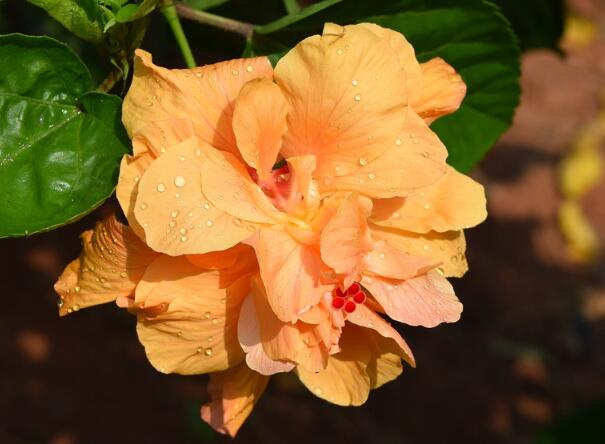
Cultivation Methods for Hibiscus rosa-sinensis
1. Soil: It can adapt to various soils, but fertile, loose, slightly acidic soil is best.
Site selection and soil preparation: Choose a sunny, warm and humid climate, and fertile, loose, well-drained, slightly acidic soil.
2. Temperature: The suitable growth temperature for Hibiscus rosa-sinensis is 15-25°C, and from October to the following March it is 13-18°C. In winter, the temperature must not be lower than 5°C, otherwise the leaves will turn yellow and fall off. Below 0°C it is prone to freezing damage, but it can still grow normally at high temperatures above 30°C.
After Frost's Descent and before the Start of Winter, it must be moved indoors, because Hibiscus rosa-sinensis is not tolerant of frost. The overwintering temperature should not be lower than 5°C, so as to avoid freezing damage; and not higher than 15°C, so as to avoid affecting dormancy. When the weather is colder, it can be covered with paper or plastic film for warmth. When first moved indoors, windows should be opened for ventilation every day during the day, and attention should be paid to changes in the dryness and wetness of the potting soil, with appropriate watering. On the coldest days, watering helps prevent freezing damage, but fertilizing should stop.
3. Sunlight: Hibiscus rosa-sinensis is a strongly sun-loving plant. During the growing period, it needs sufficient light to grow and bloom normally. If the light is insufficient, flower buds are prone to falling off, the flowers are small, and the flower color is dull; but when the sunlight is too strong, the plant will be scorched, so appropriate shading protection should be provided.
4. Watering: During the wintering period, keep the pot slightly moist. Generally, water once every 5 to 10 days, and the amount of water should not be too much, so as to avoid root rot caused by a low-temperature, high-humidity soil environment. In the dry winter climate of the north, phenomena such as pale yellow leaf color and dry leaf edges will appear, so attention should be paid to increasing indoor air humidity. Methods such as spraying and washing the branches and leaves or covering with plastic film can be used to increase the air humidity around the plant and create suitable humidity conditions for its growth.
5. Management: Management is also very important. In early May, when it is moved outdoors to a place with sufficient sunlight, management work such as strengthening fertilizer and water, loosening the soil, and pulling weeds should be carried out. Apply a dilute liquid fertilizer once every 7-10 days. When watering, pay attention to the dryness and wetness of the potting soil, as too dry or too wet will affect flowering. Management after autumn should be cautious, and attention should be paid to applying less fertilizer in the later period to avoid producing autumn shoots. Autumn shoots are tender and have weak cold resistance, and will suffer freezing damage in cold weather.
6. Repotting: Before moving it outdoors in April each year, it should be repotted. The soil should preferably be loose, fertile sandy soil. When repotting, new culture soil should also be used, some overly dense and curled fibrous roots should be cut off, sufficient base fertilizer should be applied, and a little phosphate fertilizer should be added at the bottom of the pot.
7. Pruning: After moving it outdoors, carry out pruning. For each branch, except for keeping 2-3 buds at the base, cut off all the upper part. Pruning can promote new branches, make the growth more vigorous, and also make the plant shape more attractive. After pruning, water and fertilizer should be appropriately controlled.
8. Pest and disease control: After moving indoors in winter, if indoor ventilation is poor and light is insufficient, it is prone to damage by aphids and scale insects. Attention should be paid to improving the ventilation and light transmission conditions of the indoor environment and combining this with chemical control. When there are only a few scale insects, they can be gently brushed off with a brush. The main pests of Hibiscus rosa-sinensis are aphids, white peach scale, cottony cushion scale, and mites (commonly known as red spiders). These pests are all piercing-sucking pests. That is, they use their mouthparts to pierce into the leaf surface or epidermis of the plant and suck the plant's sap. The leaves of the damaged plant lose their green color, the growth becomes weak, and the ornamental value is reduced. After aphids and mites occur, pesticides such as Ya Man Sha, Ya Man Jing, and Man Chong Qing can be diluted to a certain multiple and sprayed on the leaf surface to kill them, once a week, and generally 2-3 times can basically eliminate them. White peach scale and cottony cushion scale can damage leaves and epidermis. Generally, imidacloprid-type pesticides or their improved agents can be diluted to a certain multiple and sprayed on the affected parts to kill them. In severe cases, it can be done once every 10 days, and 3 times can basically eliminate them.
Precautions for Making Hibiscus rosa-sinensis Bloom More
Hibiscus rosa-sinensis is a flower that blooms in summer. Many flower lovers do not know how to care for it when growing it, resulting in bud drop during the flowering period. How should this situation be handled, and what are the methods to make Hibiscus rosa-sinensis bloom more? Below, the editor will introduce in detail the methods to make Hibiscus rosa-sinensis bloom more. How can Hibiscus rosa-sinensis be made to bloom more?
Methods to Make Hibiscus rosa-sinensis Bloom More:
1. Pot selection and watering
Make Hibiscus rosa-sinensis bloom more. For potted Hibiscus rosa-sinensis, it is best to use an unglazed clay pot or a wooden bucket (pot). These two kinds of flower pots have good air permeability, making it convenient for the Hibiscus rosa-sinensis root system to breathe and absorb water and fertilizer. Although the flowering period of Hibiscus rosa-sinensis is relatively long (this means it can continuously produce buds, and the number of buds is large, laying the foundation for a long flowering period), the flowering period of each branch's flower is very short. In summer, when the weather is hot and dry, it can only bloom for a little more than one day. When there is cloudy and rainy weather and the temperature drops somewhat in late summer and early autumn, each flower can only bloom for 2 to 3 days.
Because Hibiscus rosa-sinensis produces many buds, it needs plenty of water, plenty of fertilizer, and sufficient sunlight. Especially during the peak flowering period in summer, water once to twice a day depending on the temperature and the dryness and wetness of the potting soil, and water thoroughly when the soil is dry. Prevent half-watering and excessive watering that cause water deficiency and root rot. At noon, water can be sprayed on the leaf surface and around the flower pot to lower the temperature and maintain air humidity, which is beneficial to growth. Never spray water on the flowers, because the scorching sun at midsummer can cause flower damage and affect the ornamental effect.
2. How to fertilize
Make Hibiscus rosa-sinensis bloom more. It is best to use homemade fertilizer alum water for fertilizing, as it is well absorbed and quick-acting. Use a plastic bucket with a lid, put inedible waste such as the intestines from killing chickens and fish at home, together with the wastewater from washing chicken and fish and rice-washing water, pour it all into the bucket, add an appropriate amount of black alum (ferrous sulfate), screw the lid tightly, and ferment it. In summer it can be fermented into fertilizer alum water in 2 months, and in autumn in 3 months.
When using it, it must be diluted with water and must not be too concentrated, so as to prevent root damage. If you are afraid that the fertilizer alum water has an odor, you can put an appropriate amount of edible vinegar or orange peel into the bucket to reduce the odor. You can also directly buy prepared bagged acidic flower fertilizer from the flower market, put it into the flower pot, break the soil and bury it shallowly, then water with clean water to eliminate the odor.
3. Ensure safe overwintering
Make Hibiscus rosa-sinensis bloom more. In northern households, the reason for failure in cultivating Hibiscus rosa-sinensis is mostly that it did not overwinter safely and was frozen to death. Because Hibiscus rosa-sinensis is a southern tropical summer flower, it likes sunlight and is not cold-tolerant. The northern climate is cold, and households that grow flowers also have no conditions to build a greenhouse, so whether Hibiscus rosa-sinensis can overwinter safely is the key. When the temperature drops to 6°C, Hibiscus rosa-sinensis must be moved indoors to prevent frostbite. A plastic bag can be used to cover Hibiscus rosa-sinensis, and several small holes should be poked in the plastic bag to let it breathe. Note that it is enough to keep the potting soil slightly moist, because Hibiscus rosa-sinensis has the habit of winter dormancy and cannot be watered too much, so as to prevent artificially caused freezing damage.
4. How to prune branches and remove buds
Make Hibiscus rosa-sinensis bloom more. After the beginning of spring, the temperature gradually rises and Hibiscus rosa-sinensis begins to sprout. To make Hibiscus rosa-sinensis bloom continuously in summer, attention must be paid to pruning its branches and removing buds in time. For household potted Hibiscus rosa-sinensis, it is necessary both to prevent the plant shape from becoming too large and too tall, making it difficult to move and affecting placement, and to make its branches lush and bloom more. This is a contradiction.
The best way to solve this problem is to cut Hibiscus rosa-sinensis back when the main stem emerges about 10 cm from the soil, keep 3 to 5 main branches, and keep 2 to 3 branchlets on each main branch, pruning it into a shrub-like shape. This can make the branches of Hibiscus rosa-sinensis plump and lush, produce more buds, and lay the foundation for continuous flowering.
The second is to remove buds in time. Every bud that Hibiscus rosa-sinensis sprouts in spring can develop into a flowering branch. At this time, buds must be removed in time; otherwise, letting them develop will cause disordered branch growth, slender and spindly growth, scattered nutrients, and fewer and smaller flowers. The specific requirements for bud removal are usually: remove diseased and weak buds and keep thick and strong buds; remove overlapping buds and keep sparse buds; remove inner buds and keep outer buds.
Hibiscus rosa-sinensis Care
Hibiscus rosa-sinensis is native to China and is distributed in Guangdong, Fujian, Guangxi, Yunnan, and other provinces. It likes a warm, humid, and sunny environment, is not tolerant of drought, and is not tolerant of frost. North of the Yangtze River it must be potted, and in winter it must be moved indoors to overwinter.
The flowering period of Hibiscus rosa-sinensis is very long. Under temperature conditions of 15°C-20°C, it blooms continuously all year round.
Hibiscus rosa-sinensis has strong resistance and relatively extensive management, and does not require special management. During care, as long as the following principles are mastered, it can grow robustly.
1. Repotting and pruning
For potted cultivation, the soil should preferably be loose, fertile sandy loam. Before moving it outdoors in early spring each year in April, it should be repotted.
When repotting, 3 things should be done: first, replace with new culture soil; second, cut off some overly dense and curled fibrous roots; third, apply sufficient base fertilizer, and add a little phosphate fertilizer at the bottom of the pot.
In order to maintain a beautiful tree shape and a large number of flowers, according to the characteristic that Hibiscus rosa-sinensis has a strong ability to send out branches and sprout tillers, pruning and shaping can be carried out around the time it is moved out in early spring. For each branch, except for keeping 2-3 buds at the base, cut off all the upper part. Pruning can promote new branches, make the growth more vigorous, and also make the plant shape more attractive. After pruning, because the aboveground part consumes less, water and fertilizer should be appropriately controlled.
2. Management after moving out
Hibiscus rosa-sinensis is a sun-loving tree species. In early May it should be moved outdoors to a place with sufficient sunlight. This is also the growing season for Hibiscus rosa-sinensis, so management work such as strengthening fertilizer and water, loosening the soil, and pulling weeds should be carried out. Apply a dilute liquid fertilizer once every 7-10 days. Watering should depend on the dryness and wetness of the potting soil, as too dry or too wet will affect flowering. Management after autumn should be cautious, and attention should be paid to applying less fertilizer in the later period to avoid producing autumn shoots. Autumn shoots are tender and have weak cold resistance, and will suffer freezing damage in cold weather.
Move it indoors in time. Hibiscus rosa-sinensis is not tolerant of frost, and after Frost's Descent and before the Start of Winter it must be moved indoors for warmth. The overwintering temperature is required to be not lower than 5°C, so as to avoid freezing damage; and not higher than 15°C, so as to avoid affecting dormancy. Poor dormancy will lead to poor growth and flowering the following year. Any furniture room facing south with good insulation conditions can be used for overwintering. When the weather is colder, it can be covered with paper or plastic film for warmth. When first moved indoors, windows should be opened for ventilation every day during the day, and attention should be paid to changes in the dryness and wetness of the potting soil, with appropriate watering. On the coldest days, watering helps prevent freezing damage, but fertilizing should stop.
Pest Control
The main pests of Hibiscus rosa-sinensis are aphids, white peach scale, cottony cushion scale, and mites (commonly known as red spiders). These pests are all piercing-sucking pests. That is, they use their mouthparts to pierce into the leaf surface or epidermis of the plant and suck the plant's sap. The leaves of the damaged plant lose their green color, the growth becomes weak, and the ornamental value is reduced. After aphids and mites occur, pesticides such as Ya Man Sha, Ya Man Jing, and Man Chong Qing can be diluted to a certain multiple and sprayed on the leaf surface to kill them, once a week, and generally 2-3 times can basically eliminate them. White peach scale and cottony cushion scale can damage leaves and epidermis. Generally, imidacloprid-type pesticides or their improved agents can be diluted to a certain multiple and sprayed on the affected parts to kill them. In severe cases, it can be done once every 10 days, and 3 times can basically eliminate them.
Hibiscus rosa-sinensis is a very common plant. It generally blooms most in summer. Seen from a distance, it is a fiery red patch, full of vitality. Many people plant it in courtyards or balconies and other places, so in terms of cultivation methods, you should remember the tips the editor has taught everyone.