How do you grow potted mint at home? Keep these precautions in mind
Mint, commonly known as “yindancao”, is an aromatic crop with special economic value. Many people like to keep a few pots of it at home, so how do you grow potted mint at home? What should you pay attention to? Next, let us learn together:
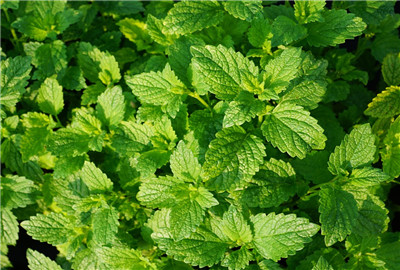
Potted mint growing methods
1. Mint growing environment requirements
Mint likes a warm, humid environment with plenty of sunlight and abundant rainfall. The rhizomes can sprout and emerge at 5-6°C, and the optimum growing temperature for the plants is 20-30°C. It has strong cold resistance. The soil for growing mint is best as loose, fertile, well-drained sandy soil. Water has a relatively large effect on the growth and development of mint; the plants require more water in the early and middle growth stages. During the budding and flowering stage, sunny and dry weather is needed, and less water is required.
2. Plenty of sunlight
Mint needs plenty of sunlight. If you grow mint, it must be placed in a sunny place. There is no need to worry even if the summer sun is strong. If there is not enough sunlight, mint tends to grow leggy, the leaves do not grow large, and it also becomes especially weak and spindly. A whole pot may look smaller and smaller.
3. Plenty of water
Growing mint requires plenty of water. Hydroponics is also possible, but soil culture will grow better. If it has not been watered for a few days and the flowerpot is extremely dry, even the leaves have dried out and withered, do not worry. As long as the roots are still alive, water it again and it will quickly recover its former vitality.
4. Fertile, loose soil
Growing mint requires fertile, loose soil. If the flowerpot is too small, or there is too little soil, the nutrients cannot keep up and it will grow very slowly. So use soil with strong air and water permeability that is very fertile. Ordinary garden soil, leaf mold soil. Add a little chicken manure fertilizer and it will be quite good. It is not picky about soil.
5. Regular pruning
Mint is very tough. Prune it often, use its leaves to make tea or whatever, and there is no problem. The more you prune, the more lush it grows. Often loosen the soil, or add some soil, or apply fertilizer, and it will grow faster. Be sure to place it in a ventilated and airy place on the balcony.
6. Pest and disease control
Rust disease: It occurs frequently in the rainy season in May and damages the leaves. Control method: clean the field and dispose of diseased plants; in the early stage of the disease, spray with a 1000-fold dilution of 25% triadimefon.
White star disease: It occurs from May to October and damages the leaves. Control method: in the early stage of the disease, spray with a 100-fold dilution of 50% carbendazim, or alternately spray with 1:1:120 Bordeaux mixture.
Mint pests and diseases also include leaf spot, rust, and silver Y moth, etc. For leaf spot, promptly remove diseased [n] and take them outside the field to bury deeply or burn, reducing the source of infection, spray with 120-fold Bordeaux mixture, or spray the leaves with a 500-fold dilution of 65% zineb. For rust, in the early stage of the disease, spray with a 1000-fold dilution of 15% triadimefon wettable powder or an 800-fold dilution of 40% carbendazim suspension concentrate. For silver Y moth, spray with a 1000-fold dilution of 90% trichlorfon, or 2.5% deltamethrin, or a 1500-fold dilution of 20% fenvalerate.
Precautions for growing potted mint
1. When it snows in winter, the mint leaves in the flowerpot all wither and look like they have no vitality. Do not worry; they will still sprout and grow again the next spring. It has strong vitality and will not die from freezing. It is best not to plant it in a flower bed, because it will invade the entire flower bed area. It will seize the nutrients of other plants.
2. If you want mint to fill the pot, mint grows very fast and very lush. There is a little trick: repot it once every year, in spring or autumn. Change to a larger pot and make the soil more fertile, and it will grow faster, because like spider plants, its root system may even develop faster than that of spider plants, and it will quickly occupy the entire flowerpot.
3. If you want to keep the mint branches growing, be sure to remove flower branches when you see them. Mint usually blooms in autumn, and after flowering, leaf growth for that year basically stops. Even if it does not completely wither, it will enter a semi-dormant state. So if you want mint to continue growing in winter, be sure to remove the flower branches. If you want to collect mint seeds to grow new mint, let the mint bloom. Mint is self-pollinating and does not set seed, so it needs artificial pollination.
Main value of potted mint
Edible value
Mint has both medicinal and edible functions. The main edible parts are the stems and leaves, and it can also be juiced and taken. In terms of food use, mint can be used as a seasoning, as a spice, and can also be paired with alcohol, brewed as tea, etc. Every 100 grams of dried mint contains 9.6 grams of water, 6.8 grams of protein, and 31.1 grams of fiber, and can provide 870.7 kilojoules of heat.
For example: mint porridge. Effects: refreshes the mind, dispels wind and dissipates heat, increases appetite, and helps digestion.
Mint tofu. Effects: can treat symptoms such as cold with nasal congestion, sneezing, and runny nose.
Mint chicken shreds. Effects: clears internal heat and relieves summer heat.
Mint cake. Effects: cooling, dispels wind and dissipates heat, clears the throat and benefits the voice.
Fresh mint crucian carp soup. Effects: can treat chronic cough in children.
Mint soup. Effects: detoxifies and reduces internal heat.
Mint herbal tea. After drinking it, the whole body feels comfortable and energy is multiplied.
In addition, mint stems and leaves have a special fragrance and can be used to make chewing gum, toothpaste, etc., with cooling, refreshing, and heat-clearing effects.
In addition, mint can be used to make honey. Its honey is dark in color, appearing deep amber, and has a strong special mint aroma.
Medicinal value
Mint is a commonly used traditional Chinese medicine in China. The young tender stem tips can be eaten as a vegetable, and the whole plant can also be used as medicine to treat symptoms such as cold, fever, sore throat, headache, eye redness and pain, muscle pain, skin wind-rash and itching, and incomplete measles eruption. In addition, it is also effective for carbuncles, deep-rooted sores, scabies, tinea, and lacquer tree dermatitis.
Mint contains menthol, a substance that can freshen breath and has many medicinal properties. It can relieve abdominal pain and gallbladder problems such as spasms, and also has effects such as antiseptic and sterilization, diuresis, phlegm resolution, stomach strengthening, and aiding digestion. Eating a large amount of mint can cause insomnia, but eating it in small doses helps sleep.
Mint is a plant full of hope. In life, it is unavoidable that there are many people or things missed, and there is almost no chance to meet, grow close to, and love again, but the less there is, the more you miss them. Although mint is a plain flower, its scent is refreshing to the heart, and coolness seeps into the skin from every pore. Every cell in the body feels clear, and that is a very happy feeling. It will give a bit of comfort to those who have once lost something, so the flower language of mint is “may I meet you again” and “love me once more”. In addition, it also has a flower language of “a person of virtue”.