Houttuynia cordata: Growing Methods and Recipes, with Food Recipes Included
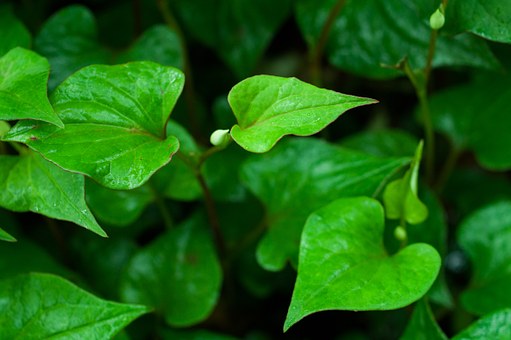
Houttuynia cordata (herbahouttuyniae), also known as zhe'ergen, cencao, ji[cai], zijicai, wild flower wheat, etc. It is the dried aerial part of Houttuynia cordata, a perennial herb of the family Saururaceae. It is produced in the provinces south of the Yangtze River basin in China. It is harvested in summer when the stems and leaves are luxuriant and the flower spikes are numerous, washed, dried in the shade, or used fresh. The name appears in the “Mingyi Bielu.” Su Song of the Tang dynasty said: “It grows in damp places, and can also spread in the shady spots of valleys; its leaves are like buckwheat but fatter, and its stems are purple-red. The people of Jiangzuo like to eat it raw; in Guanzhong it is called. Zucai, the leaves have a fishy odor, hence the common name Houttuynia cordata”. Its taste is pungent, its nature slightly cold; it enters the lung, bladder and large intestine meridians. It has the effects of clearing heat and detoxifying, transforming phlegm, expelling pus and reducing abscesses, and promoting diuresis to reduce swelling and treat strangury. It mainly treats lung-heat asthma and cough, lung abscess with vomiting of pus, tonsillitis, heat dysentery, malaria, edema, abscess swelling and sores, heat strangury, eczema, rectal prolapse and other diseases.
Houttuynia cordata Recipes
For those not accustomed to eating Houttuynia cordata raw, it can also first be stir-fried or stewed in soup. The following are several common ways to prepare Houttuynia cordata and its dietary therapeutic health benefits:
1. To regulate various bacterial and viral infections, such as wind-heat common cold, herpes, urinary system infections, etc., it must be eaten raw; a cold-dressed salad will do.
2. To prevent wind-heat common cold, simply stir-frying it is enough. This way of eating is relatively mild and is also suitable for frail people to eat daily. For healthy people, eating Houttuynia cordata as a vegetable for health care is also very good. The most common way to eat it is as a cold-dressed salad, which suits most people. Houttuynia cordata is cold in nature, so elderly people and frail people can use the method of stewing chicken. Add a little sesame oil, which also has the effect of soothing the heart. It is very helpful for relieving summer restlessness of the mind.
3. When a postpartum woman eats chicken for the first time during confinement, she must add some Houttuynia cordata, which can prevent postpartum wind.
Houttuynia cordata Growing Methods
1. Propagation
The propagation methods of Houttuynia cordata include division, cuttings and rhizome propagation. Division propagation is done from late March to April; the mother plant is dug out and the divisions are transplanted onto a sandy soil seedbed for raising seedlings or directly transplanted. Cuttings propagation can be done in spring and summer; cut healthy branches free of pests and diseases as cuttings, cut them into lengths of 12--15 cm, and insert them into flower pots, with row spacing of 16cm×10cm or 14cm×10cm. After insertion, water and shade; after rooting, move the seedlings and plant them out. Rhizome propagation can be carried out from February to March; select white, robust rhizomes without disease spots, cut them into small sections with more than 2 axillary buds, and open shallow furrows in flower pots for raising seedlings or planting out. In winter and early spring, attention should be paid to preventing freezing and keeping warm; in summer and early autumn, attention should be paid to shading and preserving moisture.
2. Planting Method
For growing Houttuynia cordata, choose natural shade (semi-shade, semi-sun) and loose, fertile potting soil for cultivation. It can be planted all year round, but planting in winter, spring and early summer can be harvested in the same year; generally the best sowing period is around the Beginning of Spring. In flower pots, open furrows in the same direction for row planting, with furrow depth 8--10 cm and width 13--15 cm, and row spacing 20--25 cm. Place Houttuynia cordata seed rhizomes in the furrows, with two parallel rows per furrow, and spacing between seed stem sections of 5--8 cm, placed continuously, head to tail. The seed stems should be placed evenly, then covered with soil; after planting, keep warm and moist. If planting in the high-temperature summer season, there must be 3 nodes to ensure that the middle node positions can sprout and root. If planting before winter, also cover with plastic film or newspaper to facilitate normal growth and development in winter and early spring and obtain high yield.
3. Daily Management
After planting out, if the seedlings encounter drought, water in the morning and evening to moisten the bed soil. From seedling survival to before the rows close, cultivate and weed and apply topdressing 2--3 times, mainly nitrogen fertilizer. Each weeding should be combined with topdressing; apply 20~30 grams of urea per square meter, applying diluted first and then concentrated. After each harvest, apply nitrogen fertilizer as the main topdressing to promote plant sprouting; after harvest in autumn, mainly apply phosphorus and potassium fertilizer, and earth up to facilitate overwintering, laying a good foundation for sprouting the next year. In dry seasons, irrigate in a timely manner; in rainy seasons, drain in a timely manner, and avoid prolonged water accumulation in flower pots. Weeds should be removed in a timely manner, and shallow cultivation and loosening of the soil should be carried out at the appropriate time; combined with loosening the soil, spread an appropriate amount of decomposed organic fertilizer between the plants and rows. For plants whose aboveground stems and leaves grow too vigorously, pinch the tips to inhibit height growth and promote the development of side branches.
4. Harvesting
After Houttuynia cordata is planted out, when the seedlings are 8—10 cm high, the tender stems and leaves can begin to be picked, and thereafter harvested once every 10—20 days. The picked tender stems and leaves can be marketed fresh or dried in the sun before marketing. The underground stems can be dug at the appropriate time according to market demand after half a year of planting out; after washing, remove impurities, and market them fresh or use them for pickling and processing. Underground stems reserved for seed use can be harvested as needed. The whole plant of Houttuynia cordata can be used medicinally and can be harvested at any time; after washing, dry it in the sun for storage or market sale.
Food Recipes
1. Cold-dressed Houttuynia cordata (1)
[Seasonings]: salt, soy sauce, vinegar, white sugar, chicken essence, red oil, dried chili, Sichuan pepper powder
[Method]:
1. Remove the old roots and fibrous roots of Houttuynia cordata, leaving the tender white roots
Cold-dressed Houttuynia cordata
Cold-dressed Houttuynia cordata
and leaves, wash them several times with clean water, wash away the mud and sand, soak in cold water for 10 minutes, remove and drain the water for later use; they can also be blanched in boiling water.
2. Cut the dried chili into sections, fry them in warm oil until crisp and fragrant, pour them together with the oil into a bowl for later use;
3. Put the Houttuynia cordata into a basin, add salt, soy sauce, white sugar, vinegar, chicken essence, red oil, Sichuan pepper powder, and the fried chili oil, mix well, and it is ready to eat; the taste can be adjusted accordingly according to your own preferences and regional differences.
[Features]: numbing, spicy, sour and sweet, light and refreshing, it is an excellent dish on the summer table.
[Tips]:
1. When eating, only the white roots and leaves of Houttuynia cordata can be eaten; when eating, it must be soaked in cold water to eliminate the off-flavor.
2. At the turn of winter and spring, when it has just put out tender shoots, the taste is the best.
2. Cold-dressed Houttuynia cordata (2)
[Ingredients]:
1. Main ingredient: 250 grams of Houttuynia cordata.
2. Seasonings: refined salt, monosodium glutamate, Sichuan pepper powder, chili oil, white sugar.
[Preparation method]:
Remove impurities from the Houttuynia cordata, wash it clean, cut it into sections, then soak it in salt water for a few minutes, add monosodium glutamate, refined salt, Sichuan pepper powder, chili oil, and white sugar, mix well and serve.
Note: Houttuynia cordata has the effects of clearing heat and detoxifying and promoting diuresis to reduce swelling. Made into a cold dish, it has a certain therapeutic effect on upper respiratory tract infections, lung abscess, urinary tract inflammation, mastitis, cellulitis, otitis media, enteritis, etc.
[Tips]: Houttuynia cordata is cold in nature and should not be eaten in excess.
3. Steamed Chicken with Houttuynia cordata
[Ingredients]:
1. Main ingredients: 1 young hen (weighing about 1500 grams), 200 grams of Houttuynia cordata.
2. Seasonings: refined salt, monosodium glutamate, pepper powder, scallion sections, ginger slices.
[Preparation method]:
1. Slaughter the chicken, remove the feathers, internal organs and feet and claws, wash clean, blanch in a pot of boiling water, remove and wash off the blood stains. Remove impurities from the Houttuynia cordata, wash clean and cut into sections.
2. Take 1 soup basin, put in the whole chicken, refined salt, ginger, scallion, pepper powder and an appropriate amount of clean water, steam in a steamer until the chicken is thoroughly cooked, then add Houttuynia cordata and monosodium glutamate, steam briefly and remove from the steamer.
[Note]: This dish is made by combining Houttuynia cordata, which clears heat and detoxifies and promotes diuresis to reduce swelling, with chicken, which warms the middle and boosts qi and replenishes marrow and essence. It can provide the human body with rich protein, fat, carbohydrates and other nutrients, and has the effects of reducing inflammation and detoxifying and warming the middle and boosting qi.