Polygonatum odoratum: Benefits, Uses and Cultivation Methods Explained
Polygonatum odoratum (fragrant Solomon's seal) is a plant of the Liliaceae family. Long cylindrical, slightly flattened, rarely branched, with a yellowish-white or pale yellowish-brown surface, semi-transparent, bearing longitudinal wrinkles and slightly raised nodes, with white dot-like fibrous root scars and disc-shaped stem scars. The texture is hard and brittle or slightly soft, easily broken, with a horny or granular fracture surface. Faint odor, sweet taste, chewy and sticky. It is mainly used to nourish yin and moisten dryness, promote fluid production and quench thirst. Used for damage to lung and stomach yin, high blood sugar, dry-heat cough, dry throat and thirst, and internal heat with wasting-thirst.
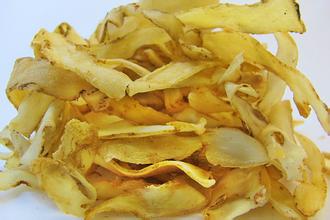
Benefits of Polygonatum odoratum
Nourishes yin and moistens the lungs; nourishes the stomach and promotes fluid production. Dry cough; consumptive cough; dry throat and thirst due to depletion of yin fluids from febrile disease; internal heat with wasting-thirst; yin deficiency with exogenous infection; dizziness and vertigo; spasmodic pain of the sinews and vessels.
Effects of Polygonatum odoratum
1. Polygonatum odoratum is sweet in taste and rich in lipids, soft and moist in nature, and is a fine medicine for nourishing yin and promoting fluid production. The vitamin A it contains improves dry, cracked and rough skin, making it soft and smooth. It thus has a beauty and skin-care effect.
2. The steroidal saponins contained in Polygonatum odoratum have an effect on cardiac muscle similar to that of lily-of-the-valley preparations. The glycosides of Polygonatum odoratum have a cardiotonic effect on isolated frog hearts, and the effect of Polygonatum odoratum decoction is similar to that of its glycosides.
3. Intraperitoneal injection of Polygonatum odoratum extract can enhance the phagocytic activity of peritoneal macrophages in burned mice, raise the level of serum hemolysin antibodies, and improve the proliferative response of splenic lymphocytes to ConA.
Cultivation of Polygonatum odoratum
[Land selection]
Choose land with low soil, air and water pollution, at an altitude of 100—1200 m, on hillocks and hills with a slope of less than 25 degrees, with deep, fertile, loose soil, good drainage, and neutral or slightly acidic soil as the planting site for Polygonatum odoratum. Polygonatum odoratum is not suitable for continuous cropping, otherwise pests and diseases will increase and yield will decline, so continuous cropping must be avoided.
[Seedling selection]
Select the high-quality Polygonatum odoratum variety "Zhushimei" (Pig's Dung Tail) that is robust, free of pests and diseases, and free of wounds.
[Land preparation and fertilization]
For the selected land, after the previous crop is harvested, apply quicklime at 150 kg/mu and soil-insect killing agents such as Dichongguang at 200 g/mu, and immediately plow (to a depth of about 30 cm), weed, and expose the soil to the sun (this point is very important and is one of the keys to ensuring a high yield of Polygonatum odoratum). Before sowing, break up the clods, divide into beds and open furrows (bed width 1.5—2 m), level and refine the soil, and apply sufficient base fertilizer, applying pig and cattle manure at 2500 kg/mu.
[Sowing]
Select seedlings with undamaged buds and robust bodies, and sow each year from July 25 to August 25 on a sunny day or a sunny day after rain when the dryness and moisture are suitable. Before sowing, they must be sterilized and disinfected with drugs such as thiophanate-methyl (diluted with water at the conventional concentration, soaked for 2~5 minutes), and arranged reasonably for sowing (there are two methods, the slant-row method and the flat-row method, with the slant-row method being more common. In the slant-row method, the end of the seed stem with the apical bud faces upward and the tail faces downward, and it is placed into the sowing furrow at a certain angle to the ground, with a density of 30cmX8.3cm and a depth of 6—7 cm.
[Mulching]
After Polygonatum odoratum is planted, it must immediately be covered with rice straw, corn stalks or thatch to a thickness of 6—7 cm, and a thin layer of soil should be spread over this layer of grass.
[Fertilization]
Fertilizer and water are crucial to the yield of Polygonatum odoratum, and the more the better, especially potassium fertilizer, but too much nitrogen fertilizer will make its stems and leaves too tender and prone to pests and diseases. Over the entire 2-year production period, it must be fertilized at least 2 times: one is at sowing time, applying human and animal manure at 1500~2000 kg/mu in the middle layer between the seedlings and the covering straw layer (a thin layer of soil should separate the fertilizer from the seedlings to avoid burning them, and if necessary, apply additional compound fertilizer at 50~150 kg/mu). The other is in August~September of the following year after the seedlings wither, cutting away the withered seedlings, pulling out weeds, then applying pig and cattle manure at 1000~1500 kg/mu, and adding rice straw and fresh grass as mulch. If conditions permit or the land is too poor, additional farmyard manure or compound fertilizer may be applied after the seedlings emerge 5 cm each year around Qingming Festival. At the same time, clear the furrows and drain water to prevent root rotting.
[Weeding]
This can be done in all four seasons, and the principle of "weed early, weed small, weed completely" must be adhered to. Weeding can be carried out by combining manual weeding with the application of a special herbicide for Polygonatum odoratum, but manual weeding must never use a hoe; weeds should be pulled out by hand to avoid injuring or killing the seedlings. At the same time, people and livestock must be strictly kept out to avoid trampling the tender seedlings. Each year before Qingming Festival, before the new seedlings emerge, use herbicide to thoroughly weed the seedbed and furrow pits; after the seedlings emerge, only glyphosate or the special herbicide for Polygonatum odoratum may be used for weeding.
[Flood prevention and drought resistance]
Polygonatum odoratum planted within the area of Ziyuan County basically needs no drought resistance, but it is especially afraid of waterlogging, especially when planted in fields; more field outlets should be opened, deep field outlets should be opened, and high beds should be raised. Once waterlogged, it is prone to yellow leaves, lodging, root rot, and reduced yield, and may even cause the death of whole plants and entire patches, resulting in total crop failure.
[Pest and disease control]
Polygonatum odoratum basically has no pests or diseases, and even if there are insects, the harm is not great; it is enough to thoroughly kill soil insects with Dichongguang at sowing time, and black light traps can also be used to trap and kill pests. The main diseases are brown spot disease and brown rot, and the key is to do the following well: First, when sowing, seedling selection must be careful; seeds should be purchased from areas with few disease sources, diseased and rotten seedlings must be removed, and the soaking time and the concentration of the medicinal solution must be ensured. Second, adhere to the principle of prevention first; each year after the new seedlings have all emerged, spray the leaf surfaces with drugs such as thiophanate-methyl for prevention, and once severe yellowing or curling of leaves is found, immediately spray with drugs such as thiophanate-methyl.