What Is Perilla? A Detailed Guide to Its Benefits, Effects and Growing Methods
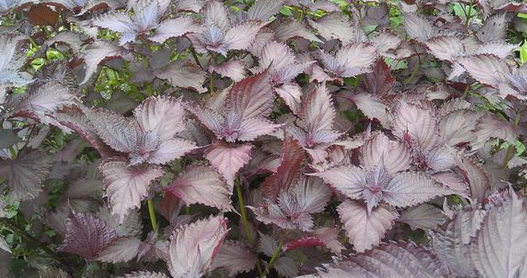
Perilla aliases: Guiren, white perilla, red perilla, etc. Perilla is an annual herbaceous plant with round or ovate leaves, 3-9.5cm long and 2-8cm wide, with coarse serrations along the leaf margins. It usually flowers in July-August and fruits in September-October. It likes to grow in a warm and humid climate, and grows vigorously with relatively high yields in environments with ample sunlight. This plant is easy to keep alive and is widely cultivated across the provinces of northern and southern China, as well as widely cultivated overseas in India, Japan, Korea, Indochina and other countries. China has a history of cultivating perilla for about 2000 years. As society continues to change, the uses of perilla have become increasingly broad, and in our daily lives we often turn perilla leaves into various foods, spices, oils, medicines and more.
[Perilla's Benefits and Effects]
In recent years, because perilla contains many unique active substances and nutrients highly beneficial to the human body, it has become a multi-purpose plant of worldwide interest with extremely high economic value. In daily life, people often use tender perilla leaves to make infused water, soups, pickles and more, and they are delicious and fragrant.
Perilla's leaves, stems and fruits can all be used to make medicine, and perilla's medicinal value is extremely high. Perilla leaves can dispel exterior cold and have a relatively strong diaphoretic effect; they are used for wind-cold exterior syndromes with symptoms such as aversion to cold, fever and absence of sweating, often used together with ginger; if the exterior syndrome is accompanied by qi stagnation, they can also be used together with Xiangfu, dried tangerine peel and the like. For moving qi and soothing the middle, perilla leaves are used for spleen-stomach qi stagnation, chest tightness and nausea.
The whole perilla plant can also be used to distill perilla oil, and its seeds can also be used to make perilla seed oil. The α2 linolenic acid in perilla seed oil is one of the essential fatty acids for the human body. It has the effects of lowering blood lipids and blood pressure, inhibiting platelet aggregation and reducing thrombosis, and can effectively prevent and treat cardiovascular diseases and prevent heart disease and senile dementia. Eating more perilla seed oil has a clear therapeutic effect on coronary heart disease and high blood lipids.
[Growing Perilla]
Perilla is highly adaptable and has no strict requirements for soil. It grows well in well-drained sandy loam, loam and clay loam, and when cultivated in fertile soil in front of and behind houses and along ditches and field edges. The previous crop is best as vegetables. It can also be planted under young fruit tree groves.
Perilla is propagated by seed, divided into direct sowing and seedling transplanting.
Direct sowing
For spring sowing, the sowing time differs by one month between north and south, March in the south and mid-to-late April in the north. For direct sowing, drill sowing is carried out in the seedbed, opening furrows 2-3cm deep at a row spacing of 60cm, evenly scattering the seeds into the furrows, and covering with a thin layer of soil after sowing. Hole sowing: sow in holes at a row spacing of 45cm and a plant spacing of 25-30cm, covering with shallow soil. Water immediately after sowing and keep moist. The sowing rate is 15-18.75 kg per hectare. Direct sowing saves labor, grows fast, allows early harvest and gives high yields.
Seedling raising
This method is used in areas with insufficient seeds, poor water conditions or drought. The seedbed should be chosen in a sunny and warm place, applied with farmyard manure, and supplemented with an appropriate amount of superphosphate or plant ash. In early April, water the seedbed thoroughly, sow after the water has seeped down, cover with 2-3cm of shallow soil, and keep the bed surface moist; seedlings emerge in about a week. After the seedlings are uniform, thin out the overly dense ones, water and weed regularly. When the seedlings are 3-4cm tall and have grown 4 pairs of leaves, choose a cloudy day or evening after the wheat harvest and transplant them into the wheat field; on the day before transplanting, water the seedling bed thoroughly.
When transplanting, plants with intact roots survive easily, so transplant them as they are pulled. With a plant spacing of 30cm, open furrows 15cm deep, arrange the seedlings, cover with soil, and water or apply diluted human and livestock manure and urine. After 1-2 days, loosen the soil to preserve moisture. Plant about 150,000 seedlings per hectare. In dry weather, water once every 2-3 days, then reduce watering and carry out seedling hardening to promote root growth.
[Choosing and Preparing the Land]
Loosening the soil
Weed frequently before the plants grow to close the rows. In direct-sown areas, pay attention to thinning and weeding. In drill-sown fields, when the seedlings are 15cm tall, thin to a final stand at 30cm, and use the excess seedlings for transplanting. Plants in direct-sown fields grow fast; if the density is high, the plants become spindly and produce no or very few branches. Although the plant height can be reached, the leaves lower on the plant are fewer and drop off due to poor light and air penetration, affecting leaf yield and perilla oil yield. At the same time, many stems and few leaves also affect the grade of the whole plant, so do not thin the seedlings too early. In seedling-raising fields, loosen the soil and weed twice from planting to row closure.
Temperature
Requirements for environmental conditions: Perilla likes a warm and humid climate. Seeds can germinate when the soil temperature is above 5℃, and the suitable germination temperature is 18-23℃. The seedling stage can tolerate low temperatures of 1-2℃. Plants grow slowly at lower temperatures. Growth is vigorous in summer. The suitable temperature during the flowering period is 22-28℃, with a relative humidity of 75%-80%. It is relatively moisture-tolerant and fairly resistant to waterlogging, but not drought-tolerant, especially during the formation of the product organs; if the air is too dry, the stems and leaves are coarse and hard, high in fiber and poor in quality. It has broad adaptability to soil and can also grow in relatively shady places.
Topdressing
Perilla's growing period is relatively short; the whole plant can be harvested 2.5 months after planting, and since the whole plant is used as medicine, nitrogen fertilizer is the main type. Apply fertilizer intensively before row closure.
For direct-sown and seedling-raising fields, apply topdressing when the seedlings are 30cm tall. Open furrows between the rows and apply 15000-22500 kg of human and livestock manure and urine per hectare, or 112.5 kg of ammonium sulfate and 150 kg of superphosphate, then loosen the soil and earth up to bury the fertilizer well. Apply fertilizer a second time before row closure using the same method. But for this application, be careful not to touch the leaves.
Irrigation
After sowing or transplanting, if it does not rain for several days, water in time. During the rainy season, pay attention to drainage, clear the working paths, and prevent water accumulation from causing root rot and leaf drop.
Harvesting and processing
When harvesting perilla, choose a sunny day to cut it, as the aroma is full and drying is convenient. Harvesting perilla leaves for medicinal use should be done from late July to early August, before perilla flowers.
Perilla stems: harvest in early September before flowering, when the inflorescences have just grown. Cut them off from the base with a sickle, hang the plants upside down in a ventilated and shaded place to dry, and after drying, beat off the leaves for medicinal use.
Perilla seeds: harvest from late September to mid-October when the seeds and fruits are ripe. Cut off the fruit spikes or the whole plant, tie them into small bundles, dry them in the sun for several days, then thresh out the seeds and dry them in the sun. The yield is 1125-1500 kg per hectare.
While collecting seeds, pay attention to selecting and keeping good seeds. Choose robust plants with high yields, wait until the seeds are fully mature before harvesting, dry them in the sun and thresh them for use as seed.