Differences Between Rosemary and Thyme and How to Care for Rosemary
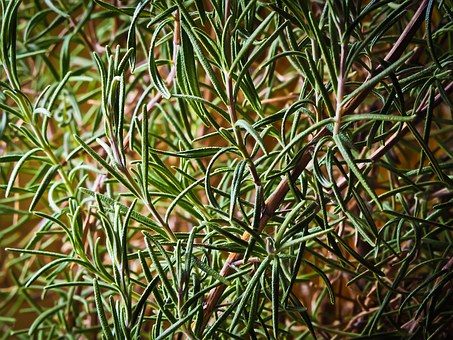
Rosemary is also known as "dew of the sea." It is an evergreen shrub with an upright habit and grayish-green, narrow, slender, pointed leaves that give off a pine scent. Since ancient times it has been regarded as an herb that can enhance memory. In spring and summer it produces small pale blue flowers. Rosemary is native to the Mediterranean coast and is an evergreen shrub that blooms with small blue flowers in summer, looking like little water droplets, which is why rosmarinus in Latin means "dew of the sea." Rosemary also symbolizes loyalty, so at European weddings brides often wear rosemary as an accessory to proclaim to the world that their love is unwavering.
Thyme is a commonly used spice in European cooking, with a pungent, aromatic flavor, used to add to stewed meat, eggs or soup. It should be added as early as possible so that it can fully release its aroma. In Europe, thyme has traditionally been considered a symbol of courage, so in the Middle Ages it was often given to knights setting out for battle. In China it is called di jiao, di hua jiao, shan jiao, shan hu jiao, she xiang cao, etc., and is produced in the northwestern region. It is especially concentrated in the mountainous areas of southern Ningxia, where locals gather, sun-dry and store it during the Dragon Boat Festival, or stir-fry it in a wok until dry. When the heat of June arrives, they brew it as tea to quench thirst, and it is regarded as a fine product. The Yuan dynasty work *Ju Jia Bi Yong Shi Lei Quan Ji* records the use of thyme added to camel hump and camel hoof for seasoning. Li Shizhen's *Compendium of Materia Medica* records: "The taste is slightly pungent; the locals use it to cook mutton, and it is fragrant and delicious." Thyme is native to southern Europe and is widely cultivated as a culinary spice.
In terms of effects, rosemary can relieve stomach bloating, enhance memory, refresh the mind and wake one up, and ease headache symptoms. Brewing rosemary as tea has a refreshing and mind-awakening effect. Rosemary can also strengthen liver function, lower blood sugar, help treat arteriosclerosis, and help restore vitality to paralyzed limbs. In addition, it has a fairly strong astringent effect, conditioning oily and unclean skin and promoting blood circulation, which is one of the reasons many women who are losing weight like rosemary essential oil.
Thyme has been a favorite of Europeans since ancient times. Fresh thyme has a light, delicate fragrance, and after being heated in cooking, its aroma can only be described as captivating, which is why Europeans have praised thyme as "the flirting treasure of the dining table." Thyme is a herbaceous plant that grows in low-altitude areas, mostly produced in northern Africa, Europe and the temperate zones of Asia. In China, the areas north of the Yellow River, especially the northwestern region, are the main growing areas. As a food ingredient, besides adding flavor and aroma, from the perspective of food therapy it also has effects such as improving the digestive system, promoting blood circulation, enhancing immunity, and relieving neuropathic pain. It also helps activate brain cells and improve memory and concentration. Experiments have shown that eating thyme can also combat depression and soothe emotional wounds.
In use, thyme is usually added to dishes using fresh or dried branches and leaves, but note that the total daily intake of such aromatic plants should preferably not exceed 20 grams, so as not to be too stimulating to the body.
Generally speaking, thyme is different from flavor-enhancing ingredients such as cilantro as we commonly understand them: it must be added at the very beginning of cooking so that its aroma can be fully released and achieve the best effect. As a cooking ingredient, thyme is best used fresh; dried thyme has about 40% less aroma than fresh.
Growing Rosemary
This aromatic herb likes a mild climate. In the south it can be grown outdoors year-round, while in the north it must be moved indoors in winter or given other insulation measures. Its growth rate is not fast; compared with mint and basil it is far behind. Rosemary requires at least 8 hours of direct sunlight every day and moderate watering (it should be watered somewhat less). A mature plant can be watered thoroughly once every 4 to 7 days.
Rosemary likes slightly alkaline soil. If the soil is rather acidic, you can slake quicklime and water the plant directly with the lime slurry; rosemary can tolerate this. If you are worried, you can mix it into the soil, let it sit for several days, and then use it for repotting. If you do not have quicklime, the desiccant in foods such as Wangwang Senbei is lime. Reference dosage: one packet mixed into a 1-gallon pot.
Rosemary grows fast in spring and autumn and somewhat slowly in severe cold and heat. It needs to be ensured sufficient light, but in summer pay attention to shading. Rosemary is fairly drought-tolerant; just water once the soil has dried out. Water less in winter and take care to protect it from freezing; in summer, generally water once every two days.
If planted in a garden, choose soil with good drainage; waterlogged soil will cause rosemary to suffer root rot. The more alkaline the soil, the more fragrant the rosemary. If the soil is too acidic, you can bury some lime in the soil.
Regarding fertilizing rosemary, do not worry about fertilization. Herbaceous plants do not need fertilizing. However, please make sure the soil contains some lime.