Disease causes and treatment methods for yellowing leaves and slow growth in rice seedlings
Rice is the second largest food crop in China, so achieving high rice yields is a matter of widespread concern. Because rice has weak resistance during the seedling stage, it is very prone to diseases. So what are the causes of these diseases? How can they be effectively treated?
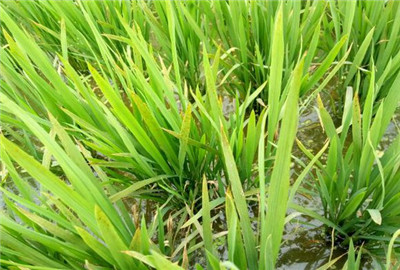
I. Nutrient deficiency effects
a. Nitrogen deficiency
Yellowing starts from the tips of old leaves, then gradually extends downward to the heart leaf, and finally the whole plant turns yellow-green. In severe cases, the leaf tips and leaf margins wither and turn yellow, the seedlings grow slowly, and from a distance the seedlings appear uniformly yellow. Quickly apply quick-acting nitrogen fertilizers such as urea and ammonium bicarbonate as a top dressing.
b. Potassium deficiency
When potassium fertilizer is insufficient, the plant is short and small, with few tillers, and the leaves are upright; new leaves are dark green and lack luster. The condition develops from old leaves upward, producing rust-colored spots on the leaves that spread from the leaf tip downward or from the leaf edge inward. In severe cases, these become large spots or streaks, and the leaves die back with a reddish-brown color (also known as akiochi). From a distance it looks as if burned by fire. When these symptoms appear, drain the field immediately, use intermittent irrigation, and promptly apply potassium fertilizer as a top dressing, or spray potassium dihydrogen phosphate + Meizhouxing or alginic acid.
c. Zinc deficiency
With zinc deficiency, the leaves first lose green and become yellow-white in the midrib area, then yellow-red or red-brown spots or patches appear, turning red-brown and scorched, and the leaves become narrow, with veins becoming brittle and easily broken. In severe cases, albino seedlings appear. Zinc sulfate or chelated zinc can be sprayed on the leaves as a remedial measure.
II. Yellowing caused by fertilizer damage or pesticide damage
Improper selection of fertilizers, excessive application rates, improper pesticide application, and repeated spraying can also cause toxicity and yellowing, leading to block-like and patch-like yellowing of leaves. Sometimes there are scorched spots on the yellow leaves. When pesticide damage is severe, the leaves develop chlorotic or yellowed spots, or become scorched, lose water, and wither; sometimes even the whole plant dies. In the early stage of occurrence, deep water can be immediately introduced into the field and then replaced 2~3 times, or clean water can be sprayed on the rice plants. Spraying Bihu or brassinolide + Meizhouxing or alginic acid on the leaves can alleviate and reduce the degree of pesticide damage. Combine this with timely top dressing of quick-acting fertilizers such as urea to help quickly restore normal growth.
III. Yellowing caused by plant poisoning
a. Poisoning by reducing gases and hydrogen sulfide
The root system turns black, sometimes the soil has a rotten egg smell, and there are few white roots, which are thin. The old leaves at the base are yellow-brown, with scorched leaf tips. In severe cases, the old leaves die, leaving only 1~2 green new leaves at the top.
b. Organic acid poisoning
The root system shrinks and the epidermis peels off. There are few new roots, the leaf color turns yellow, and sometimes wilting occurs. In severe cases, the lower leaves wither and die. Fields with toxic yellowing should also be drained immediately and sun-dried to improve soil permeability, increase oxygen content, and promote root growth. In fields with excessive organic acids, also apply quicklime or soil amendments to neutralize soil acidity.
IV. Yellowing caused by disease infection
a. Rice blast at the seedling stage
It mostly occurs before the 3-leaf stage. The base of the seedling turns dark brown, and the upper part appears yellow-brown or pale red. In severe cases, the leaves curl and the diseased seedlings die. Promptly spray isoprothiolane or Fuji-One or fenoxanil for control.
b. Damping-off
The leaves gradually turn yellow from old to young, the stem base softens and rots, and it breaks easily when pulled; the whole plant withers and dies in a yellow-brown color. Pay attention to strengthening temperature management. In the early stage, spray metalaxyl + hymexazol or Runmiaoqing + Meizhouxing or Anglibang for control.
c. Bacterial leaf blight
Generally, yellow-green or dark green spots first appear on the leaf tips or leaf margins, then extend along the leaf veins into streaks and become gray-white. The boundary between diseased and healthy parts is distinct. When humidity is high, yellow-brown "bacterial ooze" often appears on the lesions.
d. Rice bacterial leaf streak
Initially, dark green water-soaked translucent small spots appear, then pale yellow narrow elongated streaks form along the leaf veins, oil-soaked and translucent, with bacterial ooze overflowing under high humidity. In severe cases, multiple lesions can merge with each other, and the leaves die back in a red-brown color.
e. Bacterial foot rot
The heart leaf wilts and curls, and some have already turned yellow and died, resembling the dead heart seedlings caused by stem borers, but there are no borer holes in the stem. The stem base often turns black and rots, with a foul odor. The stem nodes become hard and brittle and break easily.
Summary of treatment for the above diseases: Bacterial leaf blight, bacterial leaf streak, and bacterial foot rot are all bacterial diseases. In the early stage of occurrence, promptly spray thiodiazole-copper or thiosen copper or chloroisobromine cyanuric acid for control.
V. Yellowing caused by insect damage and virus transmission by leafhoppers
a. White-tip nematode disease
The upper part of the leaf tip shrinks and dies, appearing yellow-white or yellow-brown, and twists into a paper-twist shape. The key is to use disease-free seeds before sowing, or the best control is seed soaking with Jinzhongling or fenitrothion. Once it occurs, spraying for control has poor efficacy.
b. Rice yellow dwarf disease
The plant is stunted, with small leaves and clustered tillers, no mosaic, and yellowing of leaves and leaf sheaths. In severe cases, the plant dies.
c. Rice orange leaf disease
The leaf tips of the lower leaves yellow first, then the yellowing extends downward through the whole leaf and spreads upward, causing yellowing of all leaves on the plant. The plant is short, with few tillers and few new roots. The leaves are short, small, and upright. After tillering, affected plants are prone to die.
d. Yellow dwarf disease
Yellowing starts from the top leaf and the leaf below it and moves downward from the tips. Diseased plants are markedly stunted, do not tiller, have few and short roots, and the diseased leaves lie flat or even droop. In severe cases, the plant dies.
Summary of treatment for the above diseases caused by leafhopper virus transmission: Yellow dwarf disease, yellow dwarf disease, and orange leaf disease are all caused by virus transmission by leafhoppers. Pay attention to controlling leafhoppers routinely, which can effectively prevent their occurrence. When they occur in the field, promptly pull them out and destroy them, and spray isoprocarb + Atyling or ningnanmycin + Bihu for control.
VI. Yellowing caused by virus transmission by small brown planthoppers
a. Downy mildew
The plant is stunted, the leaves are chlorotic and mosaic-like, with yellow-white spots. Sometimes the heart leaf yellows and twists. In severe cases, the whole plant yellows and dies. In the early stage of occurrence, promptly spray metalaxyl-mancozeb or cymoxanil-zinc or propamocarb for control.
b. Rice stripe virus disease
The heart leaf is affected, with intermittent yellow-green or yellow-white streaks along the leaf veins. As the lesions enlarge, half or most of the diseased leaf becomes yellow-white. The rest still shows chlorotic streaks. The plant is not obviously dwarfed, with few tillers. Tall varieties may bend and droop in a paper-twist shape. In severe cases, the plant dies.
Summary of treatment for diseases transmitted by small brown planthoppers carrying viruses: These are caused by virus transmission by small brown planthoppers. Pay attention to controlling small brown planthoppers routinely, especially in seedling fields. After occurrence in the field, promptly spray virus-removing agents or Atyling + Bihu or brassinolide + thiamethoxam or sulfoxaflor for control.
VII. Effects of insect pests
a. Thrips
After thrips damage the leaves, yellow-white small spots or micropores appear. The leaf tips wither and yellow and shrink lengthwise. In severe cases, patches of seedlings turn yellow and red, as if burned by fire. Promptly use clothianidin or carbosulfan or imidacloprid for control, and at the same time pay attention to strengthening water and fertilizer management.
Final summary: Pay attention to soil testing and formula fertilization, do not use undecomposed organic fertilizer, do not apply nitrogen fertilizer excessively, maintain reasonable dense planting, and do not transplant too deeply or allow excessive water accumulation in the field. Use pesticides scientifically and reasonably, and carry out seed dressing or seed soaking with chemicals before sowing to cultivate robust plants. Routinely control virus-transmitting pests such as small brown planthoppers and leafhoppers in seedling fields and fields, which can effectively reduce and prevent leaf yellowing caused by the above reasons.