When does a hyacinth bloom? How long does the flowering period last? How do you grow it?
Hyacinth is a perennial herbaceous bulbous plant, and it is the most fragrant species among the flowering plants discovered by research. So when does a hyacinth bloom? How long does the flowering period last? How do you grow it? Let's find out together:
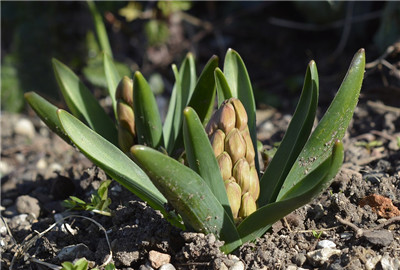
1. When does a hyacinth bloom?
Hyacinth is best planted in fertile, well-drained sandy loam, and dislikes overly wet or heavy clay soil. Hyacinth bulbs have a summer dormancy habit, root in autumn and winter, and sprout new shoots in early spring. Planting is generally carried out in October. The hyacinth bulb can only bloom after growing to 19 cm, and it usually blooms from February to April of the following year. During the growth of the hyacinth, the root system grows best when the bulb is at a low temperature of 2-6°C. The suitable temperature for bud break is 5-10°C, the suitable temperature for leaf growth is 10-12°C, and 15-18°C is most favorable during the bud emergence and flowering stage. The storage temperature for the bulb is 20-28°C, with 25°C being the optimum, which is most ideal for flower bud differentiation.
2. How long does the flowering period last?
The flowering period of a blooming hyacinth is about one month. It fades relatively quickly when the temperature is higher, so after flowering, keep the temperature as low as possible.
If grown in soil, it can continue to bloom the following year, provided that fertilizer is applied during cultivation; generally, saving seed is not recommended.
3. How do you grow it?
Hyacinth cultivation is divided into water culture and soil culture:
1. Key points for water culture of hyacinth:
a. There should be a 1cm-2cm gap between the water surface and the bottom of the bulb. Never let the water submerge the bottom of the bulb!
b. The water temperature should not be high; below 15°C is better.
c. Place the bulb on the neck of the bottle. After roots develop, lower the water level until the roots can just touch the water surface. This allows the roots to fully absorb oxygen and promotes root growth. After the roots have developed, cover the container with black cloth to let the bulb develop further.
d. Do not place it in direct sunlight before the bulb sprouts.
e. When the shoot grows to five centimeters, place it in a dark place. After the roots have fully emerged, place it in a warm spot without direct sunlight, and add water frequently so that the water reaches the bulb.
f. When the leaves and flower buds emerge, expose it to sunlight for one or two hours daily to make the leaves and flower stalks sturdy; rotate it one direction every day so it does not grow leaning to one side. No fertilizer is needed, and it will produce a bright, fragrant hyacinth in March or April of the following year.
g. With the temperature in your home kept at 17°C to 20°C, you will enjoy watching the buds grow and color up. But do not place them directly near a heat source, so the beautiful hyacinth flowers will stay open longer.
h. When grown in plain water, change the water once a week; when grown in nutrient solution, change it depending on how cloudy it becomes, keeping the water in the bottle clean.
2. Key points for soil culture of hyacinth:
a. If the hyacinth you got has already grown roots and leaves, and you prefer to grow flowers in soil, you can still choose pot cultivation now.
b. Select healthy hyacinth bulbs and plant them in loose potting soil. You can use peat and large-grained perlite or coarse sand mixed evenly at 50% each.
c. Insert the bulb into the growing medium with a little force, then add coarse river sand up to 1/3 from the top of the bulb. Leaving the top 1/3 of the bulb exposed above the soil is more favorable for the growth and development of the bulb.
d. The number of bulbs to plant depends on the size of the pot, generally ranging from 1 to 3.
e. When planting, note: the upper end of the bulb should be exposed above the potting soil. After planting, place it in a sunny spot and keep the potting soil moist. The temperature required for forcing is 5-10°C.
Also note: hyacinth needs plenty of light and water. If there is insufficient light, or if it encounters a long dry winter, flowering will be poor, so water thoroughly and maintain humidity. If you find that the flower stalk is too short to elongate, you can place it in a dark place for several days to encourage spindly growth, and once the flower stalk extends, resume normal cultivation. As for color, hyacinth comes in white, pink, peach red, purple red, purple blue, yellow and other varieties, and the cultivation method is the same.
The flower language of hyacinth: victory, competition, joy, affection, happiness, deep passion, admiration, stubbornness, life, pride, eternal remembrance.