Causes and Solutions for Yellowing Leaves in Strawberries, Blueberries, Watermelons and Hami Melons
Strawberries, blueberries, watermelons and Hami melons are prone to yellowing leaves during growth. Do you know what causes this? And what should you do about it? In fact, junior high school biology textbooks already explain the roles of the various nutrient elements that affect plant growth. Yellowing leaves in green plants are mainly caused by a lack of nutrient elements.
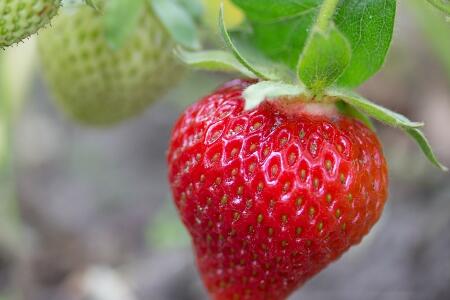
What should you do when strawberry leaves turn yellow?
1. Too great a gap between dry and wet. After the plant goes without watering for a long time, the leaves first wilt and then turn yellow. There is also the case where, after a long period without watering, a large amount of water is suddenly given and the plant simply cannot adapt, so the leaves turn yellow.
The correct approach: watering strawberries should imitate nature, with sunny days and rainy days (do not water if not dry). Remember to water moderately.
2. Changes in environmental temperature. Suddenly moving plants from a greenhouse to a spot in the path of an air conditioner's airflow causes yellowing and leaf drop. A lack of sunlight will affect the strawberry's photosynthesis, and it will also reduce leaf transpiration and promote circulatory disorders in the plant.
The correct approach: place them in a sheltered spot with plenty of sunlight for cultivation.
3. Yellowing and leaf drop caused by a lack of trace elements or by excessive fertilization.
The correct approach: if light and watering are normal, yellow leaves are caused by a lack of fertilizer. Apply some fermented rice-washing water, or evenly apply 20 grains of compound fertilizer under the soil at the edge of the pot each month.
4. Yellowing and leaf drop caused by metabolism and disease, but there will not be large-scale leaf drop.
The correct approach: if strawberries are grown on a large scale, weeds should be removed first and soil-dwelling pests eliminated. You can spray 1000 times diluted 50% phoxim emulsifiable concentrate (wetting the soil layer 5-6 cm deep) to control white grubs, mole crickets and cutworms. If you are growing them yourself, remember to regularly prune dead leaves or use insecticides reasonably.
What should you do when blueberry leaves turn yellow?
1. Soil moisture remains too high for a long time, causing severe anaerobic respiration in the root system, and ultimately the blueberry's fine roots die, unable to properly transport water and nutrients to the plant. As a result, chlorophyll synthesis is blocked, causing the leaves to turn yellow.
Improvement measures:
(1) Control the amount of watering and keep soil moisture between 18-22%.
(2) Pay attention to drainage during the rainy season, especially in low-lying plots or plots prone to water accumulation. Water accumulation in blueberry plots must not exceed 24 hours, otherwise the plants may permanently fail to resume normal growth.
2. Poor soil physical structure. After watering, the surface easily crusts or has poor water retention, so the water after watering cannot penetrate into the soil layer or evaporates quickly. This prevents most roots from absorbing enough water and nutrients, causing leaves to lose water and nutrients and show yellowing symptoms.
Improvement measures:
(1) Improve the soil and increase organic matter content, preferably between 40-60%. If conditions permit, improve the whole area; to save costs, you can also use only hole improvement.
(2) Replace the soil. The soil for growing blueberries requires a pH of 4.5-5.5, with sandy loam being best. Soil with good air permeability and water-holding capacity is beneficial for root growth.
(3) Increase organic matter mulch on the surface. Covering the soil surface with organic matter can, on the one hand, reduce water evaporation, and on the other hand, the continuous decomposition of organic matter helps improve the surface soil structure and promote root growth.
3. Pests and diseases can also easily cause yellow leaves, such as damage from aphids and rust disease, and soil-dwelling pests like white grubs gnawing on roots. All of these can cause varying degrees of leaf chlorosis.
Improvement measures:
(1) For aphid damage, spray cypermethrin or imidacloprid; for rust disease, spray mancozeb or lime sulfur mixture.
(2) For the soil-dwelling pest white grub, in spring and summer you can apply chlorpyrifos or phoxim granules in holes around the blueberry root zone, or directly drench with liquid emulsifiable concentrate diluted in water.
4. Yellow leaves caused by nutrient deficiency, generally mainly iron-deficiency chlorosis.
Improvement measures:
Apply ferrous sulfate or chelated iron in a certain ratio and at certain intervals to improve leaf chlorosis.
What should you do when watermelon leaves turn yellow?
1. Yellow leaves caused by improper fertilization
Using undecomposed human and animal manure, or long-term heavy use of chemical fertilizers, causes excess fertilizer to burn the roots. Some people use too much low-quality foliar fertilizer; because many foliar fertilizers on the market contain hormone-like substances, this causes hormone and trace-element poisoning in watermelons, making leaves rigid, chlorotic, brittle, deformed and yellow.
Control methods: strictly prohibit the use of undecomposed human and animal manure. Chicken and cow manure must be fully fermented and decomposed in advance before use. For chemical fertilizers, it is best to use formula fertilization and appropriately increase phosphorus and potassium fertilizer. When applying base fertilizer, nitrogen fertilizer should not be used excessively, to prevent leaves from turning yellow.
2. Yellow leaves caused by element deficiency
In recent years, because watermelon cultivation has good returns, continuous cropping of watermelons has become quite prominent, which easily causes element deficiency. The more common cases are potassium deficiency, calcium deficiency and boron deficiency in watermelons, all of which easily cause varying degrees of yellow leaves.
Control methods:
(1) Try not to practice continuous cropping.
(2) For continuously cropped watermelons, while using nitrogen, phosphorus and potassium fertilizers, add one bag of Guangxing Dibao per mu to condition the soil, activate various medium and trace elements fixed in the soil, and indirectly supplement the shortage of medium and trace elements. For watermelon seedlings that already show deficiency symptoms, spray 800 times diluted iodine-boron-potassium solution, which has an obvious effect on preventing watermelon deficiency symptoms.
3. Yellow leaves caused by pest and disease damage
(1) Red spider mites: adult and larval red spider mites gather on the backs of young tender leaves to pierce and suck leaf sap. Especially buds that have not yet unfolded, young leaves and flower buds are the main damaged parts, causing watermelon leaves to be damaged and unable to grow normally. Leaves pierced and sucked by red spider mites lose their green color and turn yellow, and in severe cases the leaves can dry up.
Control methods: remove weeds around the watermelon field (greenhouse) to cut off the source of the pests. Red spider mites have a short life cycle and strong reproductive capacity, so attention should be paid to early control. You can spray 2000—3000 times diluted 1.8% abamectin emulsifiable concentrate, or 1500—2000 times diluted 2% abamectin plus 800 times diluted iodine-boron-potassium solution on the leaves for control.
(2) Downy mildew: watermelon downy mildew is prone to occur in the middle and late stages of watermelon plant growth. This disease mainly damages leaves. At first, water-soaked light green small spots appear on the leaves, which then gradually turn yellow. The main cause is that the cultivation site is not ventilated and inorganic fertilizer application is neglected.
Control methods:
(1) Appropriately control watering in the early stage of the disease. For protected cultivation, pay attention to enhancing ventilation and reducing air humidity.
(2) Cultivate disease-free strong seedlings, increase organic base fertilizer, and pay attention to a reasonable combination of nitrogen, phosphorus and potassium fertilizers.
(3) After harvest, thoroughly remove diseased plants and fallen leaves.
4. Yellow leaves caused by insufficient light
If planting is too dense, ventilation and light penetration are poor, or protected cultivation is poorly ventilated, or watermelons are grown in low-lying land with poor growth, this can also cause watermelon leaves to turn yellow.
Control methods: while ensuring the temperature for seedlings, open windows as much as possible for ventilation and air exchange to reduce ammonia gas in the greenhouse.
5. Yellow leaves caused by overwatering
Watermelons are watered differently from other plants, but some farmers do not understand this and water once a day. Over time, the soil becomes too wet, causing severe yellowing of leaves and even root rot. After watermelons enter the flowering and fruiting stage, they are more sensitive to water. If water supply is insufficient during this period, the female flower ovary will be smaller and develop poorly.
Control methods: reasonable watering according to the water requirements of watermelons is the guarantee of early maturity and high yield. Watermelon seedlings require less water, so generally measures of controlled watering to train the seedlings are adopted to promote deeper root growth and stronger plants. During the vine extension stage, water management for watermelons should follow the principle of combining "promoting and controlling", keeping the soil alternately dry and wet. After watermelons enter the flowering and fruiting stage, it is better to keep the soil moist during this period. The watermelon fruit-swelling stage is a period of higher water demand, so watering should be increased to keep the soil relatively moist.
What should you do when Hami melon leaves turn yellow?
1. Drought yellowing
Yellowing from lack of water is different from yellowing from too much water. Yellowing from lack of water shows as dried and withered leaf tips or edges, with old leaves turning yellow and falling from bottom to top, but new leaves growing relatively normally. Just make sure to water thoroughly and sufficiently.
2. Fertilizer-deficiency yellowing
This shows as tender leaves becoming lighter in color, yellow or pale green, while old leaves remain relatively normal or gradually turn from green to yellow. Check the potting soil regularly; if there is dry caking, replace the soil. Usually apply thin fertilizer frequently and water in some alum water at the right time to supplement iron.
3. Light-deficiency yellowing
If placed in a shaded environment for a long time, the leaves cannot get enough sunlight and cannot form chlorophyll, so the whole plant's leaves turn yellow and then fall off. Supplementary lighting can prevent this problem.
4. Fertilizer yellowing
Yellowing of flowers caused by too much fertilizer or too high a concentration shows as dry brown tips on new leaves. Generally the leaf surface is thick and lusterless, uneven and not spread out, and old leaves turn scorched yellow and fall off. Fertilization should be stopped immediately; in severe cases, use a large amount of clean water to rinse out some of the fertilizer.
5. Scorch yellowing
Strong direct sunlight shining on some shade-loving flowers (such as spider plants and hostas) easily causes the leaf tips and leaf edges to dry up, and yellow spots appear on the parts of the leaves facing the sun. Just move them to a shaded place.
6. Water yellowing
Tender leaves turn dark yellow and lusterless, old leaves show no obvious change, branches are thin and yellow-green, and new shoots shrink and stop growing, indicating overwatering. Take the plant out of the pot, place it in a ventilated, cool place to let the root ball dry by itself, then put it back into the pot.