How to grow wintersweet (Chimonanthus praecox)? Can the fruit be eaten? One article explains it clearly
Wintersweet (Chimonanthus praecox), a deciduous shrub, often growing in clumps. Wintersweet buds in the deep winter when all other flowers have withered, braving the cold and defying the frost, expressing the unyielding character of the Chinese nation in the face of tyranny, offering people spiritual inspiration and enjoyment of beauty. It is suitable for courtyard planting, and also suitable for old-stump bonsai, flower arranging and modeling art. It is an ideal precious flowering tree for winter flower viewing. The flowers are fragrant and beautiful, and it is a landscaping plant. The roots and leaves can be used medicinally, to regulate qi and relieve pain, dispel cold and detoxify, and to treat bruises, lower back pain, rheumatism and numbness, wind-cold colds, and bleeding from cuts; the flowers relieve summer heat and promote body fluid, treating restlessness and thirst, and qi stagnation with chest tightness; the flower bud oil treats burns. So, how do you grow wintersweet? Can its fruit be eaten?
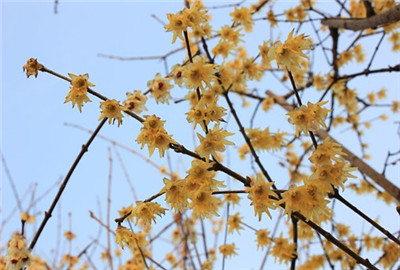
I. How to grow wintersweet?
(1) Propagation methods
Wintersweet is commonly propagated by seed, grafting, cuttings, division and other methods.
1. Seed propagation: Use seedling raising and transplanting. Harvest the fruit in June-July, peel out the seeds, and store them in moist sand for later use. Sow in March of the second year. Take out the seeds, rub off the waxy coating in water together with the sand, then sow. During the seedling stage, pay attention to weeding and fertilizing, and cultivate for 2 years before transplanting.
2. Grafting propagation: Use seedlings or division seedlings as rootstock. Cut grafting and approach grafting are best. In mid-March to April, select thick and relatively long branches, remove the tips, and cut into 6-7 cm long scions with 1-2 pairs of buds. For the rootstock, cut the seedling off 3-6 cm above the ground, perform cut grafting, apply mud slurry, and seal the rootstock and scion. After 3 years of cultivation, it becomes a plant.
3. Cutting propagation: Summer softwood cuttings are best. After dipping the cuttings in 1×10⁻⁴α-naphthaleneacetic acid for 1 min, insert them in a shaded plastic film shed for easier rooting.
4. Division propagation: In February-March, dig up the suckering seedlings produced by the mother plant and plant them. For transplanting, open holes at a row spacing and plant spacing of about 1.3 m each, and plant 1 seedling per hole. Every year in early spring and late autumn, carry out one intertillage and weeding and one topdressing each time, mainly with human and livestock manure water. To promote flowering, every year in March-April, cut the branches short and pinch off the growing tips.
(2) Cultivation methods
1. Plowing: Plow after flowering, with a plowing depth of 20-25 cm. Slightly shallower under the tree canopy to avoid damaging the roots.
2. Fertilizing: In spring after flowering, apply base fertilizer together with plowing. Wintersweet likes fertilizer, but avoid applying concentrated fertilizer. Open ring-shaped or strip-shaped fertilizer trenches along the lower edge of the tree canopy, with a trench depth of 20-30 cm. For adult trees, apply 3000-5000 kg of high-quality decomposed farmyard manure per mu; the fertilizer amount for 1-2 year old young trees is 1/3-1/2 that of adult trees. Apply one topdressing at flower bud differentiation in late June. Apply 20 kg of compound fertilizer per mu by broadcasting it along the lower edge of the tree canopy.
3. Watering: Wintersweet is drought-tolerant, but water should still be supplemented in dry seasons. In July, during the flower bud differentiation period of wintersweet, suitable soil moisture should be maintained. During the flowering period, the soil should remain moderately dry to reduce flower drop.
4. Shaping and pruning
① Shaping: Multi-stem shaping is commonly used. After planting, select and retain 3-4 healthy branches distributed evenly around as the main stems (if there are no branches, leave 4-5 plump buds above the ground and prune heavily), cut back to leave 3-5 nodes, and after they sprout, use them as main stem extension branches and side branches. Note that the main branches should not overlap or cross each other, and promptly cut off lower root suckers, sprouting suckers, weak branches and dead branches.
② Bud removal: When wintersweet leaf buds have sprouted about 50 cm, remove the excess tender buds that are dense, inward-growing, and close to the ground to reduce nutrient consumption. In the rainy season, promptly cut off the miscellaneous branches, useless branches, branches that disrupt the tree shape, and branches that block wind and light.
③ Pre-flowering pruning: After wintersweet has shed its leaves and before the flower buds swell, for some long branches, leave a pair of leaf buds above the flower buds and cut off the upper part without flower buds. Cut off dead branches, diseased and pest-infested branches, overly weak branches, and dense, excessively vigorous non-flowering branches and root suckers not used for renewal, to save nutrients. When pruning before flowering, operate carefully, do not randomly cover or bump, so as not to knock off flower buds.
④ Post-flowering supplementary pruning: After wintersweet flowers fade, supplementary pruning should be carried out promptly. The main task is to thin out aging branches, dead branches, overly dense branches and excessively vigorous branches, and to cut back weakened main branches or branch groups, so as to rejuvenate branch vigor and tree vigor. However, for main branches that are too high, too long or too strong, they can be cut back at a place with a relatively large, medium-vigorous slanted branch, letting a weak branch lead, to control branch height, branch length and branch vigor, and achieve the purpose of balancing branch vigor and tree vigor. Shorten one-year-old branches; for main branch extension branches, cut back to leave 30-40 cm, for other relatively strong branches leave 10-20 cm, and for weak branches leave 1 pair of buds or thin them out. After weak branches are thinned out, new branches can still grow from the base. In addition, after the flowers fade, promptly pinch off the remaining flowers (when seeds are not wanted) to prevent fruiting from consuming nutrients, so that next year the branches will be thick and the flowers abundant.
(3) Pest and disease control
Wintersweet has relatively few pests and diseases. Occasionally, trunk-boring pests occur; during dormant pruning, the affected branches can be cut off together with the pests and burned.
(4) Harvesting
Fresh cut wintersweet flowers are generally harvested when the flower buds first open, and after harvesting they are placed in a cool place.
II. Can wintersweet fruit be eaten?
Wintersweet fruit cannot be eaten. Wintersweet fruit is the fruit of the plant wintersweet (Chimonanthus praecox). Its medicinal name is: Tubadou, toxic, and it can be used as a purgative; it must not be eaten by mistake. Wintersweet fruit is green before ripening and only turns grayish-brown after ripening.