How to prevent and control pests and diseases when planting alfalfa in autumn and winter?
Alfalfa is the earliest cultivated and most widely distributed perennial legume forage in the world. It not only has high forage yield, excellent forage quality and high nutritional value, but is also cold-resistant, drought-resistant, tolerant of barren soil and highly adaptable, suitable for a very wide range of planting areas. It is the preferred forage for increasing dairy cow milk production and developing the beef cattle industry.
Under China's "grain-to-forage" policy, many farmers have begun to join the ranks of alfalfa growers. So in the coming autumn and winter seasons, how should planted alfalfa be protected against pests and diseases?
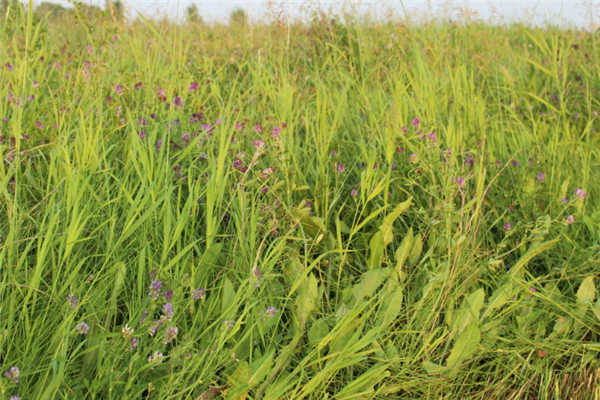
1. Stubble clearing after autumn
After the autumn harvest is complete, pathogens will overwinter on the surface stubble. Carrying out stubble clearing at this stage will eliminate a large number of pest and disease organisms and reduce the infection rate for the coming year.
2. Targeted grazing
For pests and diseases that are easy to eliminate, alfalfa stubble can be grazed so that pests and pathogens are eaten, eliminated or carried away.
3. Burning stubble
Burning stubble is quite effective for eliminating pests and diseases, but attention must be paid to fire prevention.
4. Winter irrigation
Winter irrigation can worsen the living conditions of pests and diseases, inhibit or kill pest and disease organisms, and is beneficial for alfalfa overwintering and greening up the following year.
5. Pesticide control of pests and diseases
After the autumn harvest, spraying the surface once with a pesticide plus New High-Fat Film can effectively prevent various pests and diseases and minimize pesticide residues in alfalfa products the following year.
In general, the common insect pests of alfalfa mainly include aphids, mirid bugs and leaf miners, which can be controlled by spraying 40% dimethoate emulsifiable concentrate diluted 1000 times with water or by using fenvalerate, etc. Common alfalfa diseases include powdery mildew, downy mildew, rust and brown spot, which can be controlled with carbendazim, thiophanate-methyl, etc.
Alfalfa, known as the "king of forages," is currently an "internet celebrity in the agricultural planting world." Under normal circumstances, one mu of alfalfa can support 12-15 sheep. With favorable policies now, it is highly recommended for farmers to plant it.