When is the best time to graft roses for a high survival rate? Explanation of common grafting methods
The rose is called the queen of flowers, also known as “monthly red.” It has strong adaptability and is cold-resistant, and can be grown both in the ground and in pots. Grafting is one of its propagation methods. So, when is it easy for grafted roses to survive? And what grafting methods are there?
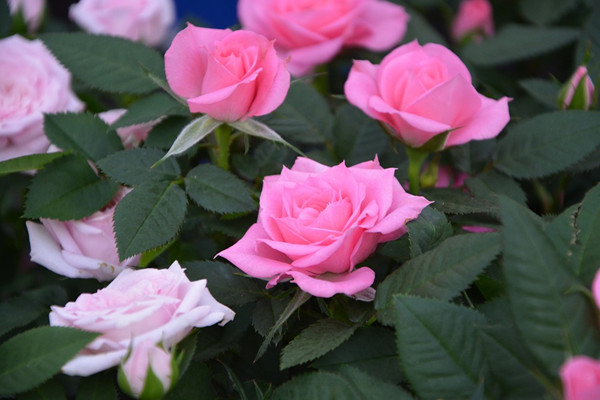
When is it easy for grafted roses to survive?
The survival rate of rose grafting is greatly affected by the grafting period. The best period for grafting is from early September to mid-October, when the survival rate is highest. The temperature during grafting is best between 18—25℃, and grafting should be done on a sunny day with no rain.
Rose grafting methods
1. Chip budding method
Use flower shears to cut off the leaf blade, leaving a 0.5 cm petiole. Pinch the branch tightly with the thumb and index finger of the left hand, with the petiole facing up, at a 45-degree angle to the ground. Use a budding knife to make a downward diagonal cut 0.5 cm above the bud, reaching the xylem, going from shallow to deep, and after passing the bud, from deep to shallow, with a cut length of 2.5 to 3 cm. The bud is then removed from the branch. Lightly pinch the petiole with the left hand, with the xylem facing up, and use the right hand to peel back a little bark from below the bud, so that the xylem tilts upward. Lift it upward, and the xylem is peeled off. Then quickly use a grafting knife on a smooth part of the rootstock about 1.4 m high, depending on the size of the scion bud, to make a horizontal cut. Generally, the cut is about 0.5 cm long. On one side of the cut, make another downward vertical cut. Be careful not to damage the xylem as much as possible. Insert the tip of the knife at the intersection of the two cuts, lift the bark, tear it downward 2 cm, leave 0.4 cm at the bottom, cut off the upper 1.6 cm of bark, quickly place the grafted bud into the lifted bark of the rootstock, press it tightly against the rootstock xylem, keep the bud eye, and wrap the joint tightly with a plastic strip 20 cm long and 0.7 cm wide.
2. Wood-bearing chip budding method
On the sunny side of the rootstock 4 to 6 cm above the ground, use a single-sided safety razor blade to cut a shield-shaped cut 1 to 2 cm long at a 30° to 40° angle. Then, using the same method and the same size, select a plump and full grafted bud on the scion stick and insert it into the already cut rootstock cut. Use a white plastic band with moderate elasticity and width to bind it firmly from bottom to top, wrapping edge by edge, with moderate tightness.
When inserting the grafted bud into the cut, the cambium should be aligned over the largest possible area, so that the rootstock xylem is not exposed. This method is simple and quick to operate and has a relatively high survival rate, but it requires high technical skill, and one must master the technique of matching the rootstock and scion in one go.
3. T-shaped budding method
T-shaped budding is also a popular method in current rose grafting production.
Use a short-bladed vertical knife to make a horizontal cut on the branchless sunny side of the rootstock 4 to 6 cm above the ground, about 5 to 8 mm wide, with a depth just reaching the xylem, then make a vertical cut downward from the middle of the horizontal cut, about 1.5 to 2 cm long, so that the bark forms a T-shaped opening.
Cut the scion stick from the mother plant, remove the leaf blade and keep the petiole, select a plump and full grafted bud, use a sharp knife to make a horizontal cut about 0.5 cm above it, cutting about 3 mm deep into the xylem, then use the knife to push and cut upward from about 0.5 cm below the grafted bud just reaching the xylem up to the cut above the grafted bud.
Use the knife to lift open the bark of the T-shaped cut on the rootstock, insert the grafted bud into the cut. After insertion, make fine adjustments, align the horizontal cut of the grafted bud with the horizontal cut of the rootstock without exposing the rootstock cambium; placing it in position in one go is ideal. After the grafted bud is placed properly, bind it with a plastic band, and the grafted bud must be exposed when binding. Although this method seems cumbersome and time-consuming, once skilled, one plant can be grafted within one minute, and the grafting survival rate is extremely high.