A Complete Guide to the Uses, Heat Level, and Growing Methods of Facing Heaven Chilies
The Facing Heaven Chili (Capsicum annuum), a variety of chili pepper, is a perennial semi-woody plant in the genus Capsicum of the nightshade family (Solanaceae), and it is cultivated in most regions of China. So what uses does it have? How hot is it? And how do you grow it? According to Solanaceae data, the Facing Heaven Chili is a small-fruited dried chili variety, with a single dried fruit weighing about 0.4 grams. Its taste is extremely hot, with a capsaicin content of about 0.8%. It is bright red, with a capsorubin (red pigment) content of about 3%, and a heat level of about 30000.
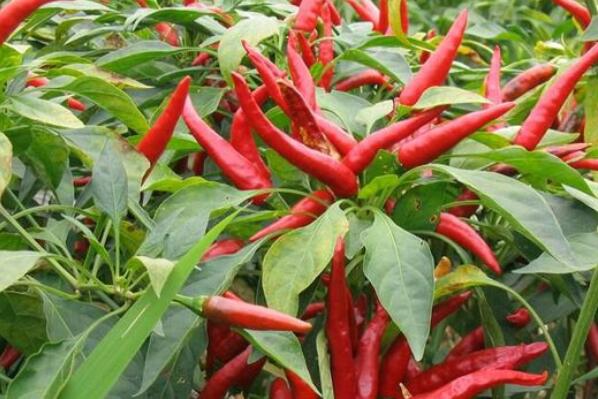
What uses does the Facing Heaven Chili have?
I. Dietary therapeutic value
Capsaicin can stimulate the brain to release endorphins, relieve pain, and speed up metabolism, helping people stay slim; it can lower cholesterol, low-density lipoprotein, and triglyceride levels, promote blood circulation, and prevent conditions such as heart disease and stroke. In addition, chilies contain capsaicin and crude fiber, which can stimulate the secretion of saliva and gastric juice, strengthen the spleen and stomach, promote appetite, and relieve stomach cold; chilies have a significant effect on preventing colds, arteriosclerosis, night blindness, and scurvy
II. Nutritional value
1. Weight loss: capsaicin can stimulate the brain to release endorphins, relieve pain, and speed up metabolism, helping people stay slim
2. Relieving stress and lowering blood lipids: it can lower cholesterol, low-density lipoprotein, and triglyceride levels, promote blood circulation, and prevent conditions such as heart disease and stroke.
3. Strengthening the spleen and aiding digestion: chilies contain capsaicin and crude fiber, which can stimulate the secretion of saliva and gastric juice, strengthen the spleen and stomach, and promote appetite
4. Other benefits: relieving stomach cold; chilies have a significant effect on preventing colds, arteriosclerosis, night blindness, and scurvy.
III. Culinary effects
1. Warming the middle and dispelling cold, strengthening the spleen and opening the appetite
2. Suitable for all ages; people with stomach cold can eat it in moderation to relieve stomach cold; in addition, it is suitable as a seasoning, used in small amounts when cooking; it can also be stir-fried on its own, and can be made into chili sauce, chili oil, chili paste, chili powder, and so on.
How do you grow the Facing Heaven Chili?
Field planting methods:
I. Selecting good seed
You can choose excellent varieties with strong disease resistance and stress resistance that are suitable for spring and wheat-stubble cultivation, such as Bullet Head No. 2 and Red Chili No. 8.
II. Raising strong seedlings
The Facing Heaven Chili is best planted as large seedlings, with a seedling age of 60 to 70 days. To ensure strong seedlings, you should raise seedlings in a sun-facing seedbed or a small arched shed. Spring chilies can be started in late February, and wheat-stubble chilies should be started in late March. The seedbed soil should be loose, crumbly, and fertile.
III. Transplanting
The Facing Heaven Chili likes moisture but fears waterlogging, so it is best to choose loam, sandy loam, or clay loam that retains fertilizer and is loose and airy. The soil pH should be 6.5 to 8. Per mu, apply 3 to 5 cubic meters of fully decomposed high-quality farmyard manure, or 50 to 80 kg of a nitrogen-phosphorus-potassium three-element compound fertilizer (each containing 16%), and this can be adjusted appropriately according to the soil fertility.
IV. Field management
(1) Cultivating and earthing up. Timely cultivating and earthing up can promote the growth and development of the Facing Heaven Chili's root system, raise soil temperature, and help preserve soil moisture. When there is more soil moisture, cultivating can also help dissipate moisture, which benefits root growth.
(2) Topdressing fertilizer. If the base fertilizer for spring chilies is sufficient, you can topdress appropriately according to plant growth. Topdressing is especially important for wheat-stubble chilies, and you can topdress somewhat earlier; provided the base fertilizer is sufficient, you can topdress 50 to 60 kg of ammonium bicarbonate, 50 to 60 kg of superphosphate, and 20 to 30 kg of potassium sulfate. Foliar spraying is even better: you can spray 50 to 60 kg of a 0.3% nitrogen-phosphorus-potassium three-element compound fertilizer (each containing 16%) aqueous solution, and spray 3 to 5 times during the growth period.
(3) Watering and drainage. The Facing Heaven Chili has a shallow root system and fears both drought and waterlogging; especially during the full fruiting period, if it lacks water, the yield will be seriously affected. You should water frequently in small amounts to keep the soil moist. Avoid watering at noon in high-temperature weather, so as not to lower the soil temperature and cause leaf drop, flower drop, and fruit drop.
(4) Pinching and topping. The Facing Heaven Chili has obvious branch layers: first the main-stem fruiting branches, second the lateral fruiting branches, and third the secondary lateral fruiting branches. Its main yield comes from the fruit on the secondary lateral branches, so when the main stem first shows buds, it should be manually pinched to encourage lateral branches. If secondary lateral branches appear late, the fruit cannot mature, so they should be removed in time.
V. Pest and disease control
(1) Diseases. Diseases harmful to the Facing Heaven Chili include damping-off, seedling blight, viral disease, and phytophthora blight, among others; they should be controlled early, and the principle of prevention being more important than cure should be maintained. July to August is the period when phytophthora blight occurs frequently; spray once every 7 to 8 days, and you can choose carbendazim or chlorothalonil for spraying.
(2) Insect pests. These mainly include cotton bollworm, oriental tobacco budworm, and Asian corn borer, among others; you can spray a 3000-fold dilution of beta-cypermethrin or a 5000-fold dilution of Kaisa emulsifiable concentrate. Usually, check frequently and carefully, and control when there are few pests and they are small. In dry weather, pay attention to controlling red spider mites, aphids, and so on.
12