A Detailed Guide to the Right Time and Methods for Grafting Osmanthus Trees
In August, osmanthus fragrance fills the air. The flowers of the osmanthus tree are widely loved in our country, small yet fresh and pleasant. They can be seen everywhere along roadsides, in parks, or in people's homes, and grafting is the most common method of propagating osmanthus trees. So do you know when it is suitable to graft osmanthus trees? What grafting methods are there? Today let us learn about them together.
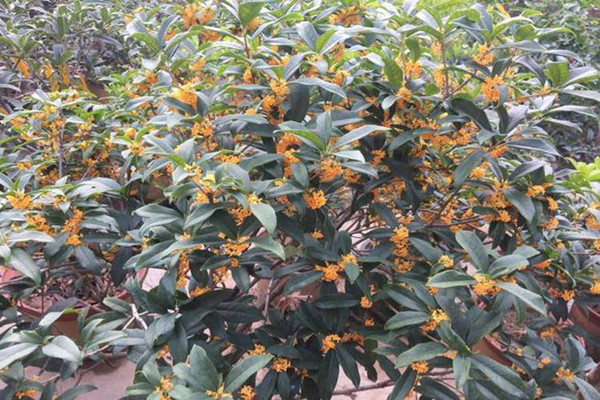
Grafting time for osmanthus trees
For grafting osmanthus trees, early spring is better, as you can determine whether they have survived in the same year, which makes management easier. Osmanthus can also be grafted in autumn, and skilled gardeners achieve a relatively high survival rate.
Osmanthus includes varieties such as Jingu, Yingui, Dangui and Sijigui. First, choose the osmanthus variety according to your preferences, needs and available resources, then from the selected osmanthus tree choose 2-3-year-old branches of good and pure quality, robust growth, well-developed and plump, free from pests and diseases, with high ornamental or economic value and moderate size, to serve as scions.
Grafting methods for osmanthus trees
Generally, side grafting and approach grafting are used.
1. Side grafting: Side grafting means trimming the rootstock before grafting. Cut off everything 6—7 cm above the soil surface, and make a slanted cut near the root crown, without damaging the pith. Use 2—3-year-old branches (without leaves) as scions, about 10 cm long, preferably with 2—3 nodes. Then cut the scion base into an unequal-sided wedge shape, insert it into the cut in the rootstock so that they fit closely together. After tying with plastic or hemp fiber, mound soil up to the top of the scion.
2. Approach grafting: For approach grafting, first grow the rootstock in a pot. In the plum rain season of June—July, select two-year-old osmanthus seedling branches similar in thickness to the rootstock and approach-graft them while still in the pot, and after they survive, cut them off before “Bailu” (White Dew). That is, the new plant can bloom in the same year.
3. After the graft survives, when the new shoot of the grafted plant reaches 10-15 cm, cut off all remaining rootstock shoots and suckers. Since the rootstock easily sprouts adventitious buds, they should be peeled off at any time. From June—August, carry out drought resistance measures, apply topdressing, and weed. For potted seedlings, when the new shoots reach about 15 cm, pinch off the tips to encourage side branch growth and form a shrub shape.
4. After the beginning of spring, start fertilizing when the nighttime temperature rises above 15°C, as the branches begin to grow at this time and need fertilizer. If using compound fertilizer, apply 4 grams each time (about one bottle cap of a small mineral water bottle), make four small holes around the pot soil or the plant, distribute the compound fertilizer evenly into them, then cover with soil (change the position next time you make holes), and fertilize once every 10——15 days, until fertilization stops after the nighttime temperature drops below 8°C in autumn. If using organic fertilizers such as cake fertilizer, use 1/3 of a rice bowl each time (no need to dilute with water). If it is packaged flower fertilizer bought from a flower shop, just follow the package instructions; if there are no package instructions, ask clearly. When flower buds are seen growing out, stop fertilizing, as excess nutrients will cause bud drop (except for Sijigui).
Uses of osmanthus trees
1. It has high ornamental value and is truly an ideal tree species for beautifying courtyards.
2. Osmanthus trees have a certain resistance to harmful gases such as sulfur dioxide and hydrogen fluoride, and are also a good flowering plant for greening in industrial and mining areas.
3. Osmanthus can be used to extract aromatic oil and is a precious spice.
4. Osmanthus can be used to make pastries or brewed as tea.