When is the best time to graft a hawthorn tree, and how many years until it blooms and bears fruit?
Seeing hawthorn reminds us of Zhang Yimou's famous film "Under the Hawthorn Tree"; those bright red little hawthorn fruits are dazzling to the eye. To obtain high yields of tasty hawthorn, grafting is needed, so when is the best time to graft a hawthorn tree? How many years until it blooms and bears fruit? According to hawthorn grower Mr. Tang, hawthorn trees are usually grafted from late July to late August.
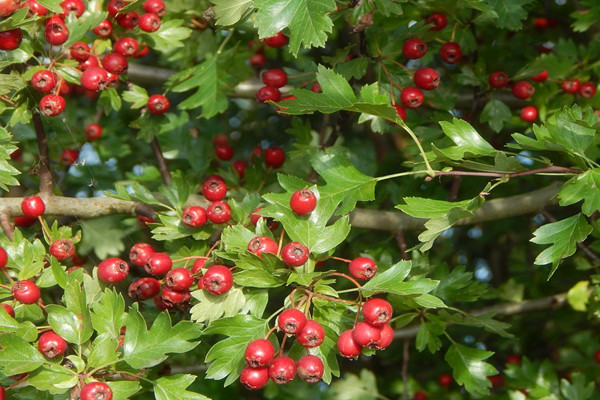
How many years until a hawthorn tree blooms and bears fruit?
A hawthorn tree generally blooms and bears fruit in 2 to 4 years, and afterwards, as the tree ages, the yield increases year by year; around its 10th year it enters the full fruiting period, and by 60 to 70 years it still does not decline.
Hawthorn grafting methods:
Hawthorn propagation is mainly done by the budding grafting method. Take a bud from a hawthorn scion, make a cut 0.5cm at the bud, with the depth reaching the top of the xylem cross-section; then cut open a triangle on both sides of the bud and pry the bud off; on the rootstock, choose a smooth side and make a horizontal cut 3-6 cm above the ground, about one centimeter, then make a vertical cut 1 cm down from the middle of the horizontal cut, forming a "D" shape, then use the front end to pry apart the bark on both sides, then insert the bud so that the bud piece is in close contact with the rootstock's horizontal cut, and tie it tightly with grafting tape.
How much does a hawthorn sapling cost?
A hawthorn sapling costs about 10 yuan at retail; wholesale is much cheaper, around 3 or 4 yuan.
What are the effects and functions of hawthorn?
1. Aids digestion
Hawthorn contains a variety of organic acids. After oral intake, it enhances gastric juice acidity, increases pepsin activity, and promotes protein digestion; hawthorn tastes sour, stimulating the gastric mucosa and promoting gastric juice secretion; hawthorn contains lipase, which can promote fat digestion; hawthorn contains components such as vitamin C, and oral intake can improve appetite; hawthorn has a regulatory effect on gastrointestinal motility, inhibiting spasmodic gastrointestinal smooth muscle and exciting relaxed smooth muscle.
2. Lowers blood lipids and resists atherosclerosis
Hawthorn's blood lipid-lowering effect is achieved by inhibiting cholesterol synthesis in the liver and promoting the liver's uptake of plasma cholesterol. Hawthorn flavonoids can also reduce the risk of atherosclerosis (AS), playing a role in preventing the occurrence and development of AS.
3. Antibacterial
Hawthorn has a strong antibacterial effect against Shigella, Proteus, Escherichia coli, Staphylococcus aureus, and others.