How do you plant and care for orchid seeds, and how often should you water them?
Orchids are epiphytic or terrestrial herbaceous plants. In the context of traditional Chinese famous flowers, "orchid" refers only to certain terrestrial species among the plants of the genus Cymbidium native to China, such as Chunlan (Cymbidium goeringii), Huilan (Cymbidium faberi), Jianlan (Cymbidium ensifolium), Molan (Cymbidium sinense) and Hanlan (Cymbidium kanran). So how are their seeds planted? How are they grown? How often should they be watered? It is reported that orchids generally, in March—April, are watered once every 2—3 days, or given a small amount once daily; in May—June, watered once daily; in July—September, given one thorough watering every evening; in October—November, watered once daily; and from December to the following March, watered once every 4—5 days. In winter, if a large amount of water is to be given at one time, it can be done on cloudy and rainy days to prevent frost damage, because on cloudy and rainy days the water will not freeze into ice right after watering. This is the watering pattern in the Yangtze River basin area. However, each region has its own watering habits.
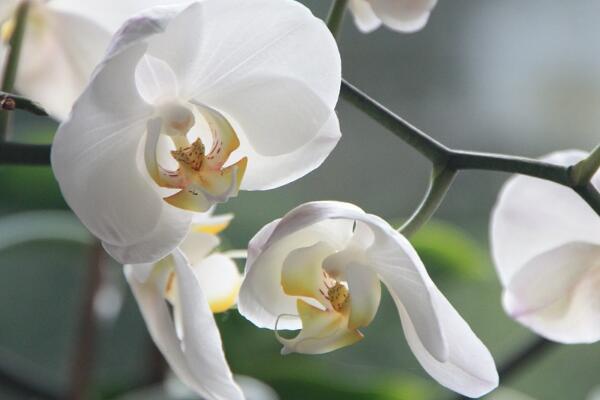
How are orchid seeds planted?
1. Sowing orchid seeds can be divided into two methods: symbiotic sowing and asymbiotic sowing.
The asymbiotic sowing method is to sow the seeds in test tubes or glass bottles containing a special culture medium. This method requires preparing a culture medium with very high requirements, the seeds must be sterilized, and the temperature and humidity control management requirements are high. Even the division and transplanting after germination and sprouting also requires relatively high ecological conditions and management skills. Most enthusiasts generally do not have the conditions to use the asymbiotic method for sowing and propagation.
2. Orchid seeds are extremely fine, and the seed contains only one incompletely developed embryo, so the germination capacity is very low. In addition, the seed coat does not easily absorb water, so sowing by conventional methods will not cause germination. Therefore, orchid fungi or an artificial culture medium are needed to supply nutrients before germination can occur.
3. For sowing, it is best to select fruit that has not yet split open. After sterilizing the surface with 75% alcohol, take out the seeds, soak them in 10% sodium hypochlorite for 5-10 minutes, take them out and rinse them 3 times with sterile water, then sow them in culture bottles containing culture medium, and place them in a dark culture room with the temperature maintained at around 25°C. After they begin to sprout, move them into the light and they can form protocorms. From sowing to transplanting takes half a year to a year. Tissue culture has already been successfully achieved, and this method can be used for propagation where conditions permit.
How are orchids grown?
1. The first thing to pay attention to when growing orchids is the place where they are planted and grown, because different places directly affect the growth and development of orchids. Orchids can generally be placed in open-air locations in spring, summer and autumn, while in winter they should be placed indoors. Outdoors, it is best to have open space on all sides and humid air. Indoors, there should be ample light. This is beneficial to orchid growth. Orchid pots are best placed on wooden racks or tables, not directly on the ground.
2. There are many varieties of orchids, and most types are afraid of direct sunlight, so attention should be paid to providing appropriate shade. In early to mid-April, orchids can receive more sunlight to promote their growth. After late April, they should be appropriately shaded. From the beginning of June to September, shading should be started earlier each day. After October, when the weather begins to turn cooler and the sunlight is weaker, shading can be delayed, but around midday it is still necessary to do a good job of shading.
3. Orchids can be exposed to a little light rain, but care should be taken to avoid plum rain, showers or continuous rain.
4. Watering is also very important when growing orchids. In June-July, when the orchid leaf buds extend to about 1.5 cm, 1-2 applications of thin, fully decomposed liquid fertilizer can be given (chemical fertilizers are not suitable). In August-September, apply 1-2 more applications of fully decomposed thin liquid fertilizer. For plain-colored orchid varieties, 1-2 applications of wood ash extract can be used, with very good results. Fertilizing in the evening is best, and then water once with clear water the next morning.
5. When growing orchids, attention should be paid to sterilization treatment. Generally, exposure under the hot sun is sufficient, as this can prevent disease occurrence. In order to prevent orchid diseases, in addition to appropriately controlling the dryness and humidity of the potting soil at ordinary times, clay pots should also be used as much as possible and glazed pots used less when choosing flower pots. In particular, newly dug orchids from the mountains that are growing poorly must be planted in clay pots. Doing so makes the potting soil dry easily, which can promote orchid growth and reduce the disease rate.