When should you divide bamboo palm? How do you carry out routine care?
Bamboo palm, also known as palm bamboo, is an evergreen foliage plant in the Arecaceae family. Its ornamental effect is very good, and when combined with some landscape rocks, it gives a strong tropical rainforest feel. So do you know when to divide bamboo palm? How do you carry out routine care?
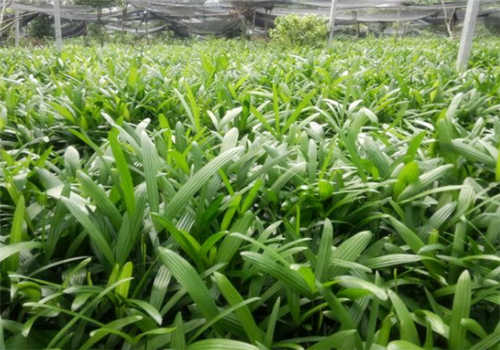
Bamboo palm division time
Bamboo palm division propagation is generally carried out in spring together with repotting. (The best time for division is March to April.)
Cut the original clump that has sprouted many stems into several clumps with a sharp knife. When dividing, injure the roots as little as possible and do not damage the buds, so that each clump contains more than 8-10 plants. After the divisions are potted, place them in a semi-shaded spot, keep them moist, and frequently spray water on the leaf surface to prevent the leaves from turning yellow and withering. After new branches sprout, move them to a sunny spot for care, and then carry out normal management.
Routine care of bamboo palm
1. Temperature management: bamboo palm, as a plant that grows in warm southern regions, generally grows in an ambient temperature of 20-30°C. According to tests, bamboo palm can grow at roughly above 0°C, and if the humidity is suitable, it can generally also grow at 40°C. So there is generally no need to worry about temperature.
2. Light control: based on its original growing environment, bamboo palm likes a semi-shaded, semi-lit environment, and daily diffused light is sufficient. However, remember that it must not be exposed to strong sunlight; in summer it needs shading and ventilation. Generally, about 2 hours a day is recommended.
3. Control of watering: generally in spring, water once a day, while in summer you can water about twice a day, and you can choose to do it at noon, paying attention to shading. After autumn, water about once every 2 days, and in winter it should be reduced further, but humidity should be maintained.
4. Choice of soil: if growing in a pot, there actually are not that many choices for soil; just keep the soil slightly acidic, generally around 6.5.
5. Use of fertilizer: bamboo palm likes light fertilizer. The main fertilizing season is during the growth period, generally spring and summer. In winter it is recommended not to fertilize, because this will cause leggy growth, or the roots will be damaged.
6. Understanding diseases: generally bamboo palm rarely gets sick; it is nothing more than leaves turning yellow or pest outbreaks. The pest that generally occurs is scale insects, and you only need to mix a pesticide of appropriate concentration. There is also a kind of brown spot disease, which is caused by long-term growth in shade. It is recommended to spray pesticide appropriately, and then a certain amount of light is needed. Anthracnose is a disease that plants often get, mainly showing brown spots on the leaves. Generally, corresponding disinfectants are sold on the market.
Tips:
Why do bamboo palm leaves turn yellow?
Light: if the light is too strong and the daily sunlight is not diffused but direct, then the leaves will turn even more yellow and withered, and the leaf tips may become scorched.
Alkaline soil: if the soil is not changed for a long time, after a while it becomes alkaline, and then the leaves turn yellow because of the soil.
Water: whether it is lack of water or too much water, it will cause the leaves to turn yellow. The roots need to be cut off, and then it should be grown again.
Fertilizer: many people think that more fertilizer is better, but in fact, once there is too much fertilizer, the concentration becomes too high, and instead it becomes harmful, so the roots get burned and the leaves turn yellow and withered.