Hydrangea Care Methods and the Best Time for Division Explained
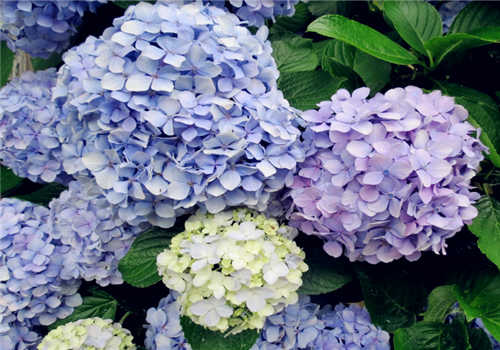
The hydrangea has a dignified appearance, and its flower colors are rich in variation, sometimes bright and sometimes delicate; it is also commonly known as baxianhua and yangxiuqiu. Its ornamental flowering period is long, and it likes semi-shaded environments, so it can even be grown on a north-facing balcony. So let's look specifically at how to grow hydrangeas, and when is the best time to divide them?
Time for Dividing Hydrangeas
The best time to divide hydrangeas is in early spring before budding. Separate the rooted branches from the mother plant and pot them directly; do not water too much, and keep them in a semi-shaded place for care. After new buds sprout, switch to normal care. In addition, hydrangeas can also be propagated by cuttings and layering:
Layering:
Carry this out when the buds begin to swell; growth can occur after 30 days. Cut it off from the mother plant in the following spring, transplant it with the soil ball, and it can bloom that same year.
Cuttings:
Carry this out during the plum rain season. Cut off the tender top shoots, about 20 cm long, remove the lower leaves, and use a suitable cutting temperature of 13-18°C; roots will form 15 days after insertion.
Key Points for Hydrangea Care
1. Soil
For growing hydrangeas, a loose, fertile, and well-drained sandy loam soil is best. However, flower color is affected by soil acidity and alkalinity: in acidic soil the flowers are blue, and in alkaline soil they are red.
2. Watering
The potting soil for hydrangeas should be kept moist, but do not water too much. Especially in the rainy season, pay attention to drainage to prevent root rot caused by waterlogging. In winter, indoor potted plants are better kept slightly dry. If too humid, the leaves rot easily.
3. Light
The hydrangea is a short-day plant. During normal cultivation, avoid direct scorching sunlight, and 60%-70% shading is ideal. When the light is too strong in midsummer, appropriate shading can extend the ornamental flowering period.
4. Temperature
The suitable growing temperature for hydrangeas is 18-28°C, and the winter temperature should not be lower than 5°C. Flower bud differentiation requires 6-8 weeks at 5-7°C; a temperature of 20°C can promote flowering, and after the flowers appear, maintaining 16°C can extend the ornamental flowering period. Note that high temperatures make the flowers fade quickly.
5. Fertilizing
The flowering period of hydrangeas is June-July. During the flowering period, fertilizer and water should be sufficient, with fertilizing once every half month.
6. Pruning
After hydrangeas bloom, pay attention to removing the flower stems to encourage new branches. Proper pruning can keep the plant shape beautiful.
7. Changing Soil
For potted hydrangeas, generally repot and change the soil once a year. It is best to repot and change the soil in early March. For the new soil, mix 4 parts leaf mold, 4 parts garden soil, and 2 parts sand, then add an appropriate amount of decomposed cake fertilizer as base fertilizer. When changing, prune the plant's root system, cutting off rotten roots, decayed roots, and overly long fibrous roots. After moving the plant into the new pot, press the soil firm, water thoroughly, place it in a shaded spot for about 10 days, then move it outdoors for normal management.
8. Pests and Diseases
Hydrangeas mainly suffer from wilt disease, powdery mildew, and leaf spot disease. Spray a 600-fold dilution of 65% zineb wettable powder for control. Pests include aphids and mirid bugs, which can be killed by spraying a 1500-fold dilution of 40% omethoate emulsifiable concentrate.
Tips:
Hydrangea care in all four seasons of spring, summer, autumn, and winter has points to note:
Spring: For potted plants, prune dead branches and repot and change the soil; after the plant has adjusted, apply one or two dilute liquid fertilizers mainly based on nitrogen fertilizer, which can promote the sprouting of branches and leaves.
Summer and Autumn: Place in a semi-shaded spot or under a curtain shed to prevent direct scorching sunlight and avoid leaves turning yellow and scorched. Apply one or two additional fertilizer applications before and after flowering to promote green leaves and abundant flowers. After the flowers fade, promptly trim off the flower stems to keep the shape attractive. Keep the potting soil often moist, but prevent water accumulation after rain, to avoid the hydrangea's fleshy roots rotting from too much water.
Winter: After winter begins, plants grown in the open ground should be hilled up with soil for warmth so they can overwinter safely; potted plants can be placed in a warm spot facing south and sunny, without cold wind. In winter, although the leaves fall, the roots and branches remain alive, and new leaves will sprout again the following spring.