How Long Does It Take for the Queen of Flowers, the Rose (Chinese Rose), to Go from Planting to Blooming, and How to Care for It and Water It
The Chinese rose is called the queen of flowers, also known as “yueyuehong”, blooming in all four seasons, generally red, or pink, occasionally white and yellow, and can be used as an ornamental plant or a medicinal plant, also known as yueji. So how long does it take from planting to blooming? How should you care for it to make it bloom? How should you water it? According to Aunt Wang, a flower grower in Zhengzhou, Chinese roses are divided into many types of seedlings, and the time needed from seed to growing up and blooming differs depending on the size of the seedling. If the seedling is very small, it generally needs a relatively long period of accumulation, and cannot bloom until it can grow relatively sturdy branches. If what you bought is a large seedling, and it does not need “acclimatization”, and the seedling can directly send out sturdy buds, the time for these buds to grow and bloom is generally about two months.
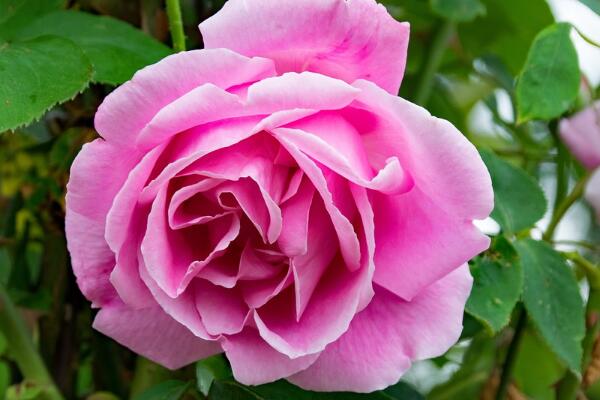
How should you care for Chinese roses to make them bloom?
Chinese roses bloom in spring, with large, vivid and fragrant flowers; when they bloom again, the flowers become smaller and smaller. Apart from the reason of fertilizer consumption, rising temperatures also promote an increase in the plant's vegetative growth momentum (luxuriant branches and leaves), while the momentum of reproductive growth (flowering and fruiting) weakens.
In addition, due to the reason of nutrient distribution, the amount of blooming and the size of individual flowers are generally in an inverse relationship. Strengthening fertilizer and water management is especially important, and timely heavy pruning after flowering is also needed, so that nutrients are concentrated in the new branches sprouting from the lower part of the plant, prompting it to produce high-quality flowers again.
1. During the growing period, topdressing is the main method, and the principle of thin fertilizer and frequent fertilizer should be mastered. Thin means 7 parts water to 3 parts fertilizer; frequent means applying about once a week. Under no circumstances should undiluted fertilizer liquid be poured directly into the pot.
2. Chinese rose fertilization is mainly based on organic fertilizer, which must be fully decomposed before use.
3. Fertilization should be chosen on a sunny day, first loosening the soil, then carried out in the evening when the potting soil is slightly dry, so the absorption effect is good.
4. On the second day after fertilizing, “return water” must be poured to prevent fertilizer damage.
5. When fertilizing, make sure the fertilizer liquid does not touch the stems and leaves, and pour it along the edge of the pot.
How should Chinese roses be watered?
1. During the winter dormant period, the leaves have all fallen, and water consumption is not large; as long as a certain humidity is maintained and it does not dry out completely, it is fine.
2. At the first revival and greening in early spring, as long as the water is poured thoroughly, pay attention to loosening the soil and keeping it moist; do not water too frequently. In this way, the sprouted buds are relatively thick and strong, and the internodes are also somewhat shorter.
3. Before the flowering period, the frequency of watering can be slightly increased to keep the soil moist, so that the flowers are less likely to wither.
4. Topdressing should be carried out together with watering, but try not to let the fertilizer water run off. If too much fertilizer is applied and leaf burn occurs, water should be poured immediately to rescue it.
5. In summer high temperatures, water evaporation is large, especially in dry seasons, so water once in the morning and once in the evening each day, with sufficient water, especially the evening watering, which should be thorough. Control watering during the plum rain season.
6. When the climate is too dry, appropriately spray more water to increase air humidity. Before flowering, to keep the branches and leaves bright and beautiful, appropriate spraying can also remove dust. However, spraying should not be too frequent, to avoid chlorides in tap water accumulating on the leaf surface over a long period and damaging the leaves. In the season when black spot disease occurs, water remaining on the leaf surface can also carry pathogen spores and cause the disease to spread.
Appendix: Flower language
Red Chinese rose represents pure love, passionate love or commendable enthusiasm, chastity, etc. People mostly use it as a token of love and a synonym for love; it is the first-choice flower for Valentine's Day. The buds of the red Chinese rose also represent loveliness.
White Chinese rose symbolizes respect and nobility. In Japan, the white rose (Chinese rose) symbolizes fatherly love and is the main flower used for Father's Day.
Pink Chinese rose represents first love; black Chinese rose represents individuality and creativity.
Blue-purple Chinese rose represents preciousness and rarity.
Orange-yellow Chinese rose represents being full of youthful spirit and beauty.
Yellow Chinese rose represents apology (but to French people it means jealousy or unfaithfulness).
Green-white Chinese rose represents purity, frugality or a pure heart.
Bicolor Chinese rose represents contradiction or having many interests.
Tricolor Chinese rose represents being learned and versatile, and deeply affectionate.